Army Briefs Trinidad on Future of Piñon Canyon Maneuver Site Expansion
Army briefed Trinidad residents that Piñon Canyon training could climb to 313 days a year and reconfigure restricted airspace up to 60,000 feet, affecting communities across about 235,000–236,000 acres.
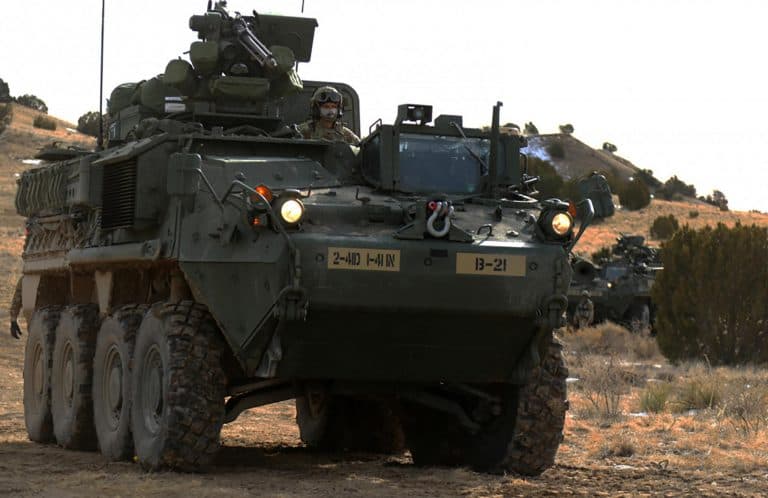
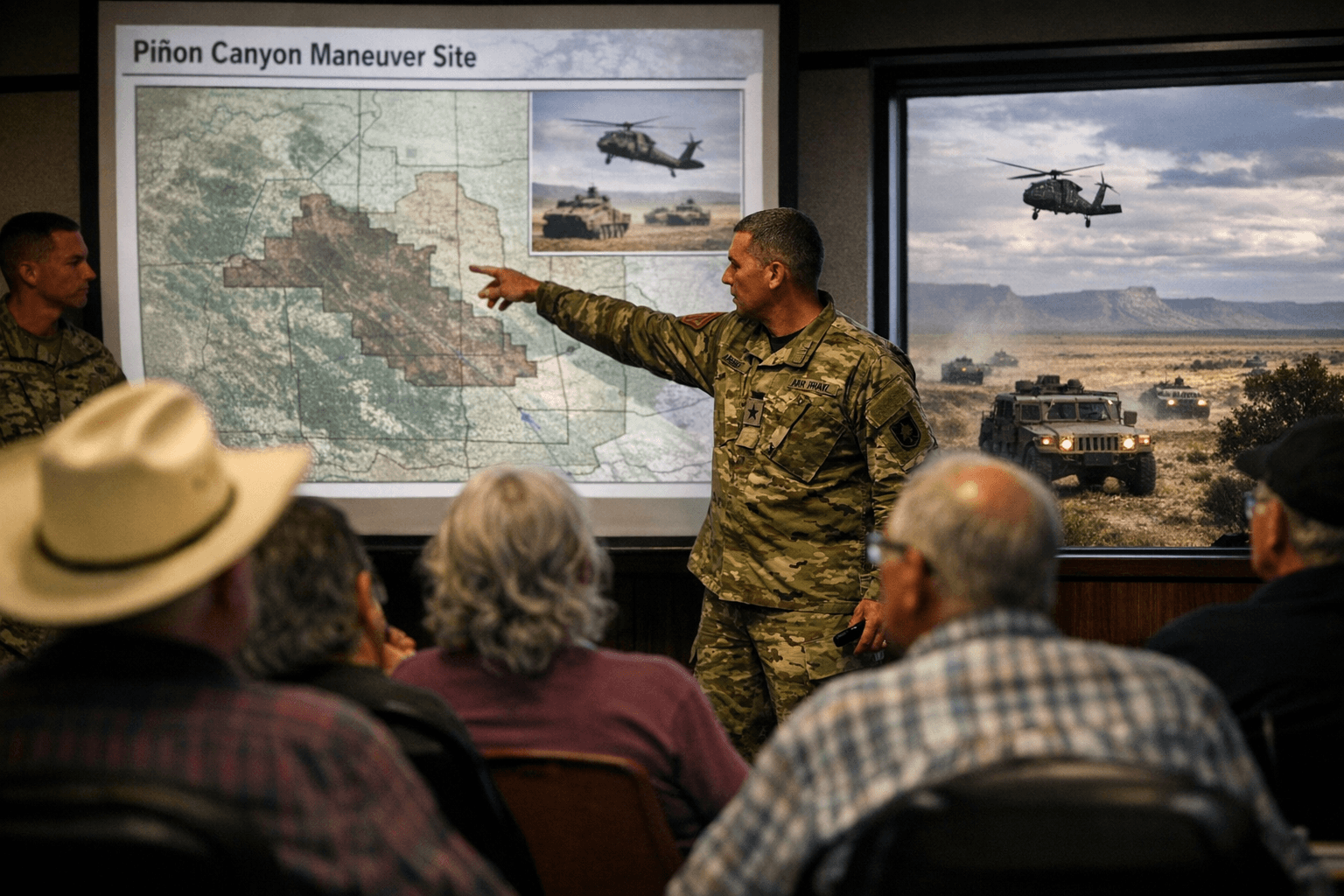
Army representatives met with Trinidad residents on Feb. 9 to outline proposals that could dramatically increase activity at the Piñon Canyon Maneuver Site, a training area about 25 miles northeast of Trinidad spanning roughly 235,000–236,000 acres across Las Animas County. The proposals discussed would reconfigure restricted airspace from its current 10,000 feet to as high as 60,000 feet and increase annual training days from 212 to a proposed 313 days in the most ambitious scenario.
Officials at the meeting described potential changes to munitions and infrastructure that community members have long watched closely. The Denver Gazette reported the site currently restricts firing to weapons no larger than a .50-caliber machine gun, while the Army’s outreach materials and local reporting indicate artillery and rocket training could be introduced if the plan proceeds. Tracy Wahl and reporting in the World Journal say proposed infrastructure work could include renovating troop quarters, building new training ranges and creating a dedicated area for unexploded ordnance disposal.
The Army has begun outreach and opened a 45-day public comment period that sources say ends on Jan. 13, but the supplied notices do not specify the year or provide the submission address. World Journal and Tracy Wahl noted the phrase “Comments can be sent to” appears in outreach materials, but the contact details were not included in the excerpts available to this reporter.
Local reactions at and after the Feb. 9 briefing reflected deep divisions in Las Animas County. Christine Louden, head of Trinidad’s Emergent Campus and a long-time local family member, said, “I’m interested in seeing what kinds of jobs and business/industry need to be in place to support Piñon Canyon and contribute to our local economy.” By contrast, longtime opponents Lori Holdread warned, “This region does not trust them, and if they think we’re just going to let them do anything they want inside that maneuver site without oversight by citizens and concerned groups, they have got another thing coming.” Doug Holdread, who helped lead opposition to previous expansion efforts, said he “expects the proposed training changes would increase the demand for training on the site and in turn, drive a request for more land later,” and that training “would destroy habitat and drive out wildlife.”
Environmental and cultural resource risks were prominent in public discussion. The Denver Gazette reported concerns about roughly 6,000 archaeological sites in the canyon and noted a Kinder Morgan pipeline runs through a large proposed impact area for munitions. Army natural-resources planning from Fort Carson emphasizes managing piñon-juniper woodlands by reducing stand density toward pre-settlement conditions, using prescribed fire to reduce fuel loading, assessing stream stability and coordinating annual INRMP reviews with USFWS and Colorado Parks and Wildlife, and cites the Army Environment, Safety & Occupational Health Strategy 2025 as a stewardship framework.
The outreach marks a renewed push decades after a fight over expansion that left the Army “in retreat on the topic by 2013,” according to the Denver Gazette. Army community engagement has produced mixed local impressions before: a March 8, 2013 community day at Piñon Canyon brought Soldiers and residents together as tanks, unmanned aerial vehicles and equipment were displayed. Korey Monohan said then, “I think it's pretty cool to see the troops, the weapons, the tanks and all the stuff they use,” and landowner Greg Jacobson told Soldiers, “What you guys are doing is an extension of what this country is.”
Key details remain to be published: authoritative acreage (sources list both 235,000 and nearly 236,000 acres), the year and start date of the Jan. 13 comment deadline, the Army’s written proposal and maps, and technical specifics for any artillery or rocket training and safety buffers. Until those materials are released, the scale and timing of changes at Piñon Canyon and their effects on Las Animas County will remain uncertain.
This article was produced by Prism’s automated news system from verified source data, official records, and press releases, then run through automated quality and moderation checks before publishing. The system is built and supervised by the people who set the standards it runs under. Read our full AI policy.
Did this article answer your question?