Boggsville preserves Las Animas County's first permanent settlement history
Boggsville is where Las Animas County's first permanent settlement turned ranching, trade, and cross-cultural cooperation into a lasting county pattern. Its survival now depends on preservation.

Boggsville sits just two miles south of Las Animas on Colorado Highway 101, but its importance reaches far beyond a roadside stop. This is the place where the county’s first permanent settlement took shape, where ranching and trade moved from frontier experiment to working economy, and where the land-use patterns of the Arkansas Valley began to harden into the region locals still live with today.
A settlement built at a crossing point
Boggsville began as a campsite used by Plains Indians before Thomas Boggs established a ranch near the Purgatoire River on a branch of the Santa Fe Trail. That location mattered: it placed the site in the middle of movement, commerce, and exchange long before Las Animas became the county seat and the railroad reshaped the valley. The settlement that followed was not an isolated homestead cluster. It was a working borderlands outpost tied to travel routes, river access, and livestock.
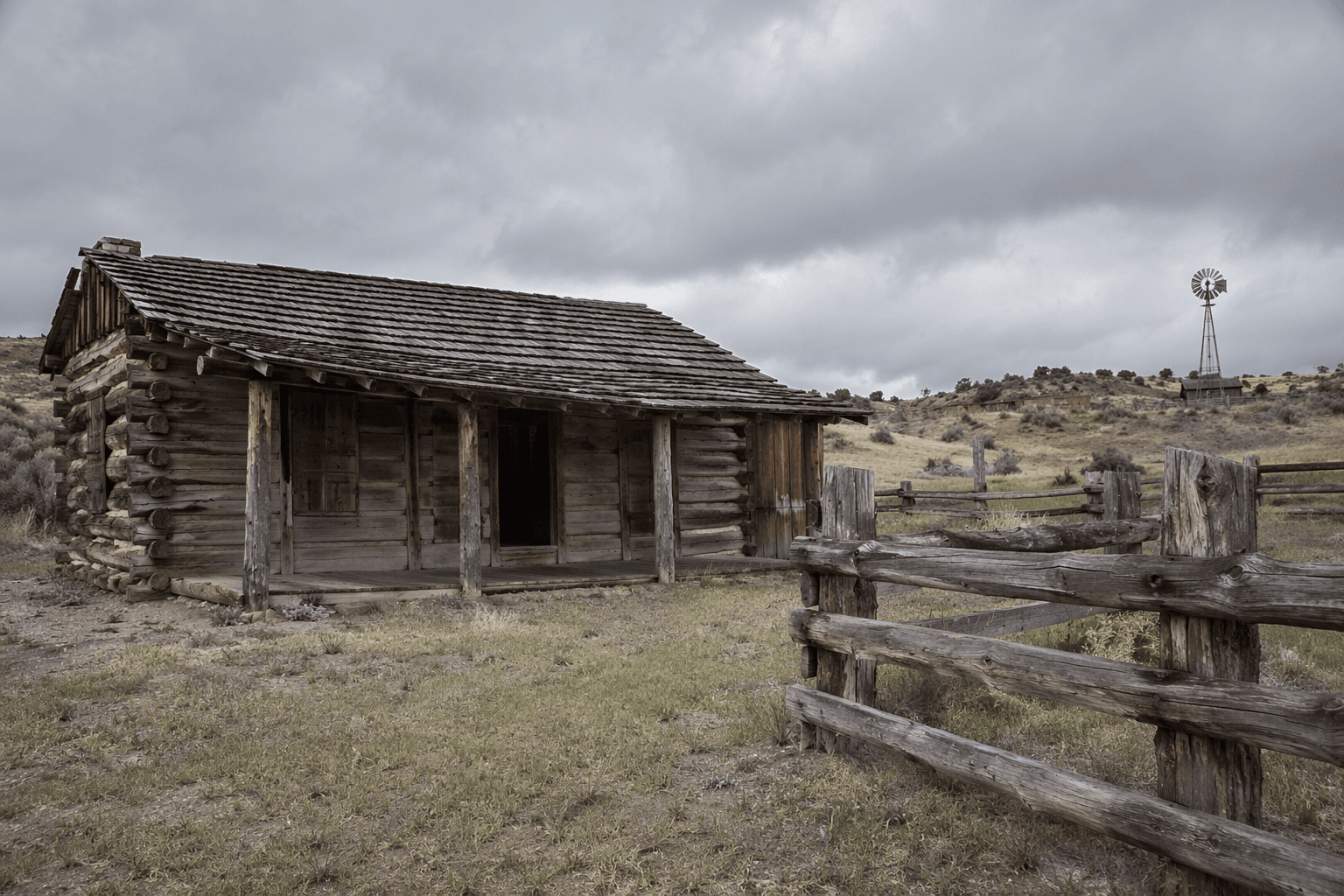
Boggs built his adobe house in 1866, and John W. Prowers arrived in 1867 to build a large two-story house. The Prowers house did more than provide shelter. At different times it served as a general store, stagecoach station, county office, and school, which shows how quickly Boggsville became a practical center of daily life. In a county where distance has always shaped opportunity, one property carrying so many civic functions tells the story plainly.
Why Boggsville mattered to the county economy
Boggsville is not just a preserved home site. It is one of the places where the cattle and sheep industries first boomed in Colorado, and that makes it central to understanding Las Animas County’s early economy. The Colorado Encyclopedia describes the settlement as the first permanent community in southeastern Colorado, and it adds that Boggsville pioneered irrigation and large-scale farming and ranching in the Arkansas Valley. That combination of livestock, water control, and cultivation is the real foundation story.
The site’s history also explains why the county’s land use looks the way it does now. Early irrigation and extensive grazing established patterns of production that tied land, water, and transport together. Once the railroad arrived a few miles away in Las Animas in the 1870s, the center of gravity shifted, but the agricultural logic Boggsville helped set in motion did not disappear. It simply moved into the next era of county development.
A borderlands community, not a simple frontier tale
Boggsville’s value lies in more than chronology. It shows how Native American, Hispanic, and Anglo residents lived and worked in close proximity, sometimes cooperatively, in a period often flattened into conflict stories. The Bent County Historical Society describes the settlement as the first permanent, non-military outpost in southeastern Colorado and says it prospered between the death of the fur trade and the rise of the railroad. That narrow window made Boggsville a place of transition, not an accident.
Rumalda Luna Boggs’s land inheritance helps explain why the settlement took root there. Her family history traces to Cornelio Vigil, and the inheritance is described as 2,040 acres along the Purgatoire River south of its confluence with the Arkansas River. That land base made the ranching settlement possible and places Boggsville within the larger history of Hispanic landholding in the region. History Colorado also identifies the site as important for understanding the role of Hispanic and Indigenous women in early Colorado trade networks, a detail that pushes the story beyond male ranchers and trail traders.
What remains on the ground today
Boggsville is now a 39-acre National Register district with the 1866 Boggs House and the 1867 Prowers House. Several interpretive markers and a bronze state historical marker help explain the site’s layered past, and the site is still described as a renovation project in progress. That matters because preservation here is not just about saving old walls. It is about keeping visible the place where the county’s first durable business and settlement system took shape.
History Colorado lists Boggsville’s National Register date as October 24, 1986, with an amendment on May 23, 2022. The National Trust for Historic Preservation describes it as a seasonal interpretive museum, which means the site is not an all-year attraction with large-scale programming. It is a leaner, more fragile kind of historic resource, dependent on public awareness and upkeep. If locals overlook it, they risk losing one of the county’s few physical records of how land, labor, and trade first worked here.
Why the site still matters now
Boggsville is one of Colorado’s earliest extant agricultural and trade centers, and that status gives it practical value today. It offers a direct way to understand how Las Animas County grew from a trail-linked ranching settlement into a county shaped by rail, agriculture, and boundary-crossing exchange. It also gives the county a tourism asset that is specific enough to matter, not generic heritage branding.
The site’s later history adds another layer. Boggsville was later acquired by James Lee, who established San Patricio Ranch there with 800 cattle and 1,000 horses. That shows the land remained valuable for large-scale ranching even after the original settlement faded. The place never stopped being productive land; it simply changed hands and forms as the county changed around it.

Boggsville is also closely tied to Kit Carson, and Thomas Boggs served as executor of Carson’s will. That connection places the site within the broader frontier network that shaped southern Colorado, while still keeping the focus on the local settlement that mattered most to Las Animas County. This is where the county’s earliest permanent economy took root, and that is exactly why its preservation is a civic issue rather than a narrow historical one.
Visiting Boggsville
The Colorado Tourism Office lists seasonal hours that make the site accessible without pretending it is open like a city museum. It is open from the last weekend in April to Memorial Day and from Labor Day to the last weekend in October on Wednesdays through Sundays, 10 a.m. to 4 p.m. From Memorial Day to Labor Day, it is open daily from 10 a.m. to 4 p.m. Those hours are worth knowing before planning a visit, especially for residents who want to see the Boggs House and Prowers House while the site is active.
Boggsville gives Las Animas County something rare: a place where the county’s economic origins, cross-cultural history, and land-use legacy are still visible in one landscape. The county’s first permanent settlement did not simply sit on the edge of history. It helped make the county’s history, and what survives there now is a record worth protecting.
This article was produced by Prism’s automated news system from verified source data, official records, and press releases, then run through automated quality and moderation checks before publishing. The system is built and supervised by the people who set the standards it runs under. Read our full AI policy.
Did this article answer your question?