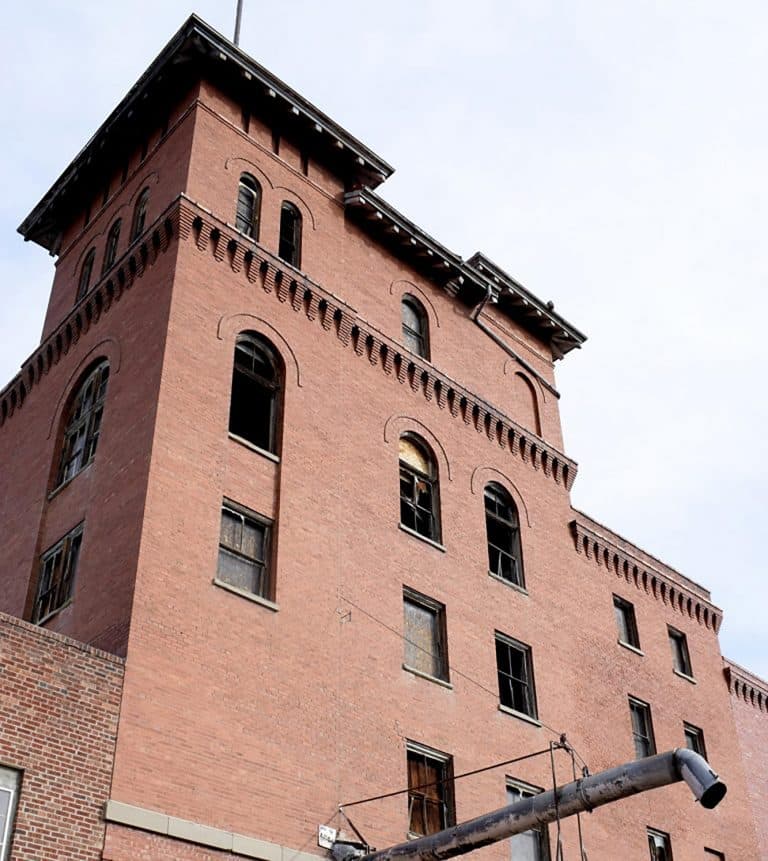
Cokedale preserves rare company town history in Las Animas County
Cokedale’s intact coke ovens, cinderblock houses and tiny footprint make it a living record of Las Animas County’s coal era, not just a relic.
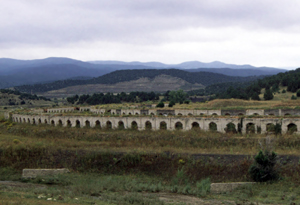
Cokedale is one of the few places in Las Animas County where the coal era still reads in the ground plan. Just eight miles west of Trinidad on Highway 12, the town covers about one square mile, holds roughly 150 residents, and still preserves the bones of a company town built to serve coal, coking and the workers who kept both running.
A company town that never fully disappeared
The Cokedale Historic District is not a loose collection of old buildings. It is a tightly packed industrial landscape of 117 buildings and sites, built almost entirely in 1906 and 1907 when the American Smelting and Refining Company developed the camp as a model town. James Murdoch, a Denver architect, designed the community around the mine, washer and coke ovens on Reilly Creek, which means the layout itself is part of the story.
That history reaches back before the company-town buildout. The site began as a 100-man tent colony in 1899, was bought by the Guggenheims in 1901, and was later renamed Cokedale. What followed was a more ambitious phase of development, one that turned a work camp into a planned community with housing, educational facilities and recreational facilities for miners and their families.
What still stands in plain sight
The strongest reason Cokedale matters is that the town did not get wiped clean when the coal economy changed. History Colorado describes it as a significant example of a company-owned coal camp tied to the coal mining and coke industry that powered southern Colorado around 1900, and Colorado Encyclopedia calls it the most intact of Colorado’s company-run coal camps. That is not a sentimental label. It is a statement about how much of the original place remains readable.
Most of the original structures still stand, and the National Register materials note that all original structures except two moved wood-frame buildings are made of coke cinderblock. The district also holds the largest surviving group of double-sided coke ovens in Colorado, which gives the town a rare industrial landmark that is still visible, not buried in documentation or museum panels.
When you move through Cokedale, the landscape is the point. The school, mercantile building, washer, power house and rows of houses were part of a complete worker community, not an isolated mine yard. That is what sets Cokedale apart from many other coal camps in the Las Animas-Huerfano district, where company towns were dismantled after World War I.

What to notice when you walk the town
Cokedale rewards close attention because the town’s survival is built into its fabric. The place is small enough to read in a single visit, but dense enough to show how a company-run community was organized.
- the cinderblock construction that ties nearly every original building together
- the surviving double-sided coke ovens, the district’s most important industrial feature
- the compact street layout shaped by the mine and the washer on Reilly Creek
- the original Mercantile Building, now home to the museum
- the center of town, where the park and civic buildings show how the community continues to function
Look for:
That physical continuity matters because Cokedale was not preserved in a frozen state. It was lived in, modified and maintained by the people who stayed after the coal company left.
From company control to local ownership
Cokedale’s later history is as important as its origin story. History Colorado says the town continued as a company town until 1946, and the mine ceased operation in 1947. The town’s official history adds that when the mine shut down, the houses and structures were sold to the miners instead of being demolished, which helps explain why the town still has such a coherent streetscape.
Cokedale was incorporated in 1948, a year after the mine closed, which marked a shift from company management to local civic identity. The same place that had been built to support extraction became a town responsible for its own survival. That transition is a major reason the district still feels alive rather than staged.

A preservation story with countywide stakes
Cokedale’s preservation is not just about heritage tourism or a picturesque stop on the way out of Trinidad. The town is a countywide example of what survives when a coal town is allowed to remain inhabited, repaired and used. Its National Historic District status, granted in 1985, formally recognized that value, and the district’s listing on the National Register of Historic Places on January 18, 1985, placed it in the national preservation record as well.
The town has also drawn active restoration support. In 2015, Cokedale received three State Historical Fund grants totaling more than $130,000 for restoration, a sign that preservation here is an ongoing public investment rather than a one-time designation. For Las Animas County, that matters because the town’s condition helps define how much of the region’s coal-era identity is still visible and how much has already slipped away.
The community history reaches into the labor story of southern Colorado too. Colorado Encyclopedia notes that few miners from Cokedale participated in the 1913-1914 coalfield strike, a detail that suggests the company’s model of worker welfare and control may have shaped local behavior differently from surrounding camps. In a county where coal labor history still carries weight, that is part of the town’s larger significance.
Why Cokedale still matters on the ground
Cokedale sits in the Raton Basin coalfield, in the foothills of the Sangre de Cristo Mountains, and its scale makes the preservation challenge easy to understand. A one-square-mile town with a population of about 150 cannot afford to treat its buildings, park and civic spaces as disposable. Every repair affects how the place reads as a historic district and how clearly Las Animas County can still tell its industrial story.
The town’s museum, housed in the original Mercantile Building, is open by appointment only and free to visitors, with donations supporting it. That small museum, along with the volunteer fire department and the maintained park at the center of town, shows a community that has not separated heritage from daily life. Cokedale endures because it is still a town first and a historic site second, and that is exactly why it remains one of the county’s most important places to protect.
This article was produced by Prism’s automated news system from verified source data, official records, and press releases, then run through automated quality and moderation checks before publishing. The system is built and supervised by the people who set the standards it runs under. Read our full AI policy.
Did this article answer your question?