Comanche National Grassland spans three counties, offers vast public recreation
Comanche National Grassland gives Las Animas County a public-land backyard of hikes, birding, dinosaur tracks, and federal planning decisions. Picket Wire is the easiest history-heavy day trip.
If you want the nearest big dose of public land, wildlife, and history from Las Animas County, Comanche National Grassland is the place to start. The grassland spans Baca, Las Animas, and Otero counties and covers about 443,764 acres in one tourism accounting, with a 2025 travel writeup putting the total at 467,373 acres including federal and other lands. That scale matters because one day trip can become a choice between prairie hikes, canyon access, birding stops, and some of the richest historic ground in southeastern Colorado.
Start with Picket Wire Canyon
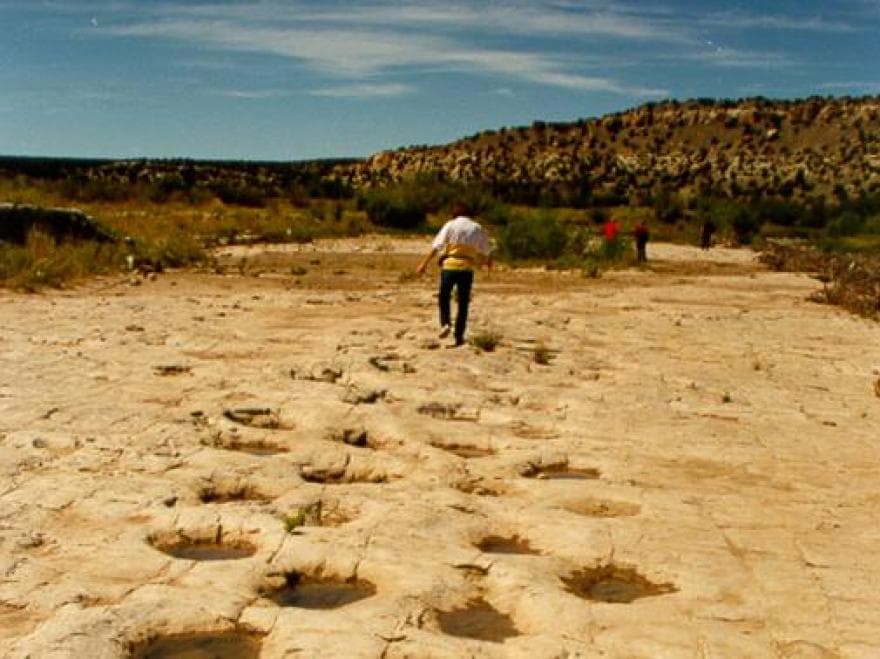
The most practical entry point for many locals is Picket Wire Canyonlands, south of La Junta, where Recreation.gov says the canyon floor holds the largest dinosaur tracksite in North America. The easiest way in is the guided auto tour, and the canyon itself is not a place for casual driving: no motorized vehicles are allowed except for guided tours led by Comanche National Grassland rangers. If you want to reach the mesa country above the canyon on your own, the Withers Canyon Trailhead provides access for hiking, horseback riding, and mountain biking.
That mix of access rules is what makes Picket Wire useful for planning. You can treat the canyon floor as a guide-led destination and the rim country as a self-directed trail outing, instead of assuming the whole area works like a standard park. A 2018 Forest Service announcement described the auto tours as all-day outings on Saturdays in May, June, September, and October, from 8 a.m. to 4 p.m., for a fee, which shows how seasonal and limited access can be on this kind of public land.
What you see there
Recreation.gov says the guided auto tour is designed to show visitors hidden dinosaur tracks and the history of early pioneers and historic ranches. Tourism material ties the same area to an old Mexican mission and settlement, Native American rock art, and one of the largest dinosaur track beds in the world. For Las Animas County residents, that means the trip is not just about scenery. It is a direct encounter with paleontology and the human past on land that remains open to the public.
Birding, wildlife, and the value of the open range
Comanche National Grassland is also one of the strongest birding and wildlife destinations in southeastern Colorado. Visit La Junta’s tourism material says the grassland is home to about 300 species of birds, reptiles, amphibians, and mammals. Defenders of Wildlife says the grassland supports the largest population of lesser prairie chickens and the largest concentration of mating leks in Colorado, which gives birders and wildlife watchers a concrete reason to plan a trip beyond the usual hiking list.
The Colorado Birding Trail adds another important detail: this is an extremely remote landscape, with places where you can stop, turn around, and see no sign of human presence besides the road. That remoteness explains why the grassland works so well for birding, photography, and solitude. It is not a crowded frontage-road attraction; it is a place where the prairie itself is the feature, and the wildlife depends on that scale.
History sits on the same land as the trails
The grassland’s historic pull is part of what makes it such a natural fit for local day trips. Tourism and recreation material link the area to the Santa Fe Trail, grazing history, archaeology, and abandoned homesteads, so the experience is not limited to one canyon or one overlook. The 2025 travel writeup also said the grassland was established in 1960, which puts the modern recreation area inside a longer federal history of land use and management.
Picket Wire Canyon carries much of that story in one place. The guided auto tour highlights early pioneers and their historic ranches, while the canyon itself is promoted as a place where visitors can learn the landscape’s deep past. For readers in Trinidad and the rest of the county, that matters because the grassland helps explain how southeastern Colorado was settled, worked, crossed, and mapped long before modern tourism began using it as a destination.
How the federal side affects what happens here
Comanche National Grassland is managed by the U.S. Forest Service as part of the Pike-San Isabel National Forests & Cimarron and Comanche National Grasslands system, so it is not a single park unit with one set of expectations. The official recreation pages present it as a public landscape with multiple destinations, each with its own access patterns and limits. That is why one part of the grassland can favor guided vehicle tours while another is better for foot, bike, or horseback travel.
The policy side is active, too. A Federal Register notice dated Nov. 8, 2024 announced a land management plan revision for the Cimarron and Comanche National Grasslands in Baca, Las Animas, and Otero counties, Colorado, and Morton and Stevens counties, Kansas. For a county like Las Animas, the practical consequence is straightforward: recreation, grazing, wildlife habitat, and historic resources are all part of the same federal planning process, so future access and use decisions are not happening in a vacuum.
Why it belongs in Las Animas County’s identity
Comanche National Grassland helps define Las Animas County beyond downtown Trinidad and the Highway of Legends. It shows the county as a place shaped by wide-open land, remote canyons, grazing history, and public recreation that still feels wild enough to surprise first-time visitors. Whether the goal is a guided dinosaur-track tour, a trailhead hike above Picket Wire, or a birding stop in country where human presence nearly disappears, the grassland gives residents a shared public landscape with real depth.
That is why this place stays relevant: it is both a recreation asset and a management responsibility, with wildlife, history, and access all tied to the same broad federal land base.
This article was produced by Prism’s automated news system from verified source data, official records, and press releases, then run through automated quality and moderation checks before publishing. The system is built and supervised by the people who set the standards it runs under. Read our full AI policy.
Did this article answer your question?