Rural cancer care brings relief to Las Animas County patients
When oncology comes to Weston instead of sending patients down the road, treatment can feel possible. For Las Animas County families, that shorter trip can decide whether care continues.
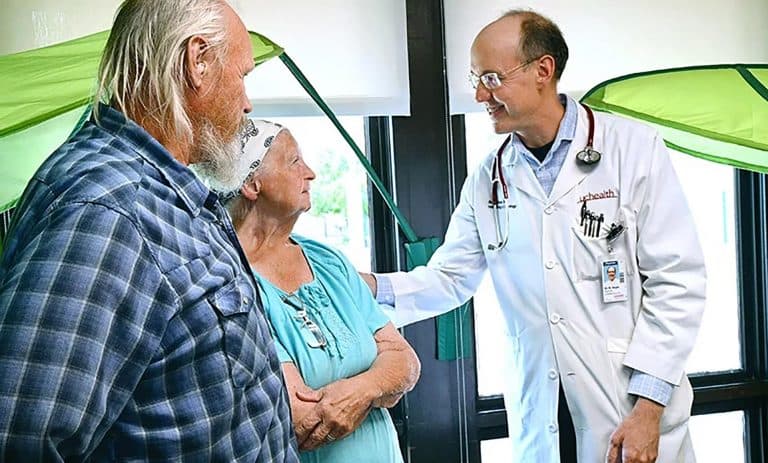
A specialist who comes to Weston can spare cancer patients in Las Animas County the kind of repeated long drive that turns treatment into a burden. For people already dealing with appointments, lab checks and the uncertainty of a diagnosis, local outreach can mean the difference between staying on care and putting it off.
Why the trip matters here
Cancer care is rarely a one-time appointment. It can mean consultations, follow-ups, blood work and, for some patients, infusion services, each one adding another drive, another day away from home and another round of logistical strain. In rural southeastern Colorado, those extra miles carry a real cost: missed work, more fuel expenses, and more time pulled away from family obligations.
That is why the traveling oncology model used by UCHealth in rural Colorado lands differently in places like Las Animas County. Dr. Robert Hoyer and his team do not ask every patient to shoulder the full burden of repeated trips to a distant center. They travel to see patients, bringing specialist care closer to where people actually live.
What local outreach changes for patients
For patients in and around Las Animas County, proximity is not a luxury feature. It shapes whether care feels manageable on a day when energy is already limited, whether a family member can drive along, and whether the appointment can happen without upending the rest of the week. When a visit is nearby, the practical obstacles shrink along with the emotional toll.
The benefit is especially clear during longer courses of treatment, when the same route would otherwise be repeated again and again. Each additional trip adds physical strain at exactly the moment patients may be least able to absorb it. Bringing oncology outreach into rural communities reduces that wear and keeps the treatment plan from becoming a transportation problem.
There is also a continuity factor. Patients are not only trying to reach a doctor; they are trying to keep seeing the same face, in a setting that feels familiar, while they move through a serious illness. That steadiness matters in rural care, where isolation can make a major diagnosis feel even heavier.
Why Weston anchors the story
The Weston patient’s experience puts a human shape on what can otherwise sound like an access policy debate. Weston is not a medical hub, and that is exactly the point: the story shows how people in small towns think about health care in terms of whether help comes close enough to be reachable. The question is not abstract. It is whether a specialist can come near enough that the trip does not become a barrier.
That local lens matters across southeastern Colorado, where families often already live far from major medical centers. In that setting, a travel-heavy care model can compound the stress of an illness that already reshapes every routine. A doctor who comes to the patient changes the equation in a way that spreadsheets and system maps never fully capture.
The Weston connection also underscores the emotional side of cancer care. Patients want medicine, but they also want reassurance, familiarity and the feeling that someone will keep showing up. In rural communities, that continuity can be as important as the appointment itself.
What this means for Las Animas County
For Las Animas County readers, the larger lesson is that health care access depends on delivery models that fit rural life. Traveling specialists are one part of that, along with shared clinic space and regionally coordinated care that can reduce the need to start every visit with a long road trip. Those approaches do not replace local communities; they help keep them connected to specialty care that would otherwise sit out of reach.
The stakes are highest for older residents, caregivers and families who already carry the demands of distance every time they need a doctor, a test or a treatment. When oncology outreach is available closer to home, it can ease the strain not just on the patient, but on everyone who has to rearrange work, transportation and caregiving around the appointment.
That is why the service should be understood as community infrastructure, not a symbolic extra. In rural cancer care, access is measured in miles, time, gasoline, fatigue and the ability to keep going back. When the specialist comes to town, treatment is not suddenly simple, but it becomes far more possible.
This article was produced by Prism’s automated news system from verified source data, official records, and press releases, then run through automated quality and moderation checks before publishing. The system is built and supervised by the people who set the standards it runs under. Read our full AI policy.
Did this article answer your question?