Trinidad Ambulance District Eyes Whole-Blood Transfusions, Expanded Behavioral Health Services
The Trinidad Ambulance District covers 4,775 square miles with only a Level IV hospital nearby; whole-blood on ambulances could change survival odds before the 85-mile run to Pueblo.
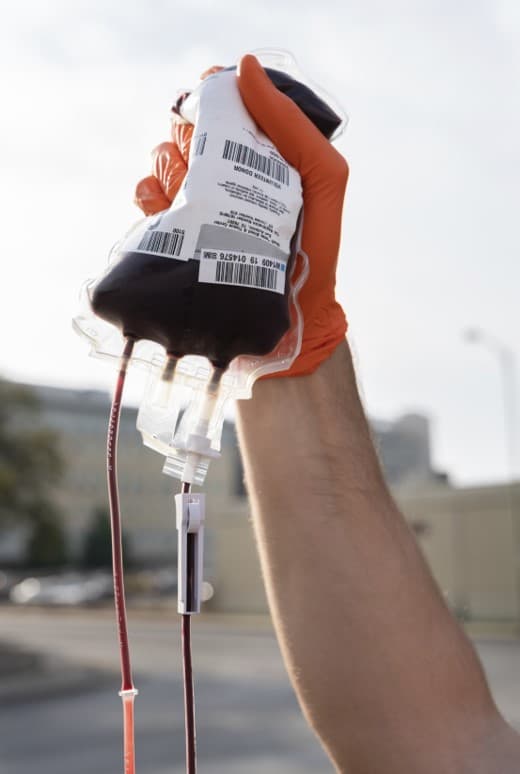
A driver bleeding out in a high-speed crash near Ludlow. A ranch hand with a severed artery 40 miles from town on a dirt road off Highway 12. A resident in the middle of a psychiatric breakdown who needs a crisis clinician, not a trip to the emergency room. These are the calls the Trinidad Ambulance District fields across 4,775 square miles of Las Animas County, and they are the scenarios pushing the district toward two significant expansions now taking shape: a regional whole-blood transfusion program and a broadened behavioral health response.
The whole-blood initiative targets the sharpest gap in the county's trauma chain. Mt. San Rafael Hospital, the 25-bed critical access facility on Benedicta Avenue in Trinidad, holds a Level IV trauma designation, meaning its crews can stabilize and transfer but cannot definitively manage the most complex injuries. For a patient hemorrhaging from a crash on Raton Pass or a rollover on the open I-25 corridor north of town, the nearest Level III centers, Parkview Medical Center and St. Mary Corwin Medical Center, are both in Pueblo, roughly 85 miles north. Under favorable conditions that ground transport runs more than an hour.
Federal EMS data puts the stakes plainly: prompt delivery of prehospital blood could save approximately 37 percent of trauma patients with severe bleeding. Yet only about 1 percent of EMS agencies nationally have established that capability. District leadership described the program as "a realistic next step" to close the gap in rural trauma care.
Getting from that description to actual units of blood on a rig requires clearing multiple layers of logistics, training, and regulatory approval. Blood products require certified refrigeration units with continuous temperature monitoring, equipment that carries a price tag of several thousand dollars per unit before factoring in restocking cycles and quality assurance protocols. The district also needs a supply agreement with a regional blood bank, protocols cleared by a physician medical director, additional paramedic credentialing, and formal authorization from Colorado's EMS regulatory authority. Officials said they are pursuing regional partnerships and grant funding to cover startup costs, though no specific dollar figures were released.
The behavioral health expansion works on a parallel problem. A TAD crew responding to a mental health crisis currently has limited tools: transport to the ED, wait for law enforcement, or both. The new model would equip EMS with stronger crisis training and co-response partnerships, routing more calls toward clinical stabilization and away from unnecessary emergency department visits or arrests. Health Solutions, which already runs mobile behavioral health evaluation services across Las Animas and Huerfano counties, represents a ready foundation for that kind of co-response framework.
Both programs remain in planning, and public meetings and stakeholder briefings are expected before either moves toward implementation. The timeline hinges on how quickly the district can lock in funding, supply agreements, and state approvals. For a county where the nearest definitive trauma care is an hour away on a good day, the district's push for whole blood is less an upgrade than a recognition of what the geography has always demanded.
This article was produced by Prism’s automated news system from verified source data, official records, and press releases, then run through automated quality and moderation checks before publishing. The system is built and supervised by the people who set the standards it runs under. Read our full AI policy.
Did this article answer your question?