White School and 7-D School show New Deal education in Las Animas County
White School and 7-D School show how New Deal spending kept rural children learning, neighbors connected, and relief visible in eastern Las Animas County.

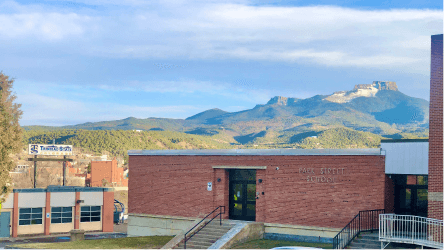
White School and 7-D School still tell a plainspoken story of survival on the eastern plains: if you wanted school, shelter, and warmth in eastern Las Animas County, the federal government had to help build it. Near Kim and Branson, these two one-room schoolhouses show how New Deal money reached isolated families in ways they could touch every day, from coal storage and horse shelter to steady employment during the Depression.
White School as a community center
White School began in 1921, when eastern Las Animas County was still being shaped by the homesteading boom of the 1910s and 1920s. History Colorado identifies it as one of the one-room schools built for that era, when distance, dirt roads, and scattered ranch homes made small schools more practical than long trips to town. The building was expanded in 1936 under the Works Progress Administration, and that addition changed more than the footprint. It gave the school a place to store coal and an adjacent barn to shelter students’ horses, a detail that shows how children actually got to class before buses and paved roads became routine.
That barn matters because it turns the schoolhouse into a record of daily life, not just education policy. Children in this part of the county did not arrive by carpool lane or school bus loop. They came by horse, on foot, and across wide open ground, and the building had to support that reality if school was going to work at all. Colorado Preservation, Inc. lists White School as National Register property 5LA.11139 and notes that its stonework includes beaded mortar joints similar to those found on other WPA projects in Las Animas County. The school and barn survive as a paired resource, which makes the site especially useful for understanding how federal relief, local labor, and rural need came together in one place.
What 7-D School shows about the Depression years
7-D School, near Road 171 in the Branson vicinity, deepens the picture by shifting from homesteading-era settlement to Depression-era relief. It was constructed from 1936 to 1937 under the Works Progress Administration and is identified by History Colorado as site 5LA.11145. The building is significant for its connection to Franklin Roosevelt’s New Deal and for the record it preserves of federal relief work on Colorado’s Eastern Plains during one of the hardest economic periods in the region’s history.
Living New Deal notes the broader setting: drought and dust storms battered the agricultural economy of the Eastern Plains especially hard during the Depression. In that landscape, a school project did more than create a classroom. It also provided much-needed employment in an isolated rural area of Las Animas County, where wages and public works could make the difference between staying and leaving. The building is described as a simple one-room schoolhouse with WPA Rustic architecture, which fits the practical style used on many New Deal projects across the county.
How the WPA changed everyday life on the plains
White School and 7-D School were part of a wider pattern in eastern Las Animas County, where the WPA built new schools and barns for several rural districts and repaired the facilities of many others. History Colorado says that work often happened in places with very limited matching funds, which meant federal relief was not abstract policy. It was the difference between a leaking, underheated building and one that could keep a district functioning through winter and hardship.
History Colorado also groups the New Deal story of Colorado’s eastern plains into four major historic themes, including the WPA, and says the cover documentation for that regional context was accepted for the State Register on December 16, 2005 and for the National Register on January 27, 2007. That broader context matters because it places Las Animas County inside a state-wide pattern of relief, not outside it. The WPA did not simply leave behind roads and school walls. It left a record of how government money was translated into local survival, especially in communities far from the centers of power.
The scale of that effort becomes clearer in Colorado’s WPA employment figures. History Colorado says about 9,000 Coloradans were at work on WPA projects by early November 1936. By late December that number had risen to more than 40,000, and it reached 43,200 in March 1937. Those numbers help explain why schoolhouses like White and 7-D endure as more than architecture. They are the physical evidence of a labor program that changed the daily rhythm of life across the state, including in places where schoolchildren still depended on horses and where coal had to be stored on site to keep classrooms warm.
What remains, and what has been lost
What remains in Las Animas County are the buildings themselves and the memory embedded in their stone, mortar, and modest scale. What has been lost is the way those schools once anchored remote family life, when a one-room school could double as a community landmark and a federal work site at the same time. The county has moved on from the era when children tied horses outside class, but the buildings still show how education was once tied to transportation, weather, and relief work as much as to lessons inside the room.
For Kim and Branson-area readers, that makes preservation more than a matter of old walls. White School shows the homesteading county adapting to rural life before consolidation. 7-D School shows federal policy responding to collapse with work, materials, and a classroom. Together they mark the point where New Deal spending became something residents could use, not just something they heard about, and that is why these places still matter on the eastern plains today.
This article was produced by Prism’s automated news system from verified source data, official records, and press releases, then run through automated quality and moderation checks before publishing. The system is built and supervised by the people who set the standards it runs under. Read our full AI policy.
Did this article answer your question?