East Helena smelter legacy still shapes town 25 years after closure
East Helena’s smelter may be gone, but its cleanup, land controls and health legacy still shape the town 25 years later.
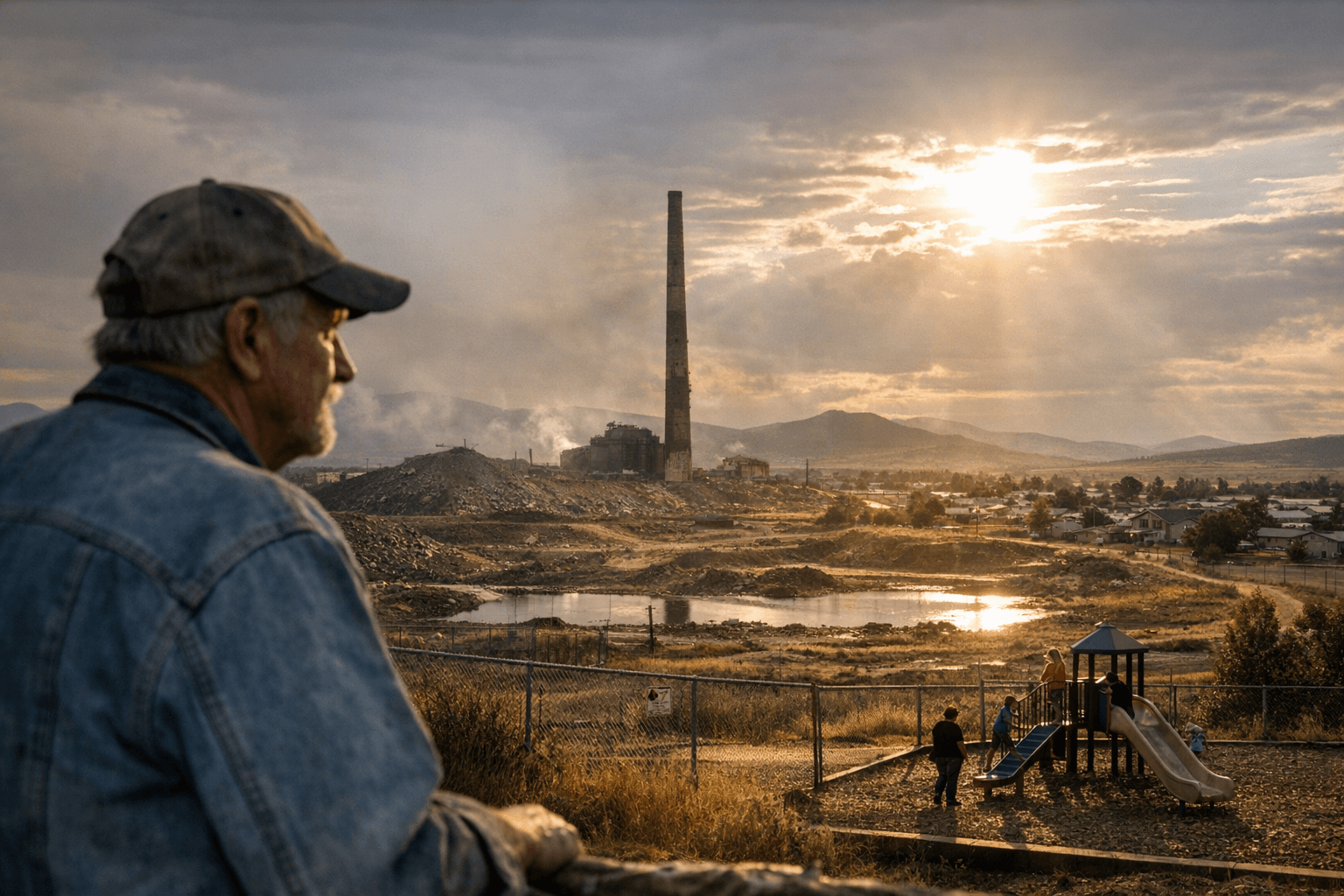
East Helena still lives with the footprint of the ASARCO smelter 25 years after it closed in April 2001. Little remains above ground beyond the slag pile, but the plant’s influence still shows up in the town’s landscape, its cleanup rules and the way longtime residents remember work, risk and community.
What the smelter built, and what it left behind
Lead and zinc smelting began in East Helena in 1888, and ASARCO bought the site in 1898. For more than a century, the plant was one of the defining forces in the town, processing about 70,000 tons of lead bullion a year at its peak and anchoring neighborhoods, jobs and daily life around the former plant. The site was never just the smelter itself, either. It covered about 2,000 surrounding acres, a scale that helps explain why the closure changed so much more than one industrial property.
That industrial footprint still shapes how East Helena is understood. The smelter’s presence helped form the city’s identity, and the company’s role went beyond payroll. Historical accounts describe ASARCO supporting an annual town picnic and a baseball league, ties that made the company feel woven into the social life of the community as much as the economy. The East Helena Smelterites, the semi-professional baseball team sponsored by the company, became one of the most recognizable symbols of that era.
The health and environmental bill
The legacy is not only cultural. It is also measurable in the soil, water and bodies of people who lived nearby. In September 1984, the U.S. Environmental Protection Agency added the East Helena site to the National Priorities List after finding high concentrations of lead, arsenic and other heavy metals in soil and groundwater. Investigators also found that children in the area had elevated blood-lead levels, sometimes double or triple the national average at the time.
Those findings are why the East Helena smelter became a Superfund site and why its environmental consequences remain central to the town’s story. Contamination spread beyond the former plant property into surrounding land, livestock, plants and nearby Prickly Pear Creek, all of which were affected by metals such as lead and arsenic. The result was not just an industrial cleanup project, but a long-running public-health response tied to an entire part of the Helena Valley.
How cleanup changed hands
Cleanup did not happen in a straight line. In 1998, the EPA transferred cleanup of the facility to the Resource Conservation and Recovery Act program, shifting the site into a different regulatory framework while remediation work continued. ASARCO’s ownership changed again in 1999, when Grupo Mexico bought the company, but the cleanup obligations remained in place.
The company later filed for bankruptcy in 2005, another major turn in a case already shaped by decades of contamination and regulatory oversight. Then in 2009, a settlement transferred all ASARCO-owned East Helena lands, about 2,000 acres, into an environmental response and custodial trust with about $96 million dedicated to finish the cleanup. That trust structure, along with work by the Montana Environmental Trust Group and the Montana Environmental Custodial Trust, became the backbone of the effort to move the former industrial site from liability toward managed reuse.
What residents can still measure today
The cleanup story is still unfolding in ways residents can see and measure. EPA and the custodial trust have worked with local agencies to impose land- and groundwater-use controls, reflecting the reality that contamination management does not end when heavy equipment leaves the property. The site is still being treated as a place that needs careful oversight, not simply a finished cleanup.
One of the clearest signs of progress came in 2023, when EPA proposed reducing the cleanup level for residential yards in East Helena to 500 parts per million soil lead or lower after hundreds of yards had already been cleaned to that standard. That change matters because it moves the discussion from crisis response to a more specific benchmark for what safe reuse can look like in neighborhoods that sat under the smelter’s shadow for generations.
Memory, identity and a town still adjusting
The anniversary coverage also shows how much of East Helena’s story is carried by people, not just records. On the anniversary day, a group of former smeltermen toured the old site, and for many it was the first time they had been back in years. That kind of return underscores how personal the legacy still is. This was a workplace, a social center and a source of local pride before it became a cleanup site.
The smelter’s closure was an economic shock as well as an environmental one. ASARCO had been one of the town’s most visible investors in community life, and when that presence ended, East Helena lost more than an employer. It lost a center of gravity. The company-town relationship still matters because it explains why the closure is remembered not just as the end of an industry, but as the beginning of a long adjustment to a different economic and physical reality.
What comes next for the former ASARCO land
The former ASARCO property remains a test case for how a small Montana community handles industrial aftermath. The site’s 2,000 acres, the cleanup trust, the groundwater and land-use controls, and the residential-yard standards all point to a future built around managed redevelopment rather than a clean break with the past. East Helena does not get to forget the smelter, because the town still lives with what it left in the ground and what it made possible above it.
That is the ledger 25 years after closure: a town that gained a powerful identity and a deep civic memory, but lost a major employer and inherited a costly environmental burden. The smelter is gone, yet East Helena is still being shaped by the choices, profits and contamination of the century that came before.
This article was produced by Prism’s automated news system from verified source data, official records, and press releases, then run through automated quality and moderation checks before publishing. The system is built and supervised by the people who set the standards it runs under. Read our full AI policy.
Did this article answer your question?