Helena’s long-unmarked Poor Farm cemetery gets a plaque
A plaque now marks Helena’s Poor Farm cemetery, where more than 380 people were buried and the county’s poorest residents were once laid to rest without a sign.
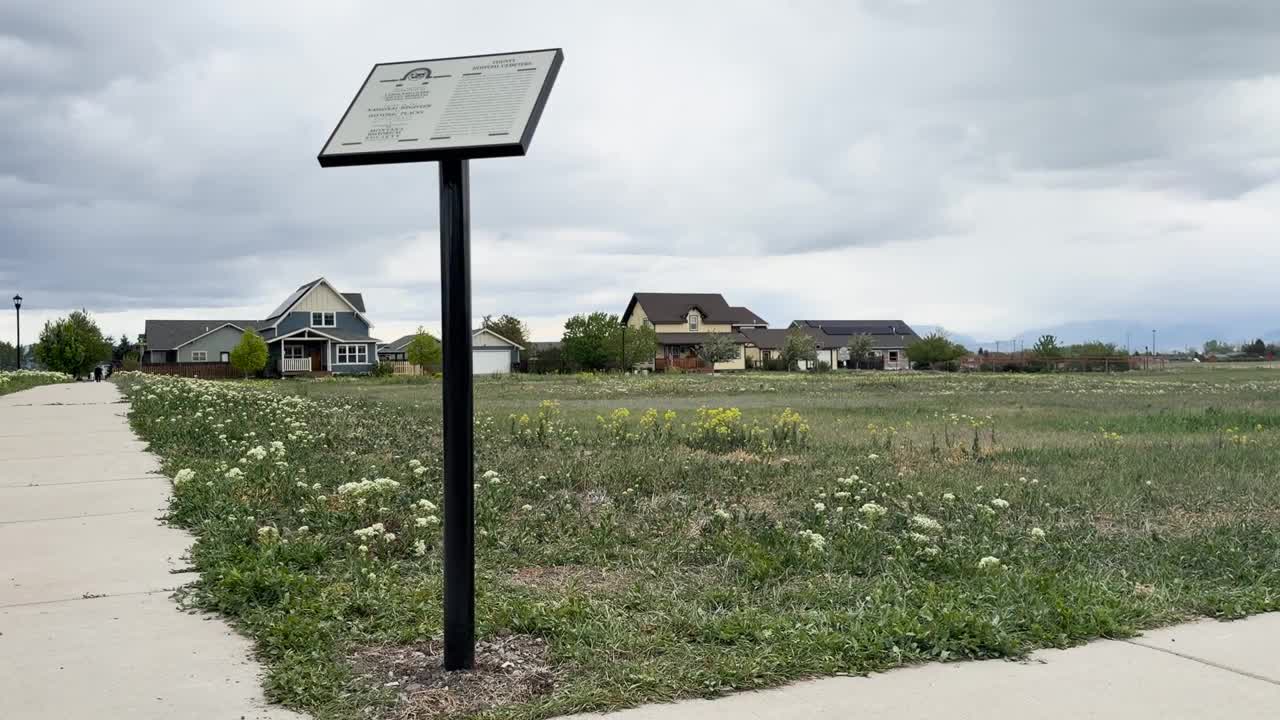
On North Benton Avenue, a square of grass in a Helena subdivision now carries a name. After more than a century without a marker, the Poor Farm cemetery was finally recognized with a plaque unveiled May 20, identifying the ground as the final resting place for more than 380 people.
The new marker changes the way the city’s early welfare history is read. Lewis and Clark County opened the poor farm in the late 1800s to house elderly people with no one to care for them, disabled people unable to work, and orphaned or abandoned children. The cemetery tied to that institution sat in plain sight for decades, with residents walking past a site that held hundreds of burials but no sign explaining what it was.

The burial ground had already been mapped and studied before the plaque went up. In October 2022, ground-penetrating radar helped define the cemetery’s boundaries at the site, which then had no signs, plaques or markers and was thought to contain as many as 400 burials. By May 2023, the number of people believed to be buried there was described as more than 300. A cadaver-dog search that year produced multiple alerts for human remains, underscoring that the ground was not just historically significant but a documented burial site.
The cemetery sits near the former poor farm site by the Florence Crittenton Cooney Campus, linking the marker to one of Lewis and Clark County’s earliest public welfare institutions. County historic preservation officer Pam Attardo had said recognition would help identify who is buried there, and residents of the surrounding subdivision had already expressed interest in having some kind of marker on the property.
The plaque now gives Helena something it had not offered the people buried there for generations: public acknowledgment. It also fixes a gap in the city’s memory, making visible the lives of residents whose deaths were folded into the county’s treatment of poverty, disability and abandonment. In a growing city where older places can disappear into new neighborhoods, the marker stands as a correction of the record and a reminder that Helena’s civic history includes the people who were most easily forgotten.
Know something we missed? Have a correction or additional information?
Submit a Tip