Home of Peace reveals Helena's early Jewish roots and frontier growth
Home of Peace Cemetery at 1201 11th Ave. still maps Helena's early Jewish merchants, families, and civic builders onto the city's rise from gold camp to capital.
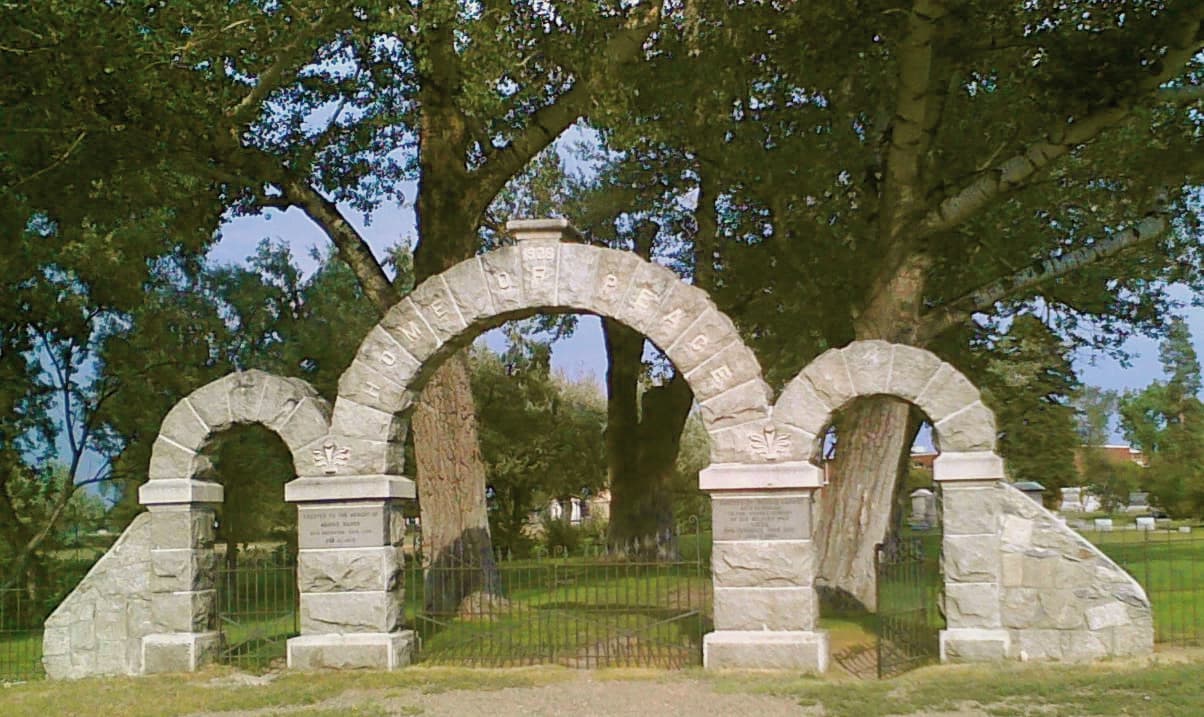
At 1201 11th Ave., Home of Peace Cemetery gives Helena a place where the city’s early Jewish community is still visible on the map. Founded in 1867 by the Hebrew Benevolent Society of Helena, it is the oldest cemetery in Helena and the oldest active Jewish cemetery in Montana. That makes it one of the clearest surviving landmarks for understanding how a gold-rush camp became a lasting capital city.
Start at Home of Peace
Home of Peace sits in Lewis and Clark County as more than a burial ground. Its stones record family lines, migration, faith, and the steady work of building a community after the first rush of miners moved on. A 2024 KPAX report identified it as the state capital’s only Jewish cemetery, which gives the site an added layer of local meaning for Helena today.
The cemetery also carries the dates that explain why Helena looks the way it does. The city was transformed by the 1864 gold strike at Last Chance Gulch, the boom that earned Helena the nickname “Queen City of the Rockies.” Helena was incorporated in 1881 and became Montana’s state capital in 1894, after statehood in 1889. Home of Peace sits inside that timeline, not beside it.
A cemetery that preserves Helena’s first community network
The Hebrew Benevolent Society of Helena formed on December 9, 1866, and the cemetery followed in 1867. That sequence matters because it shows organization coming before permanence: the city’s Jewish residents were not only passing through a mining camp, they were building institutions. Helena directories from 1867 already showed Jews as part of the city’s commercial life, which places merchants and tradespeople at the center of the town’s early growth.
The Montana History Portal’s record, “A Voice from the Rocky Mountains: Helena’s Pioneer Jewish Community, 1864-1899,” tracks that transition from frontier scramble to settled civic life. The date range captures the years when Helena moved from the first gold rush to incorporation and, eventually, to the statehouse. Home of Peace gives that arc a physical address instead of leaving it as a timeline in a book.
The National Register nomination for Home of Peace places it in Helena, Montana, and in Lewis and Clark County, which is another reminder that the cemetery belongs to the county’s public history, not only to one congregation. For descendants, local historians, and anyone tracing the city’s growth, it is a place where the county’s earliest social networks are still anchored in the ground.
What the markers can tell you
A walk through a historic cemetery works best when you know what to look for. At Home of Peace, the details can reveal how Helena’s Jewish residents balanced religious practice with frontier life, and how family memory survived in a town defined by extraction and movement.
Look for:
- Hebrew inscriptions that mark religious continuity and identity across distance.
- Family plots that show how merchants, parents, and children built rooted lives in a city that began as a camp.
- Stones and symbols that reflect Helena’s ethnic diversity, not just one story of mining and money.
- Dates tied to the 1867 founding of the cemetery and the 1866 formation of the Hebrew Benevolent Society, which place the site at the start of Helena’s civic consolidation.
Those details matter because Jewish burial grounds in American towns did more than hold the dead. They preserved religious practice, documented migration patterns, and signaled that a community had moved from arrival to permanence. In Helena, that permanence helped stabilize a city that had once depended on the churn of prospectors and freight traffic.
Temple Emanu-El extends the story beyond the cemetery
Home of Peace does not stand alone. Temple Emanu-El, built in 1891, offers a second landmark for reading Helena’s early Jewish roots. Intermountain Histories describes it as the first synagogue constructed between St. Paul and Portland and the oldest Jewish house of worship in Montana, which places Helena squarely inside a broader northern Rocky Mountain Jewish history.
The building’s more recent stewardship also matters. Montana Jewish Project sought to buy back Temple Emanu-El in 2021 and successfully purchased it in August 2022. That effort turned a historic building into an active act of preservation, showing that Helena’s Jewish heritage is not only being remembered, it is being maintained by people invested in the city’s future.
Montana Historical Society historian Ellen Baumler has said that researching the National Register nominations for Home of Peace Cemetery and Temple Emanu-El led her to a passionate interest in Montana’s early Jewish communities. That connection between the cemetery and the synagogue is the key to understanding Helena’s Jewish history as a living civic story, not a single preserved site.
How Helena’s boom became a city
The easiest version of Helena’s origin story is about gold, but the fuller story is about the people who stayed after the strike. The city drew residents with different languages, trades, and traditions, then depended on them to build the institutions that outlasted the boom. Merchants opened businesses, families formed neighborhoods, and civic leaders helped turn a mining camp into a seat of government.
That is why the 1894 capital decision matters in local history. Helena won the state capital election after competing with Great Falls, Boulder, Bozeman, Butte, Deer Lodge, and other Montana cities. By then, the city had already shown it could support the kind of settled civic life that a capital requires, including religious institutions, commercial networks, and the burial grounds that preserve a community’s memory.
Home of Peace makes that shift visible in one place. It shows that Helena was not built only by the rush for gold, but by the families and leaders who organized belief, commerce, and care for the long term. In that sense, the cemetery is one of the city’s most direct witnesses to how frontier growth became durable government and lasting community.
This article was produced by Prism’s automated news system from verified source data, official records, and press releases, then run through automated quality and moderation checks before publishing. The system is built and supervised by the people who set the standards it runs under. Read our full AI policy.
Did this article answer your question?