Lewis and Clark County explains how historic preservation works
Historic status in Helena can trigger a separate review, shape demolition and renovation costs, and open tax credits, grants, and local oversight for owners.

On Sept. 26, 2022, Helena’s Historic Preservation Officer recommended denial of a demolition, and Preserve Montana publicly backed that position. A demolition bid for a Helena building in a historic district does not stop with the owner.
Who decides what gets protected
Historic preservation in Helena and Lewis and Clark County runs through the Helena/Lewis & Clark County Historic Preservation Commission. The commission promotes preservation of historic and prehistoric sites, structures, objects, buildings, and districts. It also reviews development in historic districts and work that affects historic properties, then advises the city, county, planning board, zoning commission, and board of adjustment.
That local system is tied to the Certified Local Government program, a support program for local historic preservation funded by the National Park Service and managed by the Montana State Historical Society. The program links state and local governments with federal partners, provides technical preservation advice, and directs 10% of its federal funding to cities, towns, and counties committed to preservation.
The separate Lewis and Clark County Heritage Preservation and Tourism Development Council adds another layer. Its bylaws were adopted in April 2012, and the council has seven members serving three-year terms. Its role is to preserve the history and prehistory of Lewis and Clark County through artifacts, papers, stories, places, and images.
What counts as historic here
Helena has twelve designated historic districts and forty-two individually listed National Register of Historic Places properties. Beyond those named places, the city also recognizes many contributing buildings that help define older neighborhoods and commercial blocks.
These districts and properties recognize national, state, and local architectural, historical, social, and cultural values. They also create a sense of place, support heritage tourism, and can help unlock federal tax credits, local tax abatement, and rehabilitation grants. Helena’s code states that historic districts are not meant to hinder development but to create opportunity.
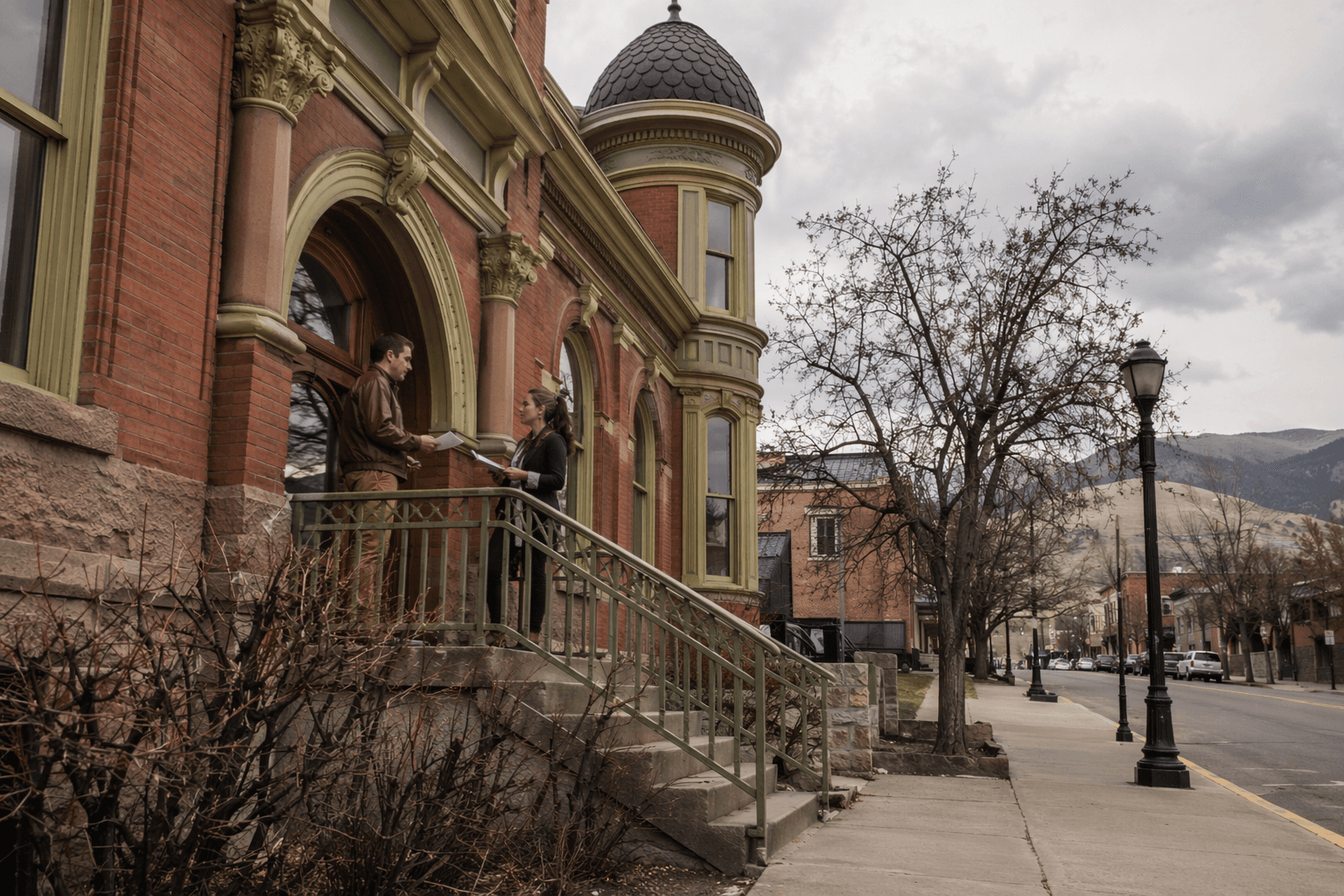
Helena’s demolition-review ordinance says officials weigh architectural, historical, social, and cultural values. A building can be ordinary in appearance and still matter because of its role in a block, a neighborhood, or the city’s social history.
The standards that guide the review
The commission uses both the Secretary’s Standards and local standards when it reviews work. Those local standards are not one-size-fits-all: Lewis and Clark County uses separate downtown and neighborhood preservation standards to interpret what the broader rules mean on the ground.
A project in Downtown Helena is not judged exactly the same way as a remodel in a neighborhood district. A façade change, an addition, new windows, or a demolition proposal can be treated differently depending on where the building sits and what district standards apply. Review turns on whether the change fits the district’s architectural and historical character.
Any structure listed on the National Register or located in a historic district goes through a separate application process and is reviewed by the Historic Preservation Officer. The preservation review can sit alongside, and sometimes ahead of, the normal building-permit path.
What this means for owners and developers
The city’s preservation rules affect money, timing, and reuse. If a property is in a historic district or is individually listed, the owner may face extra paperwork and a second review before demolition or major alteration moves forward. That can extend permit timelines, but it can also open financing tools that do not exist for ordinary buildings.

Helena’s ordinance points to federal tax credits, local tax abatement, and rehabilitation grants as incentives. Montana adds another layer through its historic preservation tax credit, which equals 25% of the federal credit for certified rehabilitations. The same rules that limit demolition can also lower the cost of a qualified restoration.
Direct preservation grants for private entities are rare, and tax credits have largely replaced direct construction funding. That shifts the practical math for homeowners and commercial developers. A project that looks expensive up front can become more viable if the rehabilitation is certified and the credit stack is available, especially in older commercial blocks where reuse can be cheaper than full replacement.
Where residents can step in
The clearest public opening comes when a project reaches the Historic Preservation Officer, the preservation commission, or the city and county boards that receive the commission’s advice. Pam Attardo has served as City-County Historic Preservation Officer since 2014, and the officer can present a recommendation directly to elected officials when demolition is under review.
At the Helena City Commission meeting, a formal recommendation to deny a demolition was put before the commission, and Preserve Montana publicly urged denial as well. At that stage, neighbors, preservation advocates, and business owners can see whether a proposal is likely to clear the preservation hurdle or be sent back for redesign.
The Heritage Preservation and Tourism Development Council links preservation to tourism and education through artifacts, stories, places, and images.
This article was produced by Prism’s automated news system from verified source data, official records, and press releases, then run through automated quality and moderation checks before publishing. The system is built and supervised by the people who set the standards it runs under. Read our full AI policy.
Did this article answer your question?