Lewis & Clark Library serves countywide access, programs, and community needs
Lewis & Clark Library reaches every corner of the county, cutting household costs while linking branches, digital borrowing, outreach, and public space.
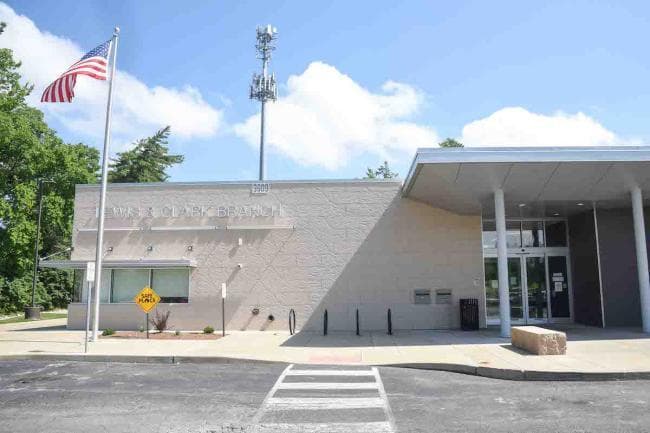
Countywide access that saves money
Lewis & Clark Library is one of the few county institutions that reaches Helena, East Helena, Lincoln, Augusta, and the outlying places in between without asking residents to pay twice for the same tools. From books and digital media to mobile outreach and public programming, the system is built to keep everyday costs down and keep access close to home.

That matters in Lewis and Clark County because the library is not just a place to check out a novel. It is a practical resource for families, students, older adults, job seekers, and anyone who needs information, a quiet public setting, or a trusted place to keep learning without buying every service outright.
A network built for a spread-out county
The library’s website lists branches and services across the county, including Augusta, East Helena, Helena, Library Administration, and Lincoln. The site also shows a June 2026 calendar, a small but important sign that the system is active day to day, not frozen in a single role or limited to one building.
That broad footprint matters because Lewis and Clark County is not centered entirely around one downtown. Residents outside Helena can still reach a local library point, which reduces the friction of travel for children doing homework, adults researching a topic, or anyone trying to stay connected to community life. In a county this size, a branch in the right place is often the difference between using a service and going without it.
The reach extends beyond the branches themselves. The library says its bookmobile serves long-term care and assisted living facilities, schools, and outlying county communities. The strategic plan also points to outreach through a Bookmobile and Book Bike, which shows a system designed to meet people where they are, not only where the shelves are.
What residents use it for
The library’s value is most visible in the everyday costs it helps avoid. Ebooks, audiobooks, movies, digital magazines, reading programs, and catalog access all reduce the need to buy or subscribe individually. For households stretching a budget, that can mean one less retail purchase. For people working from home, searching for jobs, or researching a project, it can mean one less bill for information that should be easy to reach.
The digital side is broad. Residents can use Libby for digital magazines, Beanstack for reading challenges, the Montana Shared Catalog mobile app, and Wowbrary for weekly new-item alerts. Those tools extend the library’s reach well past the front desk and into daily routines, whether someone is checking out a title from a phone or keeping up with new arrivals from home.
The FY2025 budget also describes the library as an accessible community gathering space and a center of discovery for all ages. That language matters because it points to more than book lending. It reflects a public institution serving people who need a place to meet, learn, and spend time without a purchase attached.
More than 150 years of local history
The current system sits on a deep historical foundation. Lewis & Clark Library says it has been serving the county for more than 150 years, and its history page says Helena’s library was the first library in the state and opened before Montana became a territory. It began as a subscription library started by Colonel Wilbur F. Sanders, J.W. Whitlach, and Ben Stickner Jr.
That early library was destroyed by fire in 1874, but it was rebuilt. Then, in 1886, Helena citizens voted to create a free public library, which opened on August 7, 1886, in the Murphy Block. The Helena Public Library was renamed the Lewis & Clark Library in the mid-1970s, when it became a joint city-county library. East Helena was added as a branch in 2001, joining the earlier branches in Lincoln and Augusta.
That history explains why the library still functions as both a civic institution and a countywide service network. It grew out of Helena, but it now serves a much wider public than one city block ever could.
Who governs it, and why that matters
The Lewis & Clark County page says the City-County Library Board was created by interlocal agreement under Helena City Code and Montana law. The board has five members, two city appointees, two county appointees, and one joint appointee, and it is responsible for hiring staff and setting policy.
That structure matters because the library is not run as a symbolic amenity. Its direction is shaped through formal city and county oversight, which gives residents a stake in decisions about staff, branches, services, and future investments. In practical terms, the board helps determine whether the library remains broad and accessible or becomes harder to reach.
What the strategic plan says about demand
The 2023-2028 Strategic Plan shows how much local input the library took before setting its next phase. The previous plan expired at the end of 2022, and more than 500 community members and local leaders contributed to the new one. That level of input suggests the library is responding to real demand, not guessing at it.
The plan names four priorities: Library Facilities, Collections and Programs, Marketing and Public Awareness, and Staff Engagement. Those goals line up with what county residents actually use. Facilities determine where people can go. Collections and programs determine what they can do there. Outreach and awareness determine whether residents know what exists. Staff engagement determines whether the service stays dependable.
Budget pressure, staffing, and the next phase of service
The FY2025 budget, approved Aug. 20, 2024, gives the clearest picture of how much labor the system requires. Personnel expenses made up 74% of the overall budget after a 14.9% increase in personnel costs, including a 3.5% cost-of-living increase and a pay-matrix adjustment. That is a reminder that libraries are not passive storage spaces. They are people-intensive public services.
Director John Finn wrote that reading, books, and lifelong learning remain the focus, but he also emphasized the library’s role as a community gathering space. The budget says the library provides services in person, online, and virtually, and that it received its 18th annual NEA grant for The Big Read. That combination of local delivery and outside recognition shows a system that is trying to widen access without losing its county focus.
The February 2026 board memo adds another layer of forward motion. Finn reported that a new Bookmobile would be delivered in April and dedicated on May 21, and that the board transferred $152,411.24 from retained earnings to the Depreciation Reserve Fund. Trustee Judy Meadows also joined staff and architects on a design tour of six Portland-area libraries to gather ideas for a new East Helena library space. In one discussion, Finn described the library as the city’s “premier Third Space,” a phrase that captures how central the institution has become to daily public life.
If access ever shrank, county residents would lose more than a stack of books. They would lose local branches, digital borrowing, outreach to schools and care facilities, public programming, and a countywide institution that helps lower household costs while keeping information within reach. In Lewis and Clark County, that is not a side service. It is part of how the community stays connected.
This article was produced by Prism’s automated news system from verified source data, official records, and press releases, then run through automated quality and moderation checks before publishing. The system is built and supervised by the people who set the standards it runs under. Read our full AI policy.
Did this article answer your question?