Montana Supreme Court Orders Lower Court to Hear Media Requests on Sealed Murder Records
Montana's highest court ruled a five-member panel found Judge Jeffrey Dahood fundamentally misunderstood the law by blocking media from the sealed Anaconda murder case.

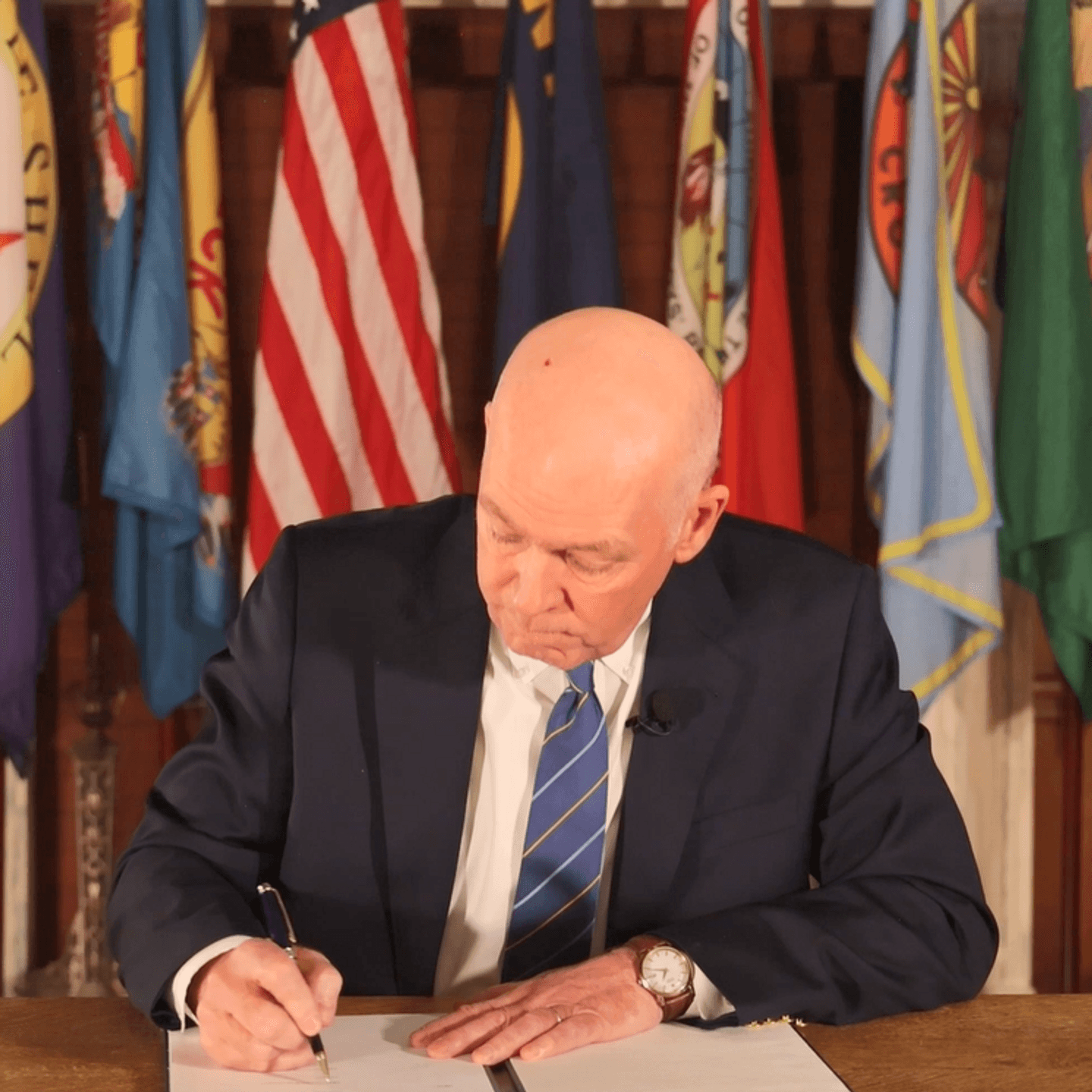
A five-member Montana Supreme Court panel ruled Tuesday that a lower court must allow news outlets to argue for public access to documents in the murder case against Michael Paul Brown, charged with shooting and killing four people in Anaconda last summer. Chief Justice Cory Swanson signed the ruling, with the high court stating that District Court Judge Jeffrey Dahood had fundamentally misunderstood the law.
On Aug. 1, Brown walked into The Owl Bar in Anaconda and opened fire, killing four people before fleeing the scene, according to law enforcement. The victims were Nancy Lauretta Kelley, 64; Daniel Edwin Baillie, 59; David Allen Leach, 70; and Tony Wayne Palm, 74. Immediately following their deaths, Brown hid in the mountains outside city limits for a week before being apprehended. Charges against him include four counts of deliberate homicide, as well as arson, theft and intentionally evading law enforcement.
While Brown was still at large, at the request of Anaconda-Deer Lodge County Attorney Morgan Smith, Judge Dahood sealed all legal documents in the court case, a move legal experts said was unusual. While the seal order was modified in late August to release limited information, certain documents remain unavailable to members of the press and the public, including records related to evidentiary materials.
The coalition of media seeking access comprises The Daily Montanan, Montana Free Press, The Montana Newspaper Association, Montana Broadcasters Association, Lee Enterprises, Inc., which owns and operates five of the state's largest print newspapers, and the Montana Freedom of Information Coalition. The coalition is represented by the law firm Goetz, Geddes & Gardner. Attorneys for the media argued in a court brief that Montana law codifies an "unconditional right to participate in criminal proceedings before a court seals records."
When news outlets asked to intervene in the case in January, Dahood rejected the request, saying the media did not show why they had the authority to get involved. The media organizations had sought to join the case in district court in a limited capacity, asking the court to vacate its August order modifying which records remained sealed. After the denial, the coalition went directly to the state Supreme Court asking it to exercise supervisory control and reverse the order.
Smith, in filings opposing full unsealing, framed the closed records as essential to a fair trial. "Many of the facts and evidence within the State's possession have not been disseminated publicly and will be crucial to the State's prosecution of this matter," Smith wrote. "The details surrounding the commission of the crimes alleged in this case, should they be subject to public dissemination, would greatly prejudice the prospective jury pool and taint the ability to impanel an impartial jury."
Darrell Ehrlick, editor of the Daily Montanan, wrote that while courts have always been able to keep certain parts of court cases out of public view, such as juvenile criminal cases and some medical records, sealing off entire criminal cases sets a "dangerous precedent." Jim Strauss, president of the Montana Newspaper Association and part of the legal effort, put the stakes in statutory terms. "The press is statutorily entitled to be heard before documents are sealed," Strauss said.
Brown's trial, previously scheduled for January, was rescheduled in mid-December because Brown "lacks fitness to proceed," according to a joint motion from the state and defense accompanied by a psychologist's assessment. Brown is currently undergoing a 90-day psychological evaluation with the Montana Department of Public Health and Human Services that will conclude in March.
On December 16, Brown was found unfit to stand trial and was subsequently placed in a mental health facility and put into the custody of the director of the Montana Department of Health and Human Services for examination. The Supreme Court's order now sends the access question back to Dahood's court in Deer Lodge County, where the media coalition will finally get its formal opportunity to be heard.
This article was produced by Prism’s automated news system from verified source data, official records, and press releases, then run through automated quality and moderation checks before publishing. The system is built and supervised by the people who set the standards it runs under. Read our full AI policy.
Did this article answer your question?