County outlines Trinity Drive safety and ADA overhaul for 2026
Trinity Drive is set for a $6.75 million reset, with new medians, a multiuse path and a flashing crosswalk that will reshape trips past Ashley Pond Park and the Justice Center.
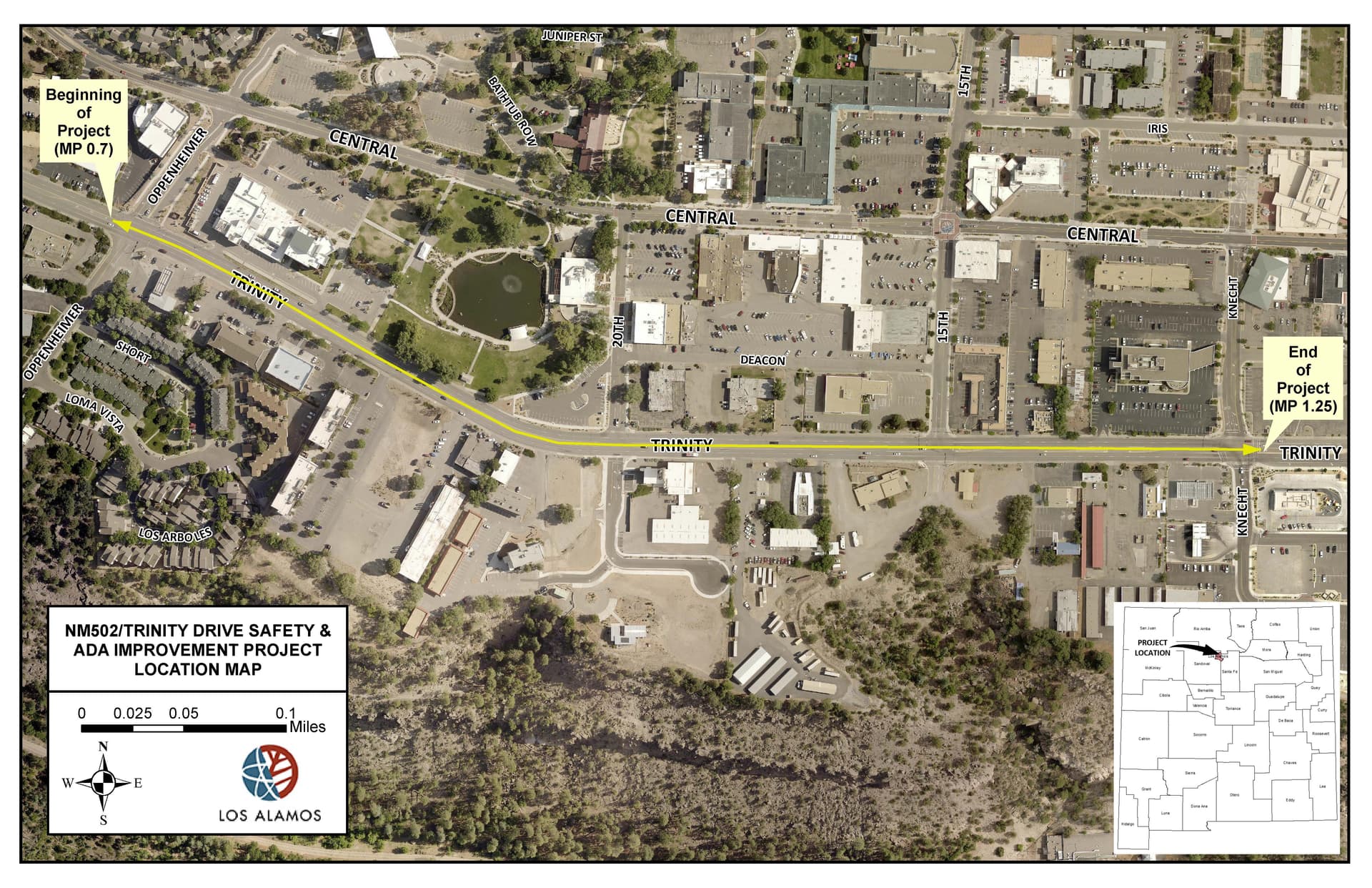
Trinity Drive drivers will see a tighter, more directed street between Oppenheimer Drive and Knecht Street, with fewer places to weave, clearer turn control and new crossings built into one of Los Alamos County’s busiest corridors. In a short May 27 video, Councilor David Reagor discussed the hybrid road diet feature that will change how people reach Ashley Pond Park, the Justice Center, nearby businesses and transit stops while construction moves ahead through the end of the year.
The county says the Trinity Drive Safety and ADA Improvements project is valued at $6.75 million, received utility-board approval May 6 and council approval May 19, and is scheduled to start in June and finish by December 31, 2026. The work includes an 8-foot multiuse path along the south side of Ashley Pond Park, an NMDOT park-and-ride layover pullout near the Justice Center, medians to separate traffic and manage turns, a rectangular rapid flashing beacon at Trinity and 20th Street, and replacement of water, gas and electrical lines. The county says phasing is being planned to limit disruption to businesses and events, but the corridor’s role as a civic and commercial spine means residents should expect friction as lanes and access points shift.
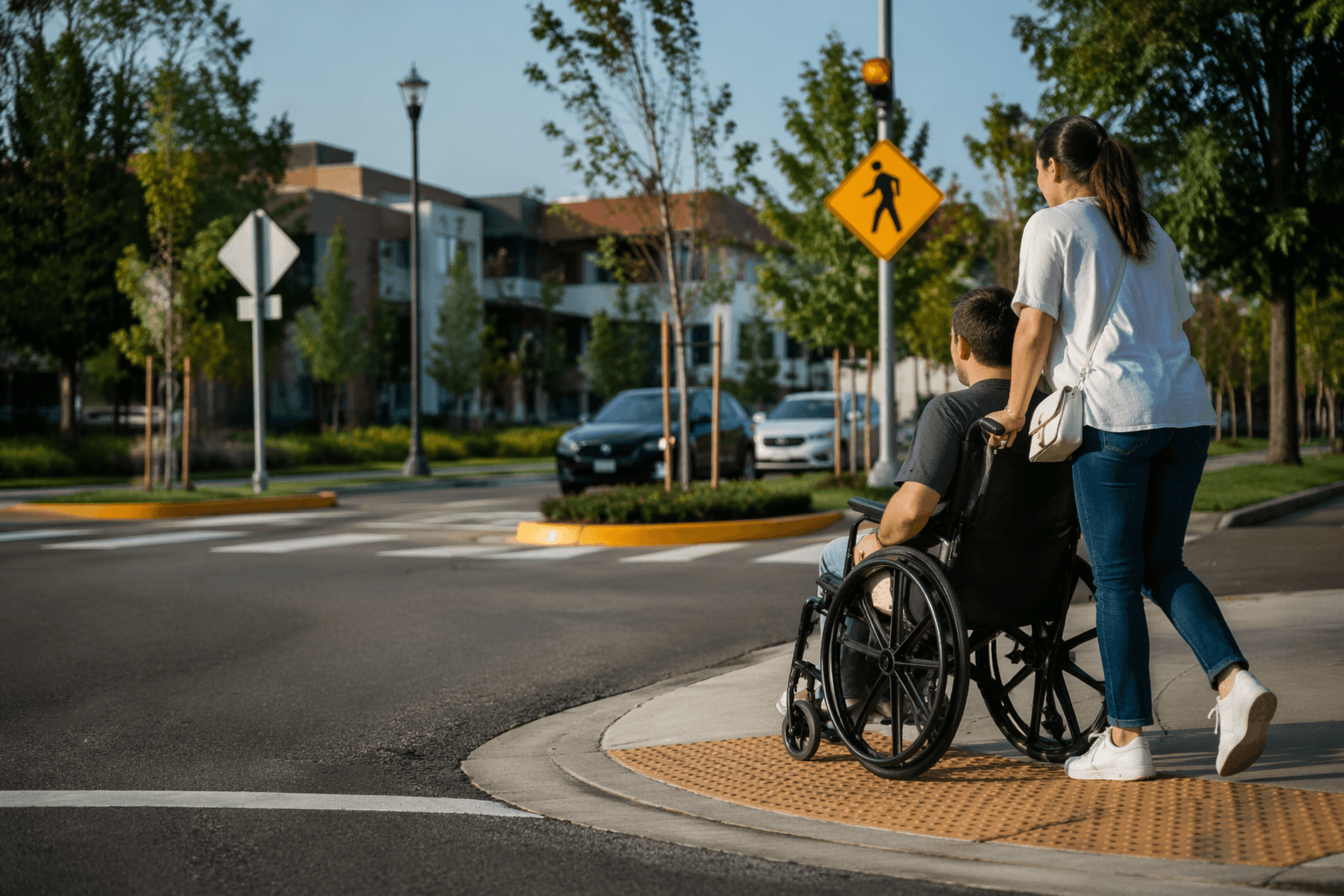
Physically, the hybrid design is meant to narrow the street’s current feel and organize movements that now compete for the same pavement. The September 2024 concept called for one westbound lane, two eastbound lanes and a two-way left-turn lane, a change from the corridor’s existing configuration, which the Transportation Board described in June 2024 as four 11-foot lanes and a continuous left-turn lane in part of the route. For drivers, that means fewer broad openings for passing and turning, more defined places to make lefts and more separation between through traffic and turning traffic. For people walking or biking, it means a new path, a better-marked crossing at 20th Street and a corridor that is intended to be easier to cross than the current setup.
The county has been building toward this for years. A 2016 road safety audit started the process, and federal Highway Safety Improvement Program money is helping pay for it. In June 2024, the Transportation Board said the corridor had 54 crashes from 2014 to 2020, with Knecht Street identified as a hotspot. It also rejected widening for bike lanes because the state did not have the needed right-of-way, and dropped roundabouts over visibility concerns. That leaves the hybrid road diet as the county’s main answer to a street that already carries cars, pedestrians, cyclists, transit riders and business traffic through a dense part of town.
The debate is not new. Los Alamos County put the first Trinity road diet in place in June 2020 on the Diamond-to-Oppenheimer segment. By July 2023, staff said traffic had surged during the Canyon Road closure, then settled back down, with no prolonged consistent congestion and crash counts stabilizing after an earlier reduction. The 2021 Los Alamos Downtown Master Plan pushed the same larger goal: make it possible to park once and walk. Trinity Drive now enters the next test of that idea.
This article was produced by Prism’s automated news system from verified source data, official records, and press releases, then run through automated quality and moderation checks before publishing. The system is built and supervised by the people who set the standards it runs under. Read our full AI policy.
Did this article answer your question?