DOE, N3B Request Hearings After NMED Issues LANL Cleanup Compliance Orders
DOE and cleanup contractor N3B are seeking hearings after NMED issued compliance orders against LANL legacy waste cleanup, even as the lab hit all 11 FY2025 milestones.
The U.S. Department of Energy's Environmental Management Los Alamos Field Office and legacy cleanup contractor Newport News Nuclear BWXT–Los Alamos, LLC have requested hearings after the New Mexico Environment Department issued compliance orders against them, escalating a regulatory dispute over the pace of cleanup at Los Alamos National Laboratory.
The hearing requests came as EM-LA and NMED also held their Annual Public Meeting for Cleanup of LANL Legacy Waste in Los Alamos, where officials presented a mixed picture: solid milestone performance on paper, yet a state regulator demanding faster action after what it characterizes as years of missed deadlines.
Brian Harcek, EM-LA's director of the Office of Quality and Regulatory Compliance and the agency's designated manager for consent order compliance, told attendees that all 11 milestones for fiscal year 2025 were completed on or ahead of schedule, and that EM-LA submitted 83 additional consent order deliverables to NMED during that same period. For fiscal year 2026, EM-LA and NMED agreed to 10 milestones covering soil investigation and remediation, the hexavalent chromium plume, and material disposal areas. EM-LA had already completed one of those milestones before the meeting concluded.
Caitlin Martinez, a water resource professional with NMED, provided updates on the revised 2016 Compliance Order on Consent and explained how LANL legacy cleanup is divided into Class A and Class B campaigns. Class A campaigns are those in which EM-LA and NMED have agreed that completion dates can be established; they operate on five-year schedules.
The compliance orders that triggered the hearing requests have not been made public, and the specific violations or demands they contain remain undisclosed. What is clear is that NMED is pressing harder. As reported in February, "after years of missed deadlines, New Mexico is demanding that the Energy Department expedite the cleanup of so-called legacy nuclear and hazardous waste at the Los Alamos National Laboratory, the birthplace of the atomic bomb."
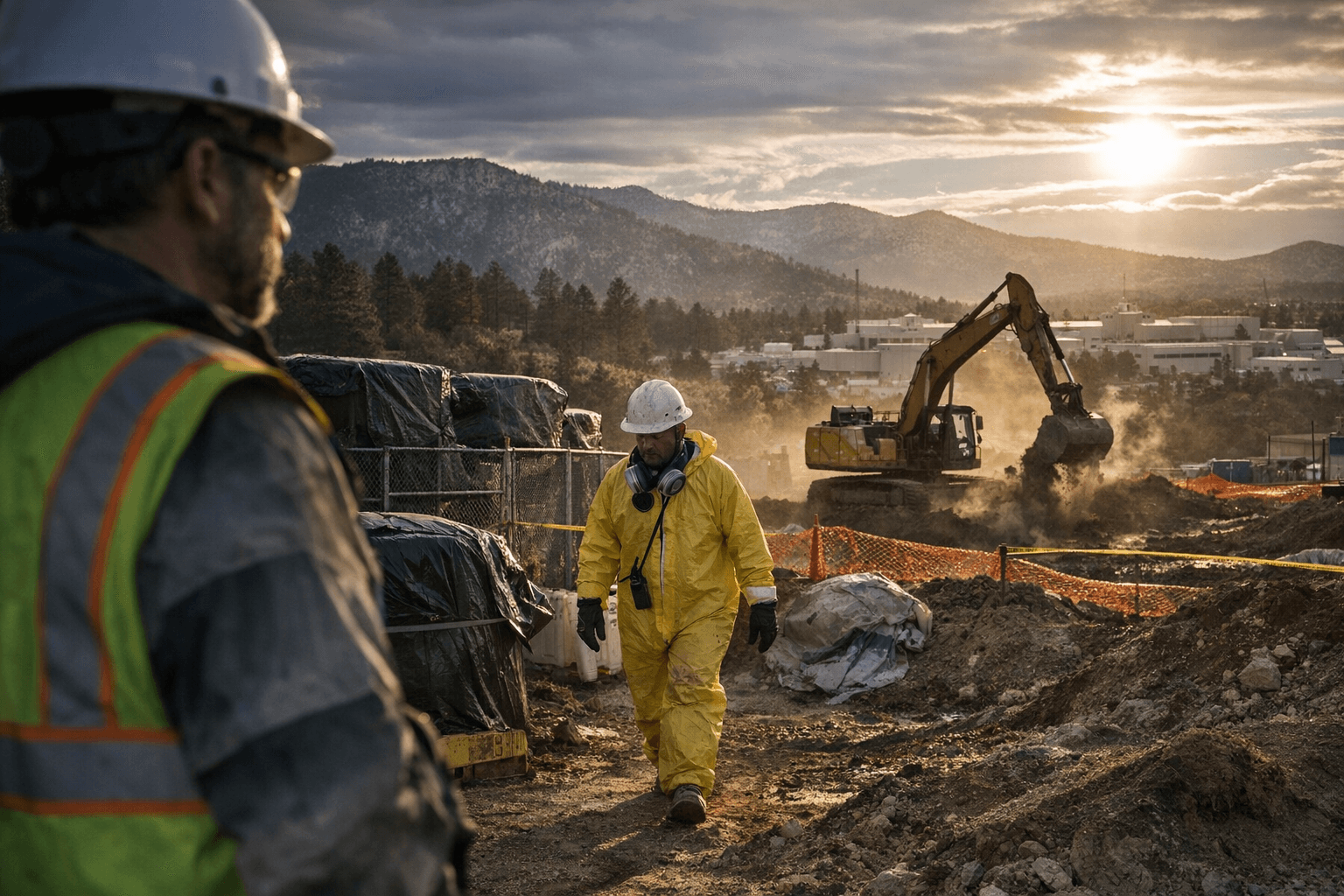
At the center of one active remediation effort is a hexavalent chromium plume in Mortandad Canyon. N3B crews used angled drilling to install a new monitoring well, designated R-71, on the plume's northwestern boundary, a technique chosen specifically to safeguard water resources and preserve nearby pueblos' cultural sites. The chromium reached the subsurface because LANL flushed it into Sandia Canyon between 1956 and 1972, when the lab used it as a corrosion inhibitor in the cooling towers of a non-nuclear power plant. The practice was standard across American industry during that era.
The regulatory friction is not new. Critics have long argued that the June 2016 revised Consent Order, signed by NMED, DOE, and then-contractor Los Alamos National Security, LLC, was "an unfortunate step backwards in compelling comprehensive, genuine cleanup at the Lab" compared to the original 2005 Consent Order that New Mexico regulators defended successfully against DOE lawsuits under the Richardson Administration.
DOE claimed as far back as 2018 that LANL cleanup was roughly half complete. The NMED compliance orders, and the hearing requests now filed against them, suggest that assessment has not settled the underlying disagreement about how much work remains and how quickly it must proceed.
EM-LA said it will provide updates on FY 2026 milestone status and broader legacy cleanup progress at public engagements throughout the year, with schedules available on the EM-LA website.
This article was produced by Prism’s automated news system from verified source data, official records, and press releases, then run through automated quality and moderation checks before publishing. The system is built and supervised by the people who set the standards it runs under. Read our full AI policy.
Did this article answer your question?