Fire, Forests and Jemez wildfire history topic of Los Alamos talk
A free talk at the Los Alamos Nature Center will trace how fire has shaped the Jemez for centuries and why that history still drives evacuation planning here.
Wildfire is not just a seasonal threat in Los Alamos County. It is a long-running force that has already forced evacuations, reshaped forests and changed the way the community plans for the next extreme fire season.
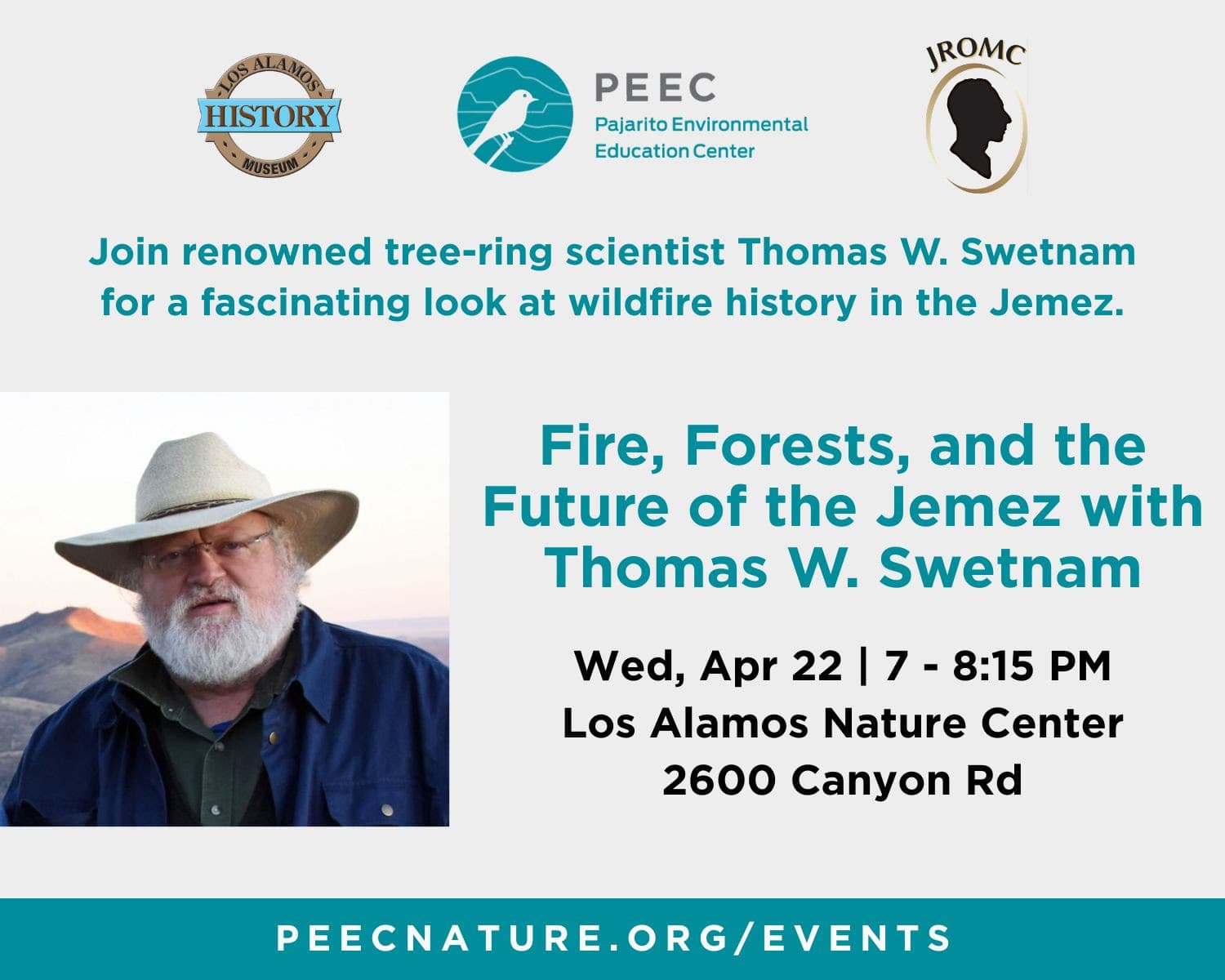
That larger picture will be the focus of Fire, Forests, and the Future of the Jemez, a free public presentation set for 7 to 8:15 p.m. Wednesday, April 22, at the Los Alamos Nature Center Planetarium. The program is being hosted by the Pajarito Environmental Education Center, the Los Alamos History Museum and the J. Robert Oppenheimer Memorial Committee, a combination that signals the talk will connect science, history and civic risk, not just deliver a lecture.
The featured speaker, Thomas W. Swetnam, is identified in event materials as Regents Professor and Director Emeritus of the University of Arizona Laboratory of Tree-Ring Research. He studied at the University of New Mexico and the University of Arizona and has used tree rings to reconstruct hundreds of years of climate and fire history. His work has focused on land use and forest fire ecology across the western United States, Mexico, South America and Siberia. Event materials also note that he has testified to the U.S. Congress and served on advisory boards, including the first Board of Trustees of the Valles Caldera National Preserve.
The Los Alamos County angle is immediate. The county’s updated Community Wildfire Protection Plan was first approved in 2009, updated in 2016 and updated again in 2022. Its goals are straightforward: reduce the threat of catastrophic wildfire, protect lives and infrastructure, and promote ecosystem health. Those goals are rooted in lived experience here, especially the 2000 Cerro Grande Fire, the 2013 Thompson Ridge Fire and the 2022 Cerro Pelado Fire.
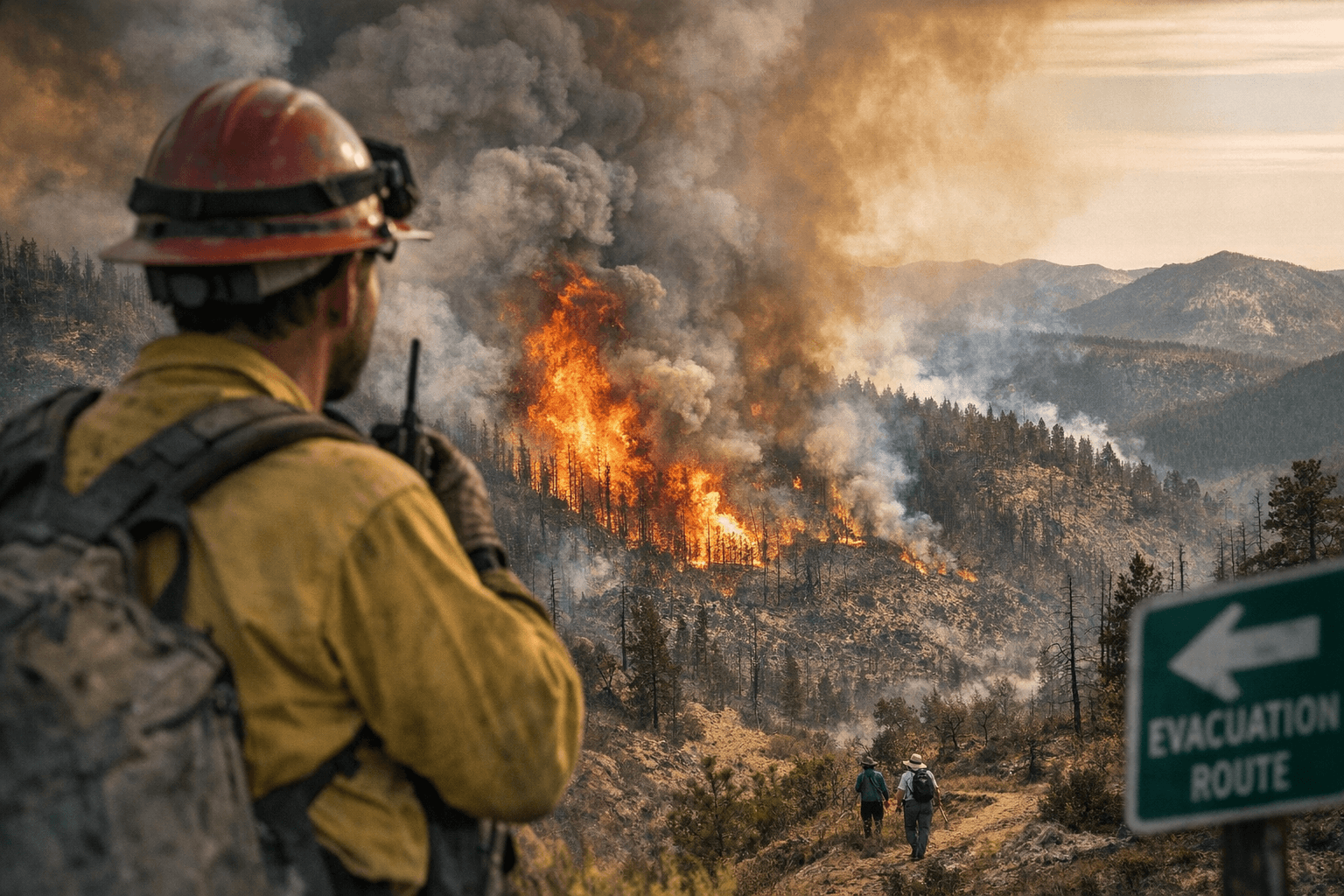
Cerro Grande remains the most searing example. It began on May 4, 2000, as a prescribed burn that escaped control, forced the evacuation of Los Alamos and White Rock, burned more than 47,000 acres and destroyed 235 structures. It also affected Bandelier National Monument, Los Alamos National Laboratory and nearby Pueblo lands. More than a decade later, the 2011 Las Conchas Fire burned 156,000 acres in the Jemez Mountains and prompted another evacuation of Los Alamos.
The historical arc only sharpens the question Swetnam will address. The event will highlight the relationship between the Jemez forests and the Hemish, or Jemez Pueblo, along with other Indigenous communities that have lived in and cared for these lands for generations. It will also come against the backdrop of a broader restoration landscape, where the Southwest Jemez Mountains collaborative area spans about 210,000 acres across the upper Jemez River watershed, including about 110,000 acres of Santa Fe National Forest and 86,000 acres in Valles Caldera National Preserve.
For Los Alamos, the lesson is not abstract. The future of the Jemez is tied to wildfire danger at home, and the next severe season will be shaped by decisions already underway about forests, fuel and preparedness.
This article was produced by Prism’s automated news system from verified source data, official records, and press releases, then run through automated quality and moderation checks before publishing. The system is built and supervised by the people who set the standards it runs under. Read our full AI policy.
Did this article answer your question?