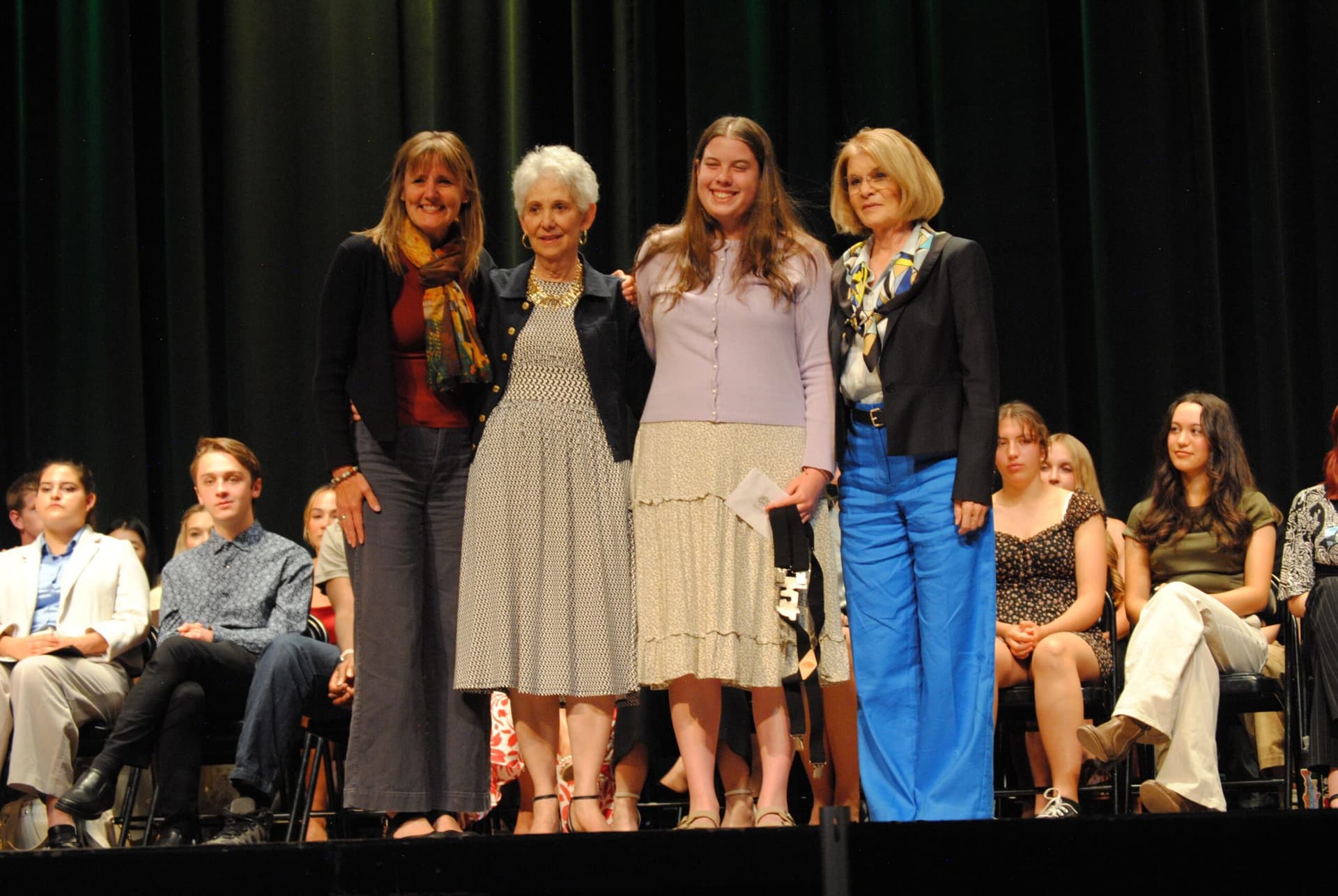
LAHS Astronomy Club Students to Lead Planetarium Programs at Nature Center
LAHS students Lydia Davis and Gavin Bent will front two original public programs at PEEC's 30-foot dome planetarium, tackling asteroid threats and a vanishing night sky.
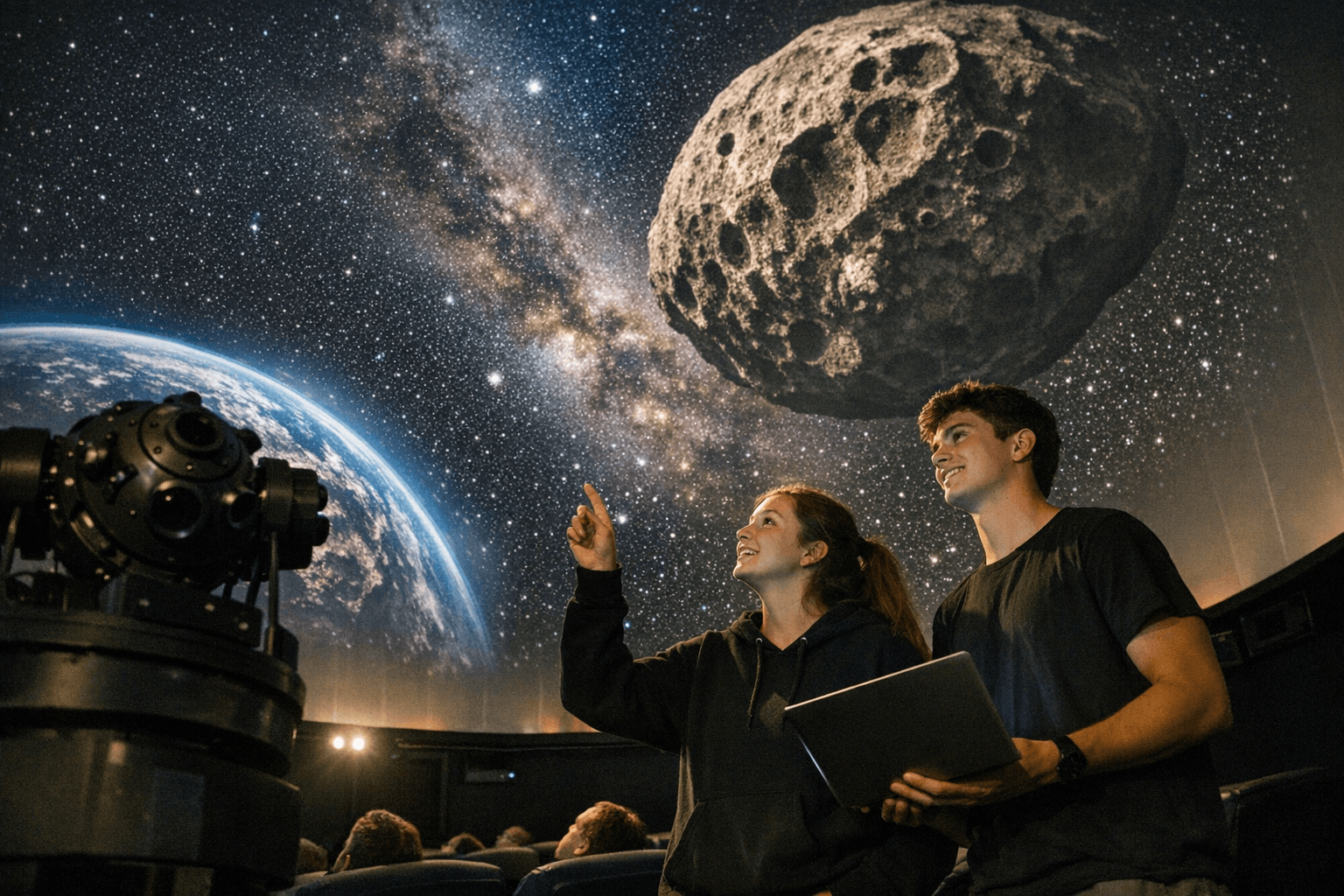
Lydia Davis and Gavin Bent are about to do what almost no high school student gets a chance to: take the presenter's seat inside a professional 30-foot digital dome and guide a paying public audience through the universe. Both are members of the Los Alamos High School Astronomy Club, and this month they are running the show at the Pajarito Environmental Education Center's Nature Center Planetarium.
Davis leads the first program, "Planetary Defense: What Happens When an Asteroid Hits Earth?," on Friday, April 10, from 7 to 8 p.m. Bent follows on April 17 with "Light Pollution: How We Lost the Night Sky." Both programs are held at the Los Alamos Nature Center Planetarium, 2600 Canyon Rd., with doors opening at 6:45. Each runs a full hour.
The two programs are the students' own work. Club members developed the content, wrote the scripts, and will deliver the narration live using the Nature Center's Nightshade dome-projection software, the same system PEEC uses for its regular programming. For the April 10 session, Davis frames planetary defense in evolutionary terms, asking audiences to reckon with the same forces that erased the dinosaurs and consider what a prepared civilization would look like. Bent's April 17 program approaches a quieter but equally consequential loss: a century of artificial illumination that has, in the club's own description, turned "a night sky that once inspired into a dull, gray mass," with measurable ripple effects on ecosystems, economies, and scientific observation.
That content, projected across a 50-seat dome, lands differently than a classroom presentation. The PEEC planetarium's full-sphere visuals put asteroid trajectories and light-pollution maps overhead and around the audience simultaneously, which is part of why the format suits the subject matter these students chose.
For families considering either evening, PEEC notes that planetarium programs are generally not suitable for children under 5. Both student-led programs are aimed squarely at elementary and middle school visitors, who are an older and more curious target than the audiences for many of PEEC's standard evening shows, which tend to run toward adult learners and feature PEEC-staff educators or invited guest scientists presenting professionally produced content. These April programs are closer to original research presentations: Davis and Bent are accountable to material they built themselves, in front of a live audience with no script safety net.
Admission is $8 for adults, $6 for children, and $20 for a family pass. Astronomy Club members attend free, as do anyone with a valid PEEC credit or voucher.
PEEC described the events as part of its "ongoing commitment to supporting youth engagement in science and providing platforms for young people to share their knowledge, creativity, and enthusiasm with the broader community." In Los Alamos, where the regional economy and identity are bound up in applied science, the clearest measure of that commitment is giving two high school students a dome and an audience and asking them to fill both.
This article was produced by Prism’s automated news system from verified source data, official records, and press releases, then run through automated quality and moderation checks before publishing. The system is built and supervised by the people who set the standards it runs under. Read our full AI policy.
Did this article answer your question?