LANL historian to discuss Los Alamos in the Cold War era
Alan B. Carr traced Los Alamos’s late Cold War years for a local veterans audience, tying LANSCE’s rise to the Lab’s changing mission.

Alan B. Carr opened a rare public window into Los Alamos history Tuesday, using a Military Order of the World Wars meeting to revisit the Lab’s Cold War years from 1970 to 1992, a period that still shapes how the community understands itself. His talk, “Winning the Cold War: Los Alamos from 1970 to 1992,” put the Lab’s evolution in front of an audience steeped in military history, national service and the town’s long-running connection to nuclear weapons stewardship.
The timing of the discussion mattered in a town where the Laboratory and the county remain tightly linked. LANL’s own history places the period Carr examined under three directors: Harold M. Agnew from 1970 to 1979, Donald M. Kerr from 1979 to 1985 and Siegfried S. Hecker from 1985 to 1997. That span covered the closing years of the Cold War, when Los Alamos was no longer just the wartime lab of its origin story, but an increasingly multidisciplinary research institution with responsibilities that extended well beyond weapons design.
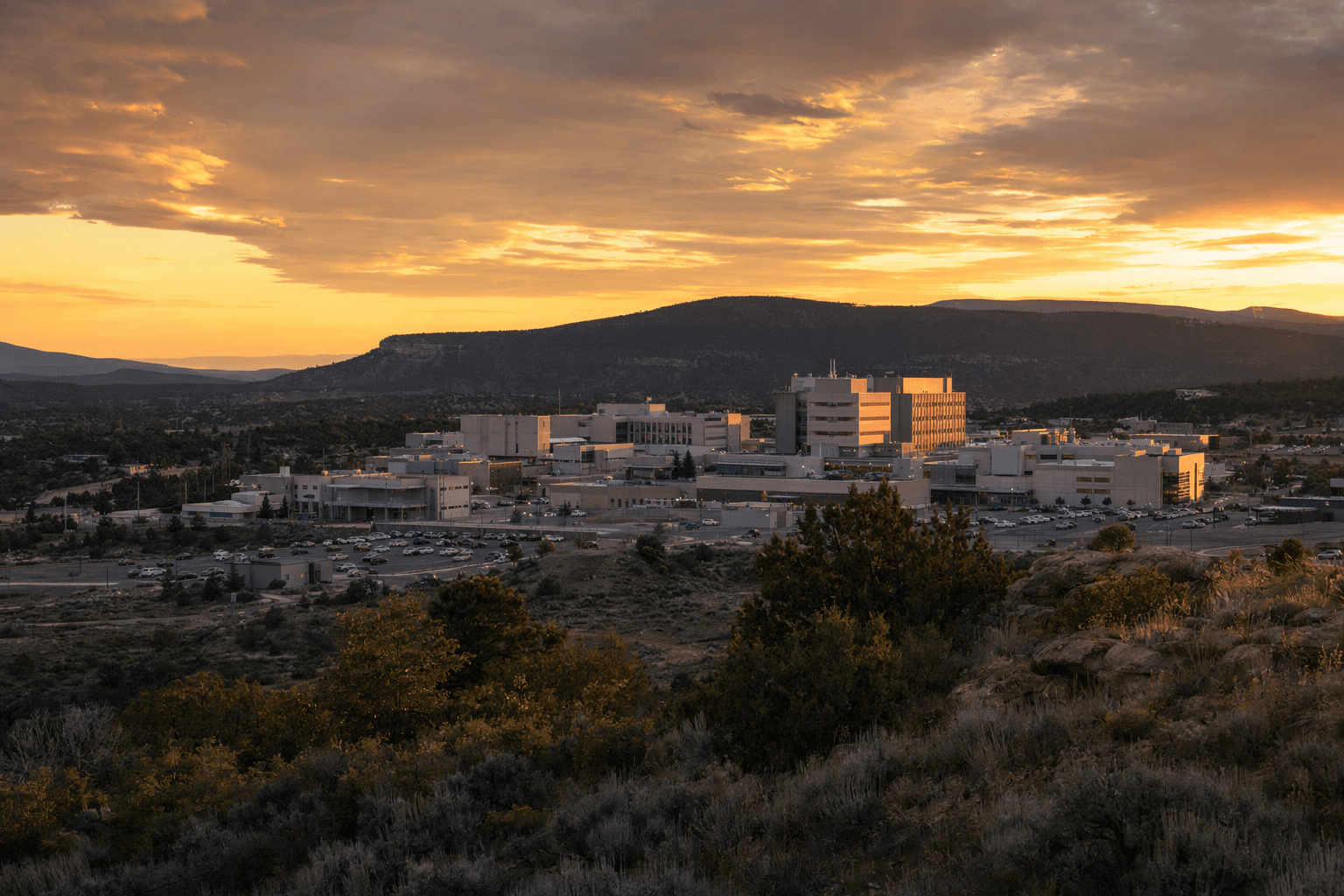
Carr’s presentation also pointed to the Lab’s growing scientific footprint. LANL says LANSCE began operating in 1972, and Carr has described it as the Lab’s major experimental science facility since then. That detail gives the Cold War story a local, physical anchor, not just in policy and strategy, but in the machines and laboratories that made Los Alamos a national center for both defense work and basic research.
Carr brought a historian’s credentials to the discussion. LANL says he joined the laboratory in 2003 after completing graduate work in history at Texas Tech University, and his work has focused on preserving and interpreting the Lab’s legacy through archives, talks and publications. The Military Order of the World Wars, founded in 1919, describes itself as a Congressionally chartered patriotic, nonpartisan veterans service organization, a setting that fit a talk centered on public memory, military service and the role Los Alamos played as the Cold War ended.
For Los Alamos residents, the value of a talk like Carr’s lies in the overlap between civic identity and institutional history. The same Lab that once defined the town’s secrecy and national mission also built the infrastructure, scientific culture and historical record that still drive local debate over how Los Alamos tells its own story.
This article was produced by Prism’s automated news system from verified source data, official records, and press releases, then run through automated quality and moderation checks before publishing. The system is built and supervised by the people who set the standards it runs under. Read our full AI policy.
Did this article answer your question?