Los Alamos County schedules Jan. 27 closed session on litigation, property
Los Alamos County Council held a closed session at 4 p.m. Jan. 27 to discuss threatened or pending litigation and real property matters, actions that may affect local land use and finances.
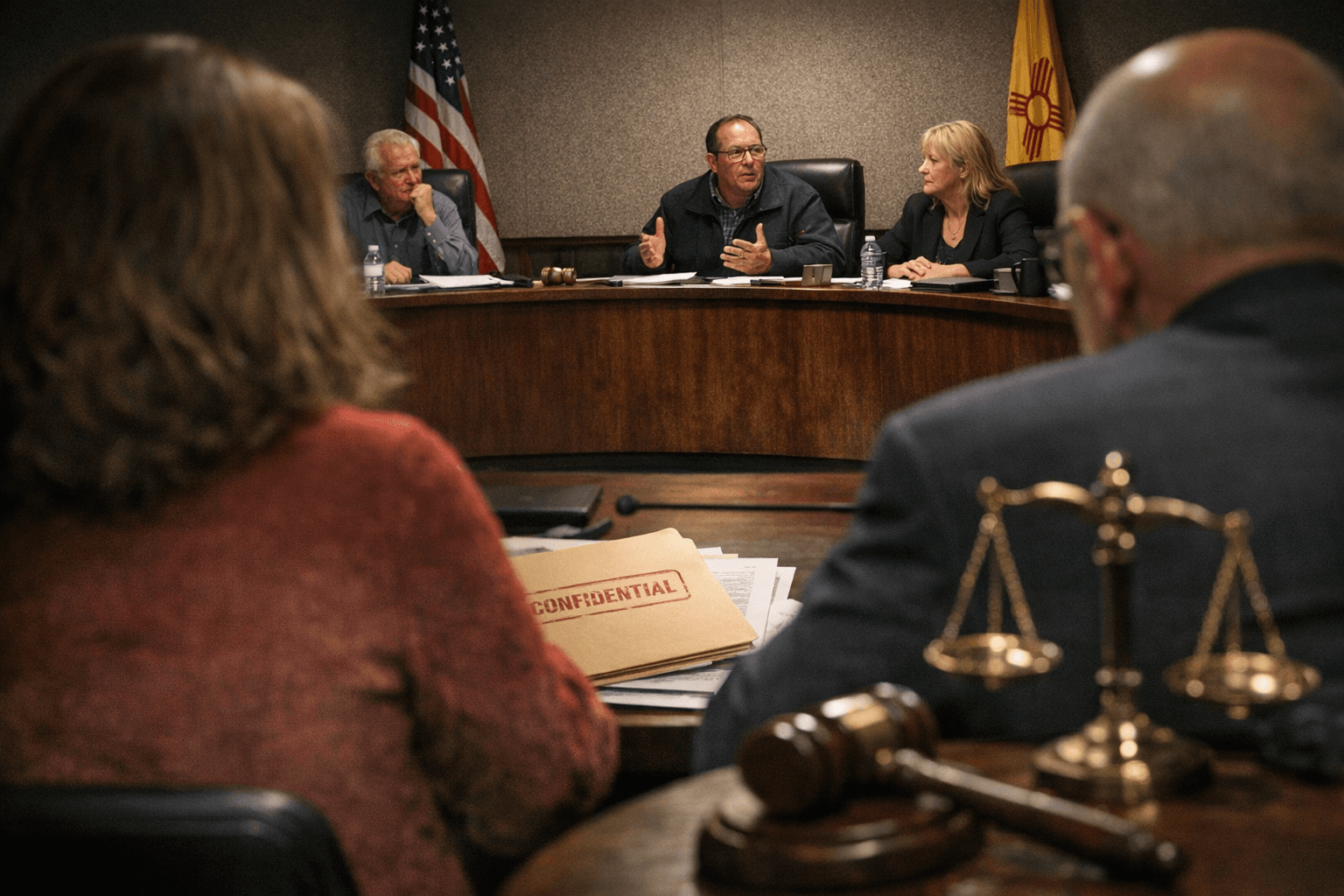
The Los Alamos County Council convened a closed session at 4 p.m. on Jan. 27 in the Municipal Building to address threatened or pending litigation and matters related to the purchase, acquisition, or disposal of real property. The notice, published by the county on Jan. 23, served as the public announcement of the session’s purpose and time.
Closed sessions under New Mexico law are limited to specific exemptions, and this meeting invoked the exemptions for legal strategy and real property negotiations. Locally, those topics can encompass everything from potential lawsuits that could expose the county to liability or require budgetary responses, to negotiations over land that might affect future housing, commercial development, open space, or county facilities. Because the session was closed, deliberations were restricted to council members, county staff, and legal counsel rather than the public.
The council’s decision to meet in closed session is procedurally significant for Los Alamos residents because outcomes from such meetings can have direct consequences on taxpayer obligations and local land-use planning. Real property transactions pursued by the county can change who controls parcels near neighborhoods, impact availability of county services, and shape long-term development patterns. Likewise, litigation decisions - including settlements or defensive strategies - can influence the county’s fiscal outlook and priorities for future budgets and projects.
Institutionally, the closed-session notice reflects routine use of the statutory exemptions that separate certain executive deliberations from open public debate. That practice balances the county’s need to receive candid legal advice and to conduct negotiations without undermining bargaining positions against the public’s interest in transparency and accountability. The balance depends on subsequent disclosure: residents typically follow council agendas and published minutes to learn what actions, if any, were adopted or authorized after closed deliberations.
For voters and civic participants in Los Alamos, the immediate takeaway is to monitor upcoming council materials for any agenda items, resolutions, or contract authorizations that follow from the Jan. 27 session. Residents interested in the implications for specific neighborhoods or county finances should review future council packets and minutes and consider raising inquiries at public meetings. How the council reports and implements decisions from this closed session will determine the practical effects on land use, public assets, and the county budget.
What happens next is a matter of record in subsequent council proceedings: watch for public disclosures or agenda items that document any actions taken as a result of the closed deliberations and assess how those actions align with long-term community priorities.
This article was produced by Prism’s automated news system from verified source data, official records, and press releases, then run through automated quality and moderation checks before publishing. The system is built and supervised by the people who set the standards it runs under. Read our full AI policy.
Did this article answer your question?