Los Alamos County trails protect 150 cultural sites, county says
A walk through Fuller Lodge and Bathtub Row doubles as stewardship: Los Alamos County says its trails protect about 150 cultural sites and keep fragile artifacts off-limits.
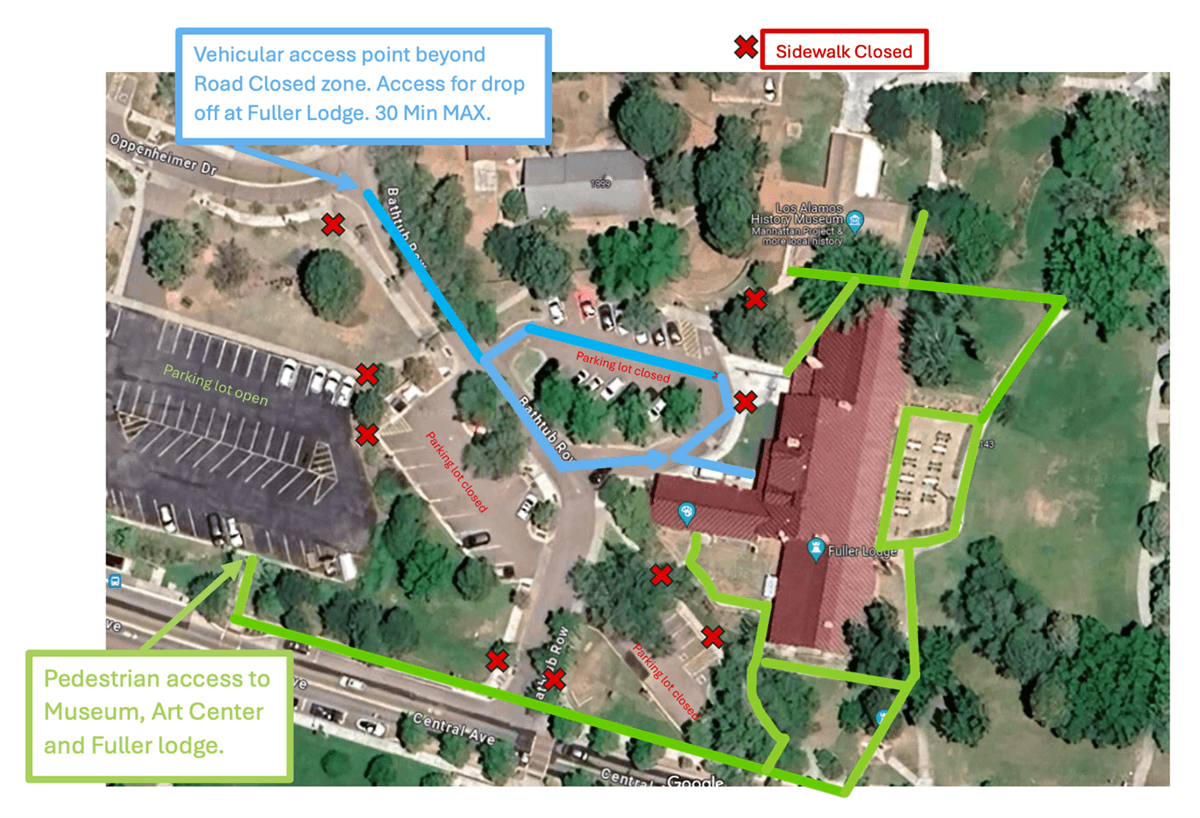
Residents heading out for a weekend walk through Fuller Lodge and Bathtub Row are also stepping into a protected landscape. Los Alamos County says its trail network is open to non-motorized use only, and about 150 cultural sites have been identified on county open space, including Ancestral Pueblo room blocks, pot sherds, petroglyphs and historical artifacts protected by federal and state law. In Los Alamos, the easiest outing is also the one that keeps the past intact.
Start at Fuller Lodge
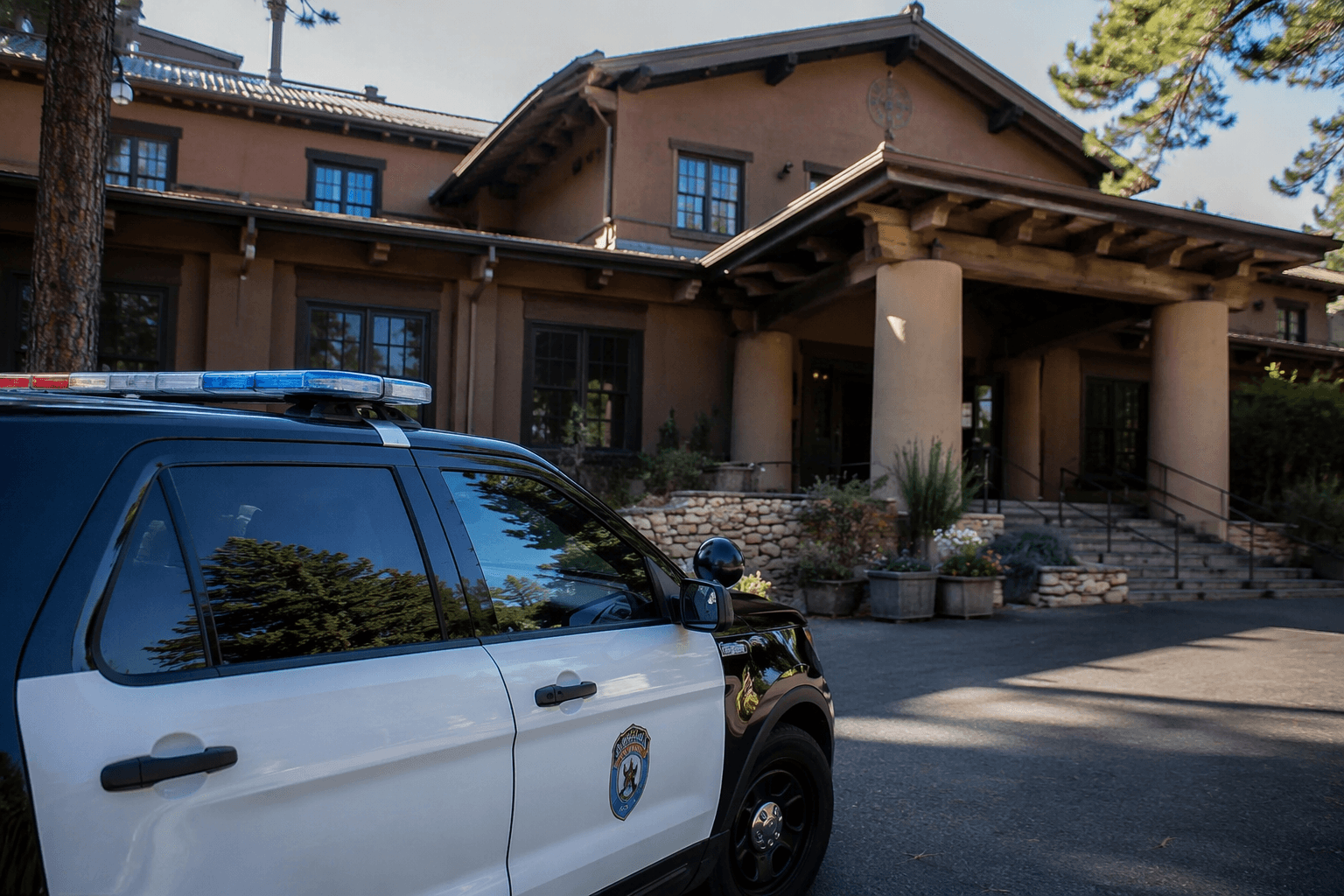
Fuller Lodge is the best place to begin because it still anchors the district in daily life. County walking-tour materials describe it as a community gathering place for more than 100 years, and the Los Alamos Historical Society says a Sept. 17, 1928, Santa Fe New Mexican headline announced, "Los Alamos School Opens, Fuller Lodge Is Completed," describing the building as a two-and-a-half-story log edifice with a prominent east-facing portal.
The Los Alamos History Museum listing places the museum complex in the heart of a National Landmark District and notes that the grounds include log and stone buildings from the early 1900s, a furnished homesteader cabin, Fuller Lodge and the masters' cottages from the Los Alamos Ranch School period of 1917-1943. That mix tells the story of the town in one compact stop: school era, homestead era, wartime science and the museum town that grew around them.
If you are joining a guided walk, the Historical Society says all tours are led by extensively trained guides. It also says reservations can be made by calling 505-709-7794, or by arriving 30 minutes before the scheduled tour time. The museum lists one-hour walking tours at 11:30 a.m. on the days it is open, which makes the stop easy to fit into a morning or early lunch outing.
Follow Bathtub Row through three eras
Bathtub Row is not just a famous street name. The Historical Society says it mattered in three eras: during the Los Alamos Ranch School years, when it passed masters' quarters and classrooms; during the Manhattan Project, when it was the road to houses assigned to key Project Y staff; and today, when it leads to the History Museum, the Historical Society offices, Fuller Lodge and nearby homes.
That layered history gives the district its unusual texture. The Historical Society says guided walks can answer questions about the five Nobel Prize winners who lived on Bathtub Row, the homesteaders who farmed 15 acres near the Memorial Rose Garden and the origins of the Los Alamos Ranch School. The Los Alamos History Museum says its Bathtub Row tour also explains how the street got its name, which gives visitors a quick way to connect the street to the people who lived along it.
Build in time for the full loop
The historical-walking-tour map says visitors can move at their own pace, and that the route takes about 1 3/4 hours at a leisurely pace. It points walkers to an 800-year-old Ancestral Pueblo site, one of the first homesteaders' cabins, Historic Fuller Lodge and the spot where the first atomic bomb components were assembled.
That makes the route more than a photo stop. It is a compressed tour of the Pajarito Plateau, where ancestral settlement, ranch-school architecture, homesteading and the Manhattan Project sit close enough to read in one afternoon. The map also suggests setting aside extra time to enjoy the museums, shopping, restaurants and galleries along the way, which is useful if the walk is part of a fuller weekend plan rather than a quick pass through town.
Once you reach the Fuller Lodge area, the rest of the loop is easier on foot than by car. The district is compact, and the self-paced route rewards pauses at the museum, the historic buildings and the trail junctions that connect the story together.
Why the trail rules matter
Los Alamos County's open-space trails are multi-use for pedestrians, equestrians and bicyclists, but the county says bicyclists should yield to other users. Dogs must be on a leash within 100 yards of a trailhead, and outside that 100-yard zone they still must remain under voice and sight control.
Those rules are not just etiquette. The county's open-space management plan, published in May 2015, frames the system as part of a broader effort to protect outstanding natural and cultural features, and county trail pages note that some routes can face closures or restrictions where they sit near Department of Energy or Los Alamos National Laboratory land. The trails function as protection corridors as much as recreation routes, keeping people close enough to learn from the landscape without damaging what makes it irreplaceable.
How Los Alamos fits into the national map
The Manhattan Project story that appears on these walks is local, but it is also national. The National Trust for Historic Preservation says Los Alamos and other Manhattan Project sites developed across the United States in 1942 and 1943, and the Manhattan Project National Historical Park was established in 2015. Los Alamos is one of the park's three major site groupings, along with Oak Ridge, Tennessee, and Hanford, Washington.
Los Alamos National Laboratory says the park is spread across visitor centers, historic sites, museums and points of interest rather than one gated entrance, which is why a street-by-street walk tells so much of the story. The laboratory's history page says its mission remains national security, a reminder that Los Alamos is still a living federal landscape, not a frozen exhibit. A walk through Fuller Lodge and Bathtub Row shows how the county protects that dual identity, letting the public in while keeping the oldest evidence where it belongs.
This article was produced by Prism’s automated news system from verified source data, official records, and press releases, then run through automated quality and moderation checks before publishing. The system is built and supervised by the people who set the standards it runs under. Read our full AI policy.
Did this article answer your question?