Los Alamos Lab adds HPE and NVIDIA systems for AI, simulations
Los Alamos National Laboratory is adding HPE-built Mission and Vision systems, with Mission targeting 4x Crossroads performance and Vision due in 2027.
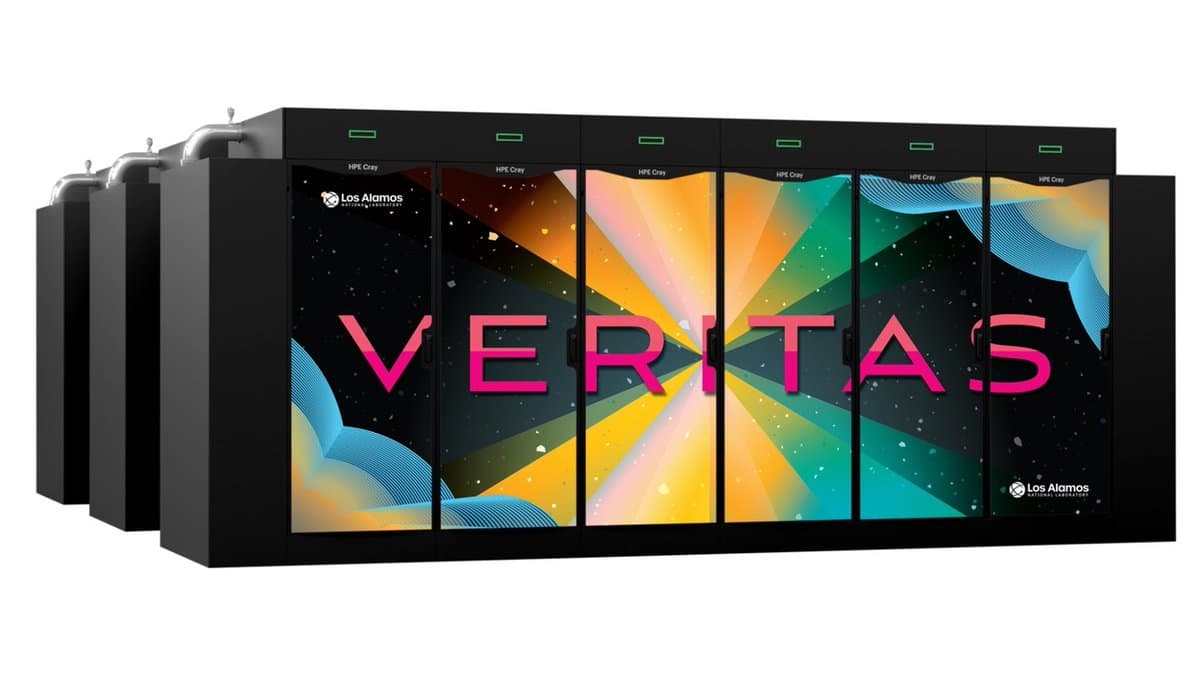
Los Alamos National Laboratory is moving to a new supercomputing stack built for a different kind of machine intelligence, one meant to speed up stockpile simulations, scientific discovery and agentic AI work from the same hardware backbone. The lab's Mission and Vision systems will be built by HPE on the Cray Supercomputing GX5000 architecture and tied to NVIDIA's Vera Rubin platform, a package that combines Vera CPUs, Rubin GPUs and Quantum-X800 InfiniBand networking.
HPE announced the project on Oct. 28, 2025 as part of a $370 million U.S. Department of Energy investment aimed at scientific discovery, AI initiatives and national security. For Los Alamos, the most immediate mission-sensitive machine is Mission, also known as ATS-5, the fifth Advanced Technology System in the Advanced Simulation and Computing program. LANL says that system will support National Nuclear Security Administration stockpile modernization and is designed to cut time-to-solution, while HPE said it should deliver four times the performance of Crossroads, the lab's earlier system.

Vision is aimed at the other side of LANL's computing portfolio: larger concurrent AI and research workloads that do not carry the same classification burden. The lab expects Vision to enter operation in 2027, which places the next major step in the county's computing profile firmly ahead, not behind. The direct liquid-cooled design also signals the scale of power and cooling needed for exascale-era computing, work that will stay inside the lab's secure perimeter but still shapes how Los Alamos handles high-end technical infrastructure.
The hardware expansion builds on work LANL already has in place. Venado, launched in 2024, later moved to a classified network and began running OpenAI's latest o3 reasoning model for national security research. LANL also developed URSA, the Universal Research and Scientific Agent, as an open-source agentic AI framework for scientific discovery. Together, those projects show the lab trying to make AI do more than summarize text: they are turning it into a tool for simulations, model-building and scientific workflows that could affect everything from nuclear stewardship to basic science.
For Los Alamos, the local impact is likely to be less about a public spectacle than about what kind of work the lab attracts and keeps here. The new systems point to a deeper investment in advanced computing talent, tighter links between classified missions and open research, and a growing role for AI in the lab's public-facing scientific agenda. In a county where the laboratory is the dominant institution, that kind of shift is as much about accountability and mission priorities as it is about faster processors.
This article was produced by Prism’s automated news system from verified source data, official records, and press releases, then run through automated quality and moderation checks before publishing. The system is built and supervised by the people who set the standards it runs under. Read our full AI policy.
Did this article answer your question?