Los Alamos Lab Uses Quantum Computers to Probe Magnetic Hysteresis
Los Alamos used quantum computers for the first magnetic hysteresis experiments, turning a futuristic promise into a tool scientists can use now.
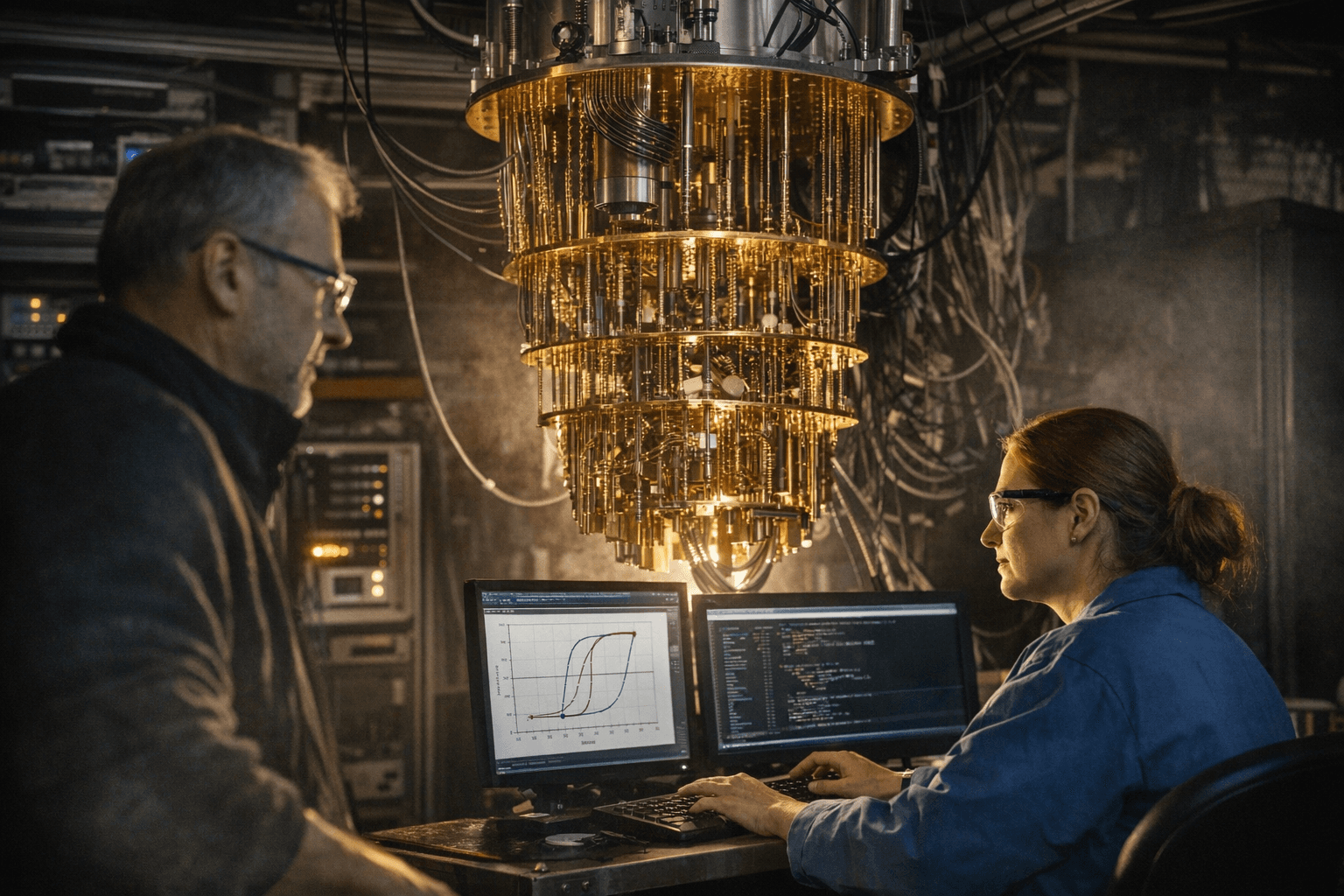
Los Alamos scientists have turned quantum computers into a working scientific instrument, and for the first time they used them to run hysteresis experiments on a magnetic system. The result gives the lab a new way to probe how materials remember their past, a problem that is notoriously hard to model on ordinary computers.
The work, published by Los Alamos National Laboratory on April 16, came out of a Laboratory Directed Research and Development project that pulled together theoretical physicists, experimental physicists, computer scientists, mathematicians and other specialists. That mix matters because the effort is not about a single algorithm or a distant hardware dream. It is about using existing quantum platforms to do physics that is difficult to reproduce any other way.
Hysteresis is a memory effect in magnetic systems, where the current response depends on previous states. Los Alamos says that makes it especially challenging to simulate with conventional computing, because the model has to account for how the system evolves over time and how earlier conditions shape what happens next. On quantum platforms, by contrast, coupled qubits can evolve under quantum fluctuations without relying on the same simplifying assumptions.
Cristiano Nisoli, who led the project, said the team has already shown that existing analog quantum computers can produce scientific results today. That is a meaningful shift for a field often discussed as if its value depends on a future universal machine that does not yet exist. At Los Alamos, the focus is on quantum annealing platforms as highly controllable experimental systems that can accelerate discovery now.
A key part of that effort came from Los Alamos scientist Elijah Pelofske, who proposed using a hardware control parameter in D-Wave machines to apply a time-varying field while the system is exposed to quantum fluctuations. The laboratory says that approach opens a path for studying magnetic behavior and broader questions in condensed matter physics on analog quantum computers.
For Los Alamos County, the significance goes beyond a single physics result. The project shows how the laboratory’s computing, math and physics teams are pushing work that depends on advanced infrastructure and highly specialized expertise, the kind of research that helps keep Los Alamos at the center of next-generation science. It also reinforces why the county’s lab remains a place where tools once treated as futuristic are being put to use on real problems today.
This article was produced by Prism’s automated news system from verified source data, official records, and press releases, then run through automated quality and moderation checks before publishing. The system is built and supervised by the people who set the standards it runs under. Read our full AI policy.
Did this article answer your question?