Manhattan Project park preserves Los Alamos' atomic-age history
Los Alamos’ Manhattan Project park turns scattered wartime sites into a public resource, but access and interpretation still depend on local and federal choices.

A park that still shapes daily Los Alamos
The Manhattan Project did not just pass through Los Alamos. It remade the town’s roads, neighborhoods, institutions, and reputation, and that history is still visible in places residents drive past every day. Manhattan Project National Historical Park gives that story a public frame, turning scattered landmarks into a resource that explains how a mesa-top community became central to the atomic age.
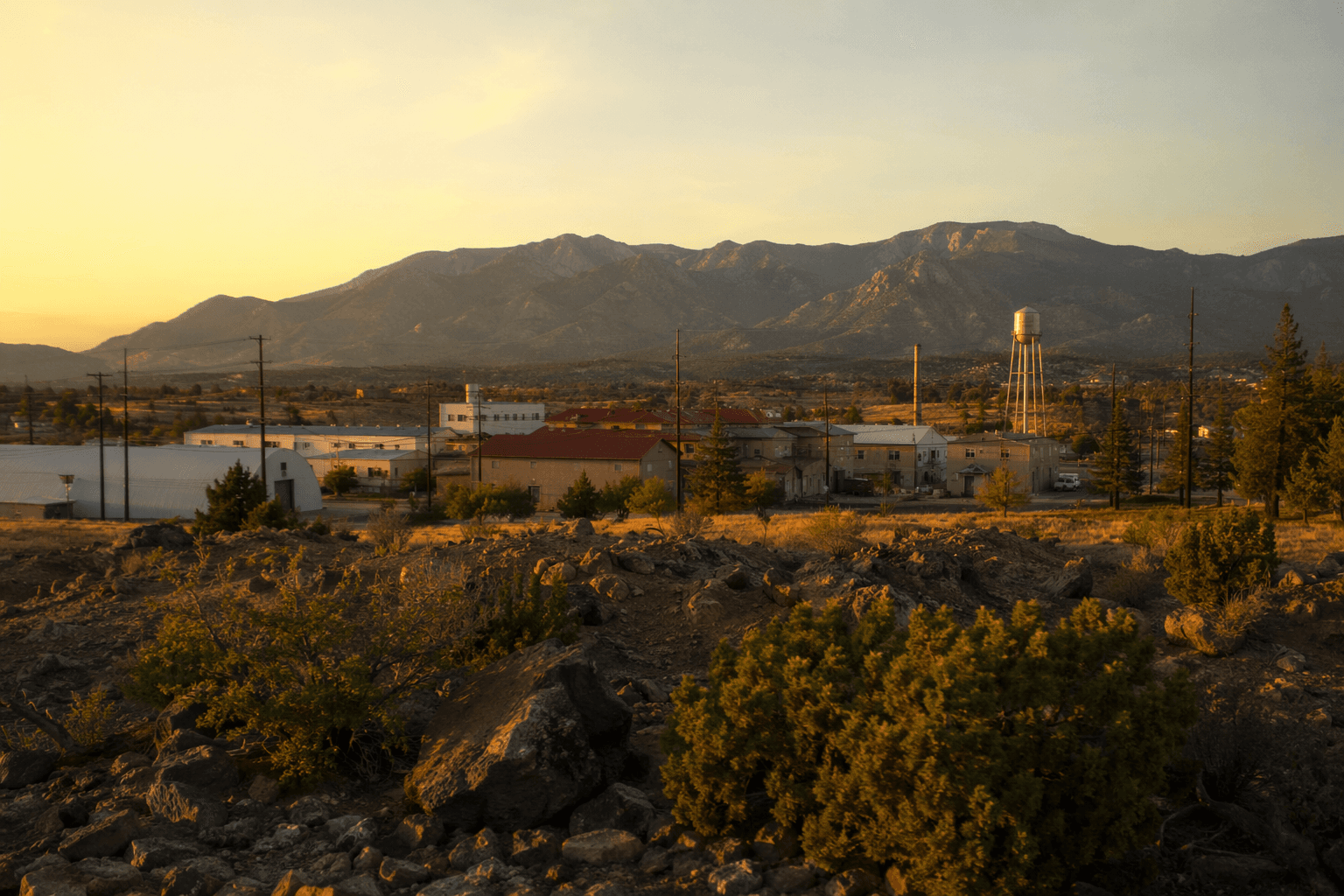
The Los Alamos unit sits about 35 miles northwest of Santa Fe, but its importance reaches far beyond geography. It helps decide what visitors learn, what students study, and which parts of the town’s past are preserved as shared civic memory rather than left to fade into a collection of disconnected sites.
How the park is organized
Manhattan Project National Historical Park was established in November 2015 as one of three units in a national network that also includes Oak Ridge, Tennessee, and Hanford, Washington. In Los Alamos, the park is not run by one institution alone. It is managed through a partnership among the National Park Service, the U.S. Department of Energy, Los Alamos National Laboratory, Los Alamos County, and private landowners.
That partnership matters because Los Alamos is both a living town and a restricted federal landscape. The Los Alamos unit is non-contiguous: some sites sit in the public town area, while others are behind the fence at Los Alamos National Laboratory. The result is a park that reflects the town’s physical and political realities instead of flattening them into a single tourist map.
What you can see in town
The most accessible part of the story is in the town itself. The park visitor center is in downtown Los Alamos, where park rangers and volunteers help interpret the history for residents and visitors. Los Alamos National Laboratory says there are about 30 officially designated Manhattan Project-related landmarks in the community, a number that shows how deeply the wartime project shaped the built environment.
Some of the best-known landmarks are publicly accessible, including J. Robert Oppenheimer’s house, Ashley Pond, and Fuller Lodge. Those places matter because they are not just relics. They are part of the everyday landscape and help connect the abstract history of scientific mobilization to the actual streets and buildings where it unfolded.
Other sites remain behind the fence at LANL and can only be seen on limited guided tours or through virtual tours. That split is part of what makes the Los Alamos unit different from many other park experiences. It is a public history site shaped by security, institutional control, and the continuing work of a national laboratory.
Why the park matters beyond nostalgia
The value of the park is not only in preserving old buildings. It gives structure to a story that can otherwise feel scattered across museums, trails, laboratories, and historic properties. Through the park, people can better understand the secrecy that defined the Manhattan Project, the lives of workers and families who built a wartime community, and the scientific, ethical, and political consequences that followed.
National Park Service materials describe the Manhattan Project as one of the most transformative events of the 20th century. In Los Alamos, that transformation was concentrated in a place where more than 6,000 scientists and workers helped develop the atomic bombs, drawing on uranium from Oak Ridge and plutonium from Hanford. The park’s role is to make that chain of events visible without separating the science from the human cost, the land, or the government systems that enabled it.
That broader lens is especially important in Los Alamos because the town’s story is not only about laboratories and brilliant minds. It also includes Indigenous land, wartime mobilization, and a community asked to live with secrecy as part of its daily identity. A fuller public history has to hold all of that at once.
What residents gain from a stronger public park
For residents, the park has practical and civic value. It supports cultural tourism, gives teachers and students a way to connect classroom lessons to places in town, and offers longtime residents and newcomers a shared reference point for talking about Los Alamos’ past. It also reinforces something easy to overlook: the county is not defined only by the laboratory. It is also a historic community with a public story worth preserving.
That story can have real spillover effects. More visitors downtown can support local businesses. Better interpretation can deepen school and museum programming. Clearer preservation priorities can help protect the places that carry the most meaning for the community. In that sense, the park is not just about memory. It is about how Los Alamos presents itself to the region and to the country.
What decisions will shape its future
The park’s future depends on choices that are still being made by federal agencies, the county, the laboratory, and private landowners. Those decisions will determine whether residents get a resource that is merely symbolic or one that is actually usable, well-funded, and honest about the town’s past.
Three issues will matter most:
- Access. More public-facing interpretation, better links between downtown sites, and careful management of behind-the-fence opportunities will determine how much of the story ordinary people can actually experience.
- Preservation. Historic buildings and landscapes need ongoing attention if they are to remain part of the public record rather than slipping into obscurity or decay.
- Interpretation. The way the park explains secrecy, scientific achievement, wartime urgency, and the consequences of the atomic age will shape who feels included in the town’s story and whose experiences are centered.
Los Alamos already has a rare historical asset. The question now is whether the park will continue to function as a living public resource, one that helps residents understand where they live while making the community’s atomic-age history more accessible, more complete, and more accountable.
This article was produced by Prism’s automated news system from verified source data, official records, and press releases, then run through automated quality and moderation checks before publishing. The system is built and supervised by the people who set the standards it runs under. Read our full AI policy.
Know something we missed? Have a correction or additional information?
Submit a Tip