Matachines Dance Returns to Abiquiú, Reviving Community Heritage
On December 17, 2025 Los Matachines del Pueblo de Abiquiú danced publicly for the first time in roughly 80 years, after elders, artists, musicians, and neighboring troupes rehearsed and rebuilt the ceremonial tradition. The revival matters for local residents because it restores a living cultural practice, strengthens intergenerational ties, and highlights how public funding and community partnerships shape cultural health and equity.
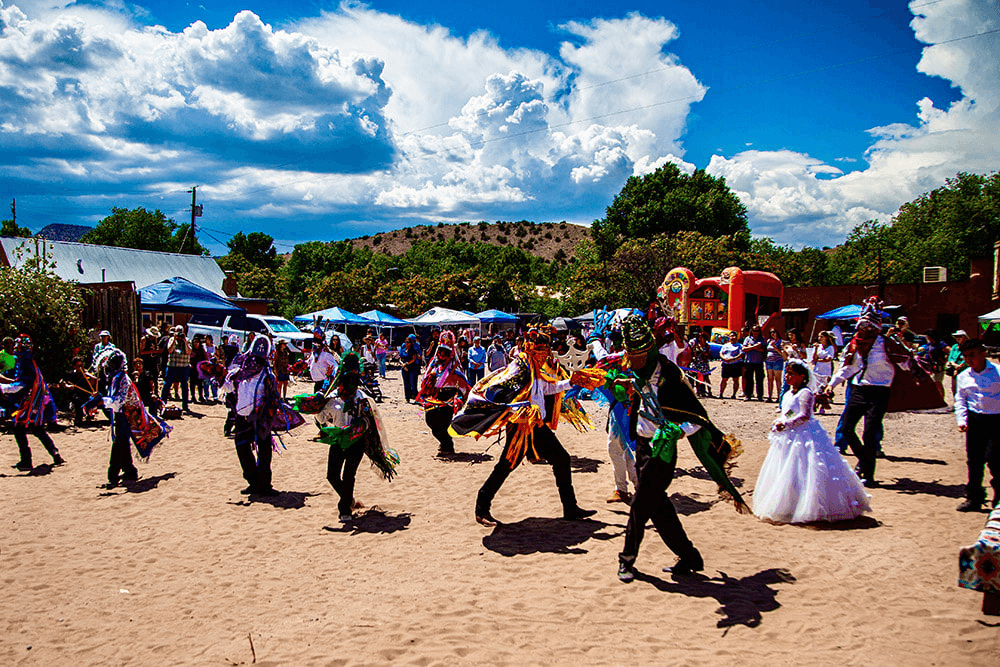
A revival of Los Matachines del Pueblo de Abiquiú culminated in a public performance on December 17, 2025, marking the return of a ceremonial dance that had not been practiced in the village for roughly 80 years. Community elders and artists brought preserved memories and artifacts to a grassroots effort that included apprenticeship with dancers from Alcalde, months of rehearsals, and the crafting of traditional attire including coronas and palmas.
The troupe assembled local participants in defined roles such as Los Matachines, La Malinche, Torito, Monarca, Mayordomo, Abuelos, and Músicos. Musicians and makers were central to the revival, and sponsorship in part by the Río Arriba County Lodger’s Tax provided fiscal support for materials and logistics. The use of lodging tax funds underscores how county level public resources can enable cultural preservation while also raising questions about equitable cultural investment across communities.
The dance carries layered histories, drawing from Spanish, Indigenous, and other influences. Local leaders framed the revival as both a celebration and a careful engagement with complex meanings, emphasizing respect for Indigenous communities and sensitivity to how narratives are represented. The apprenticeship model used in training transferred skills and oral histories between elders and younger participants, reinforcing intergenerational bonds that contribute to community resilience.

Beyond cultural heritage, the event has public health and social equity implications. Cultural reconnection supports mental health by strengthening social networks and cultural identity, both recognized social determinants of health. Community dances also provide informal support systems for elders who preserved the tradition, and they create opportunities for equitable access to cultural life when funding and programming are designed inclusively.
The Abiquiú revival illustrates how local policy, public funding, and grassroots organizing intersect to sustain living traditions. Continued attention from county agencies and cultural partners to equitable funding, respectful collaboration with Indigenous communities, and accessible programming can help ensure that such revivals support both cultural survival and community well being.
Know something we missed? Have a correction or additional information?
Submit a Tip