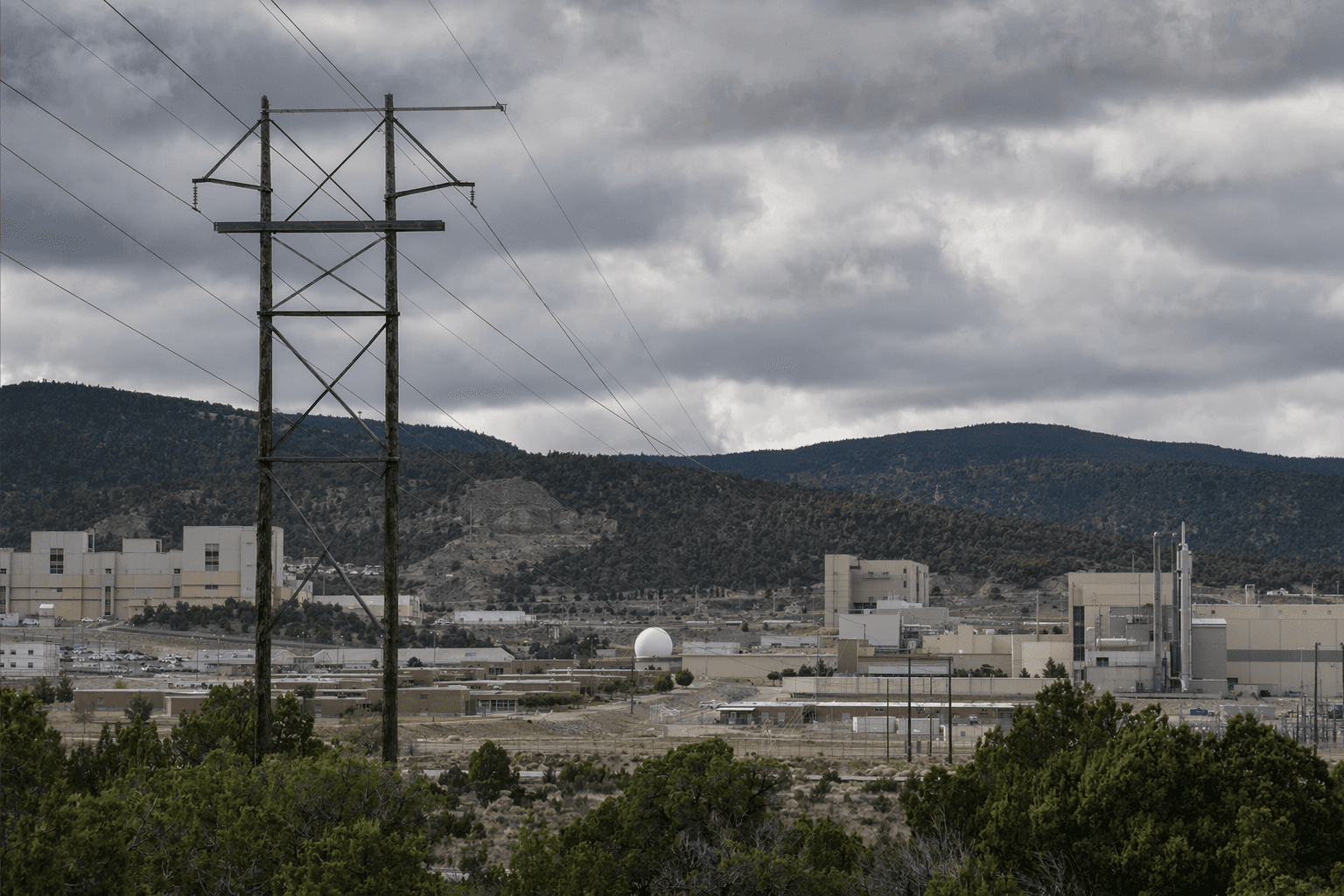
NMED Files Enforcement Actions, Seeks WIPP Permit Change For LANL Legacy Waste
NMED filed three enforcement actions and began a WIPP permit modification to demand DOE prioritize cleanup of LANL legacy waste, a move tied to local water and health risks.

The New Mexico Environment Department announced it has filed three enforcement actions and formally initiated a modification of the Waste Isolation Pilot Plant operating permit to press the U.S. Department of Energy to prioritize cleanup of Los Alamos National Laboratory’s legacy waste for disposal at WIPP. The filings target what NMED describes as a longstanding failure by DOE to move hazardous and radioactive materials off site, raising concerns about risks to local land, water, and air.
Environment Secretary James Kenney framed the action as a response to what he called DOE’s failure to meet state cleanup requirements. “The U.S. Department of Energy has failed to meet the Environment Department’s requirements to cleanup legacy waste at Los Alamos National Laboratory and prioritize the disposal of such waste in the Waste Isolation Pilot Plant,” Kenney said. “New Mexicans have stepped up to help solve the nation’s cleanup problem in a way that residents of no other state have. The U.S. Department of Energy must prioritize their health and welfare by expediting cleanup at Los Alamos National Laboratory and ensuring there’s space for New Mexico’s legacy waste at the Waste Isolation Pilot Plant.”
NMED’s announcement, issued during the week of Feb. 11, 2026, highlights a specific dispute over an 11.8-acre landfill at LANL that the department says contains mixed “legacy waste” dating from the Oppenheimer and Manhattan Project era through the 1990s. NMED says DOE has proposed leaving that landfill buried in unlined pits above the regional drinking water aquifer rather than excavating and shipping the material to WIPP, a course NMED characterizes as cheaper and less effective. NMED recommended excavation and shipment to WIPP to reduce long-term safety risks.
The permit action elevates the question of how WIPP capacity will be allocated. The federal Land Withdrawal Act sets WIPP’s statutory capacity at 6.2 million cubic feet of transuranic waste, and NMED says the facility is nearly half full. That capacity constraint is central to NMED’s demand that DOE prioritize New Mexico legacy waste for disposal at WIPP rather than relying on prolonged on-site storage.

The public announcement leaves several substantive details unresolved. The enforcement notices themselves were not released in the department’s summary, and NMED did not specify the regulatory citations, deadlines, or remedies in the announcement. The formal WIPP permit modification was initiated without accompanying text in the release, and no public-comment schedule or specific permit language was provided. The U.S. Department of Energy did not offer a statement in the material distributed with the announcement.
For Los Alamos County residents, the filings signal that state regulators are escalating enforcement to push for removal of long-stored Cold War-era waste that NMED says poses a threat to the regional aquifer and nearby communities. The immediate practical effects will depend on the contents of the enforcement orders, the details of the WIPP permit modification, and whether DOE revises its landfill plan. Expect NMED to publish formal documents and a public process in the coming weeks, and for local officials and residents to watch closely for any DOE response and schedules for excavation, shipment, or on-site controls.
Know something we missed? Have a correction or additional information?
Submit a Tip