PEEC Hosts BioBlitz at Nature Center for Global City Nature Challenge April 25
Photos uploaded from Los Alamos trails on April 25 could reach scientific databases tracking wildfire and invasives; the global event logged 3.3 million observations in 2025.
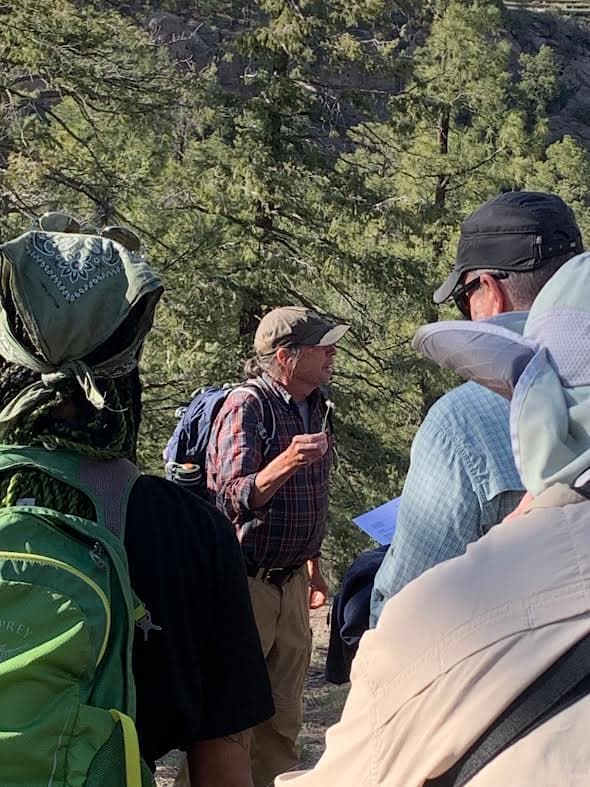
A photo snapped on a Los Alamos trail could end up in a scientific database used to track invasive species, monitor post-wildfire vegetation, and chart shifting phenology across the Pajarito Plateau. That's the practical pipeline behind the BioBlitz the Pajarito Environmental Education Center will host at the Los Alamos Nature Center on April 25, running from 7 a.m. to 2 p.m. as part of the Global City Nature Challenge.
The Global City Nature Challenge is not a local birding walk with a nice patch at the end. In 2025, the event generated more than 3.3 million observations of over 73,000 species, with more than 100,000 participants logging wildlife sightings across more than 400 cities using the iNaturalist smartphone app. Los Alamos joins that network this year as one of those participating city regions, with PEEC coordinating documentation across open space, trails, and developed areas surrounding the Nature Center.
The data pathway from smartphone camera to usable scientific record runs through iNaturalist's quality-control system. An observation earns "research-grade" status, the designation that makes it exportable to biodiversity databases accessed by researchers and land managers, when it carries a precise GPS location, a timestamp, photographic or audio evidence of the organism, and confirmation that it isn't captive or cultivated. From there, at least two-thirds of the iNaturalist identifier community must agree on a species-level identification. PEEC's identification stations and guided walks are specifically designed to help novice observers clear that threshold rather than generate photos that sit indefinitely in "Needs ID" status.
The ecological context on the Pajarito Plateau makes the data collection consequential. The Jemez Mountains have seen fire events grow larger, faster, and more severe in recent decades. Building baseline species records before and after fire events, and flagging invasive plants that displace native vegetation and alter fuel loads, depends on the kind of distributed, repeated observations that a BioBlitz can generate. For a community bordered by sensitive federal lands and active research sites, that data has direct management implications.
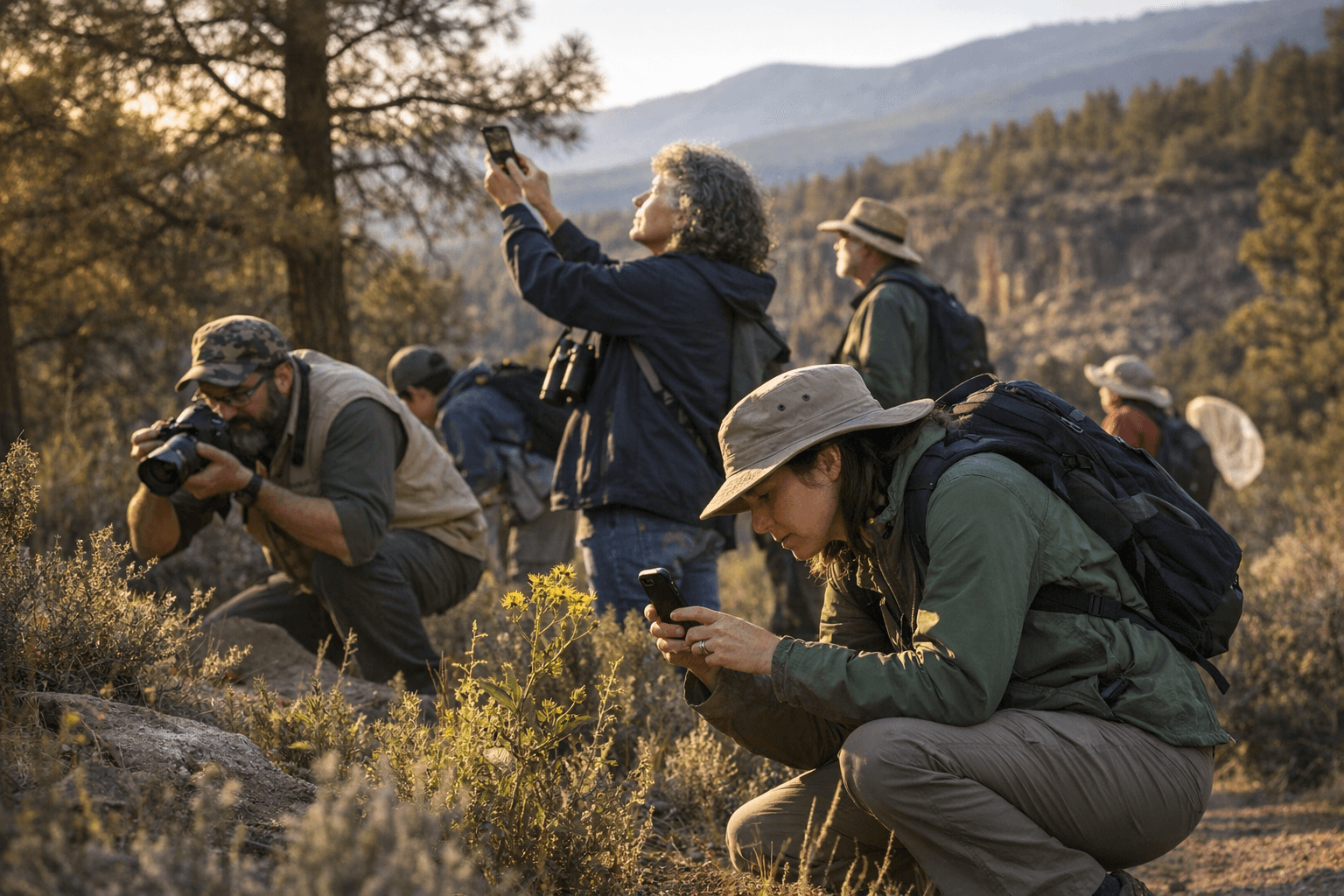
Plants, animals, fungi, and other organisms all count toward the city's total. PEEC is encouraging participants to spread across nearby open space and trail networks rather than stay within sight of the Nature Center. Register in advance, bring water, wear appropriate footwear, and charge the phone. For those who cannot make it to the Nature Center, observations logged independently through iNaturalist during the challenge window still contribute to Los Alamos's tally.
The challenge window itself runs April 24 through 27, meaning observations logged after PEEC's 2 p.m. close on the 25th still count toward the city total through the end of the weekend. The City Nature Challenge was launched in 2016 as a two-city competition between Los Angeles and San Francisco; it is now co-led globally by the California Academy of Sciences and the Natural History Museum of Los Angeles County. Every research-grade observation submitted from the Pajarito Plateau competes in that same global census.
This article was produced by Prism’s automated news system from verified source data, official records, and press releases, then run through automated quality and moderation checks before publishing. The system is built and supervised by the people who set the standards it runs under. Read our full AI policy.
Did this article answer your question?