Review questions LANL tritium venting, infant dose estimates in White Rock
An independent review says LANL’s White Rock tritium dose estimate for an infant was 0.063 millirem, while more than 99% of the tritium stayed in the containers.
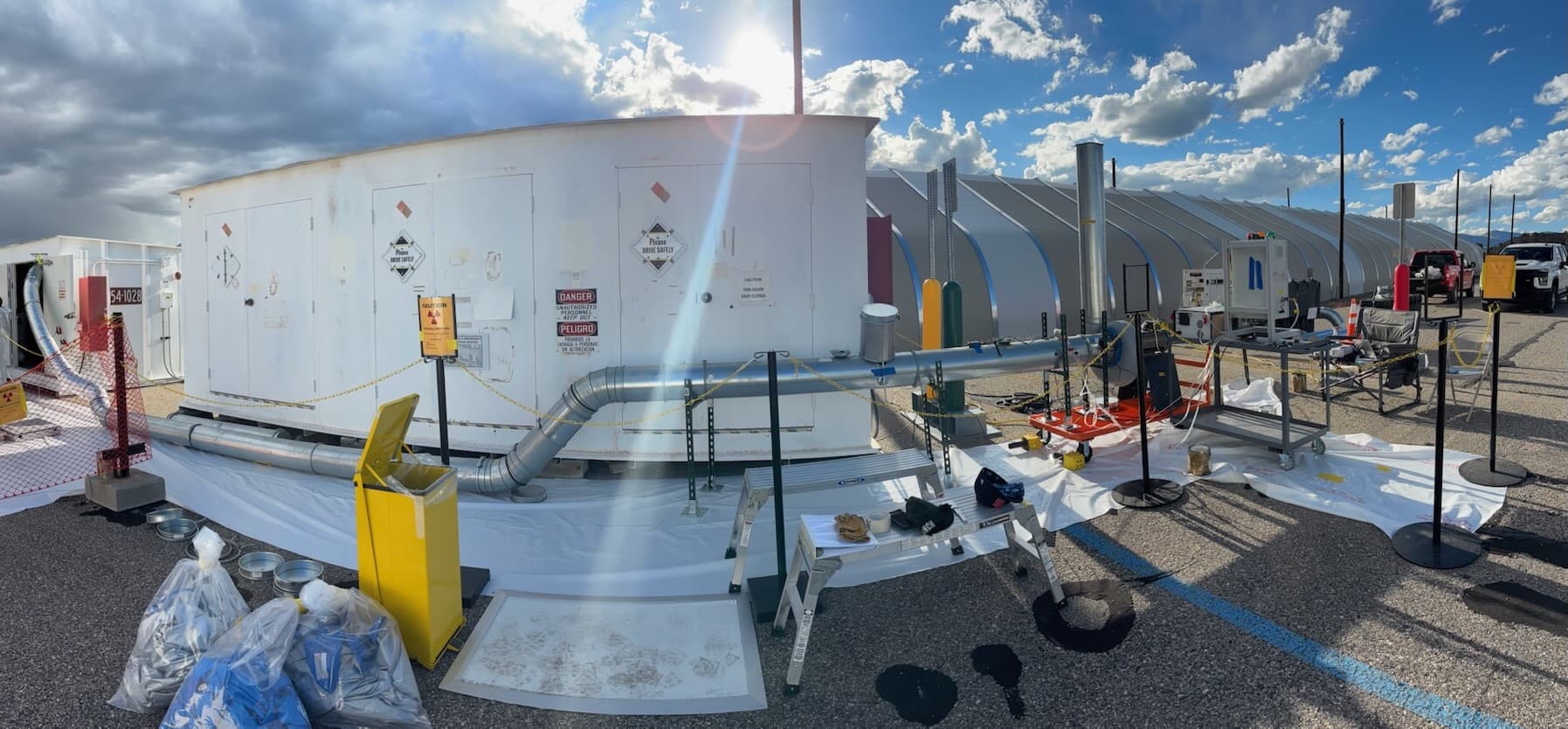
Concerned Citizens for Nuclear Safety says a new review of Los Alamos National Laboratory’s tritium reports raises fresh questions about whether the September 2025 venting at Technical Area 54, Area G, near White Rock was needed at all. The May 2026 analysis by Arjun Makhijani for Communities for Clean Water says the operation, which began Sept. 15, 2025 and ran for several days, released about 123 curies of tritium, with 88% as HT and the rest as HTO.
The same review says LANL’s highest dose estimate for the full operation was 0.0189 millirem to an adult and 0.063 millirem to an infant at a White Rock location. That infant estimate is far below the 10 millirem annual public dose standard in DOE’s air-emissions rule, but the review says the bigger issue is necessity: LANL justified venting on a possible hydrogen-oxygen buildup from radiolysis, yet no pressure increase was found in any of the four FTWCs.

The review also says LANL data indicate well over 99% of the tritium remained in the FTWCs, presumably inside the specialized AL-M1 canisters. LANL later released FTWC Radioactive Air Emissions Summary, Volume 1 on Nov. 14, 2025 and Volume 2 on Feb. 17, 2026, with Volume 1 saying the final container was shipped off-site that same day and emissions for the whole operation were less than 123 curies.
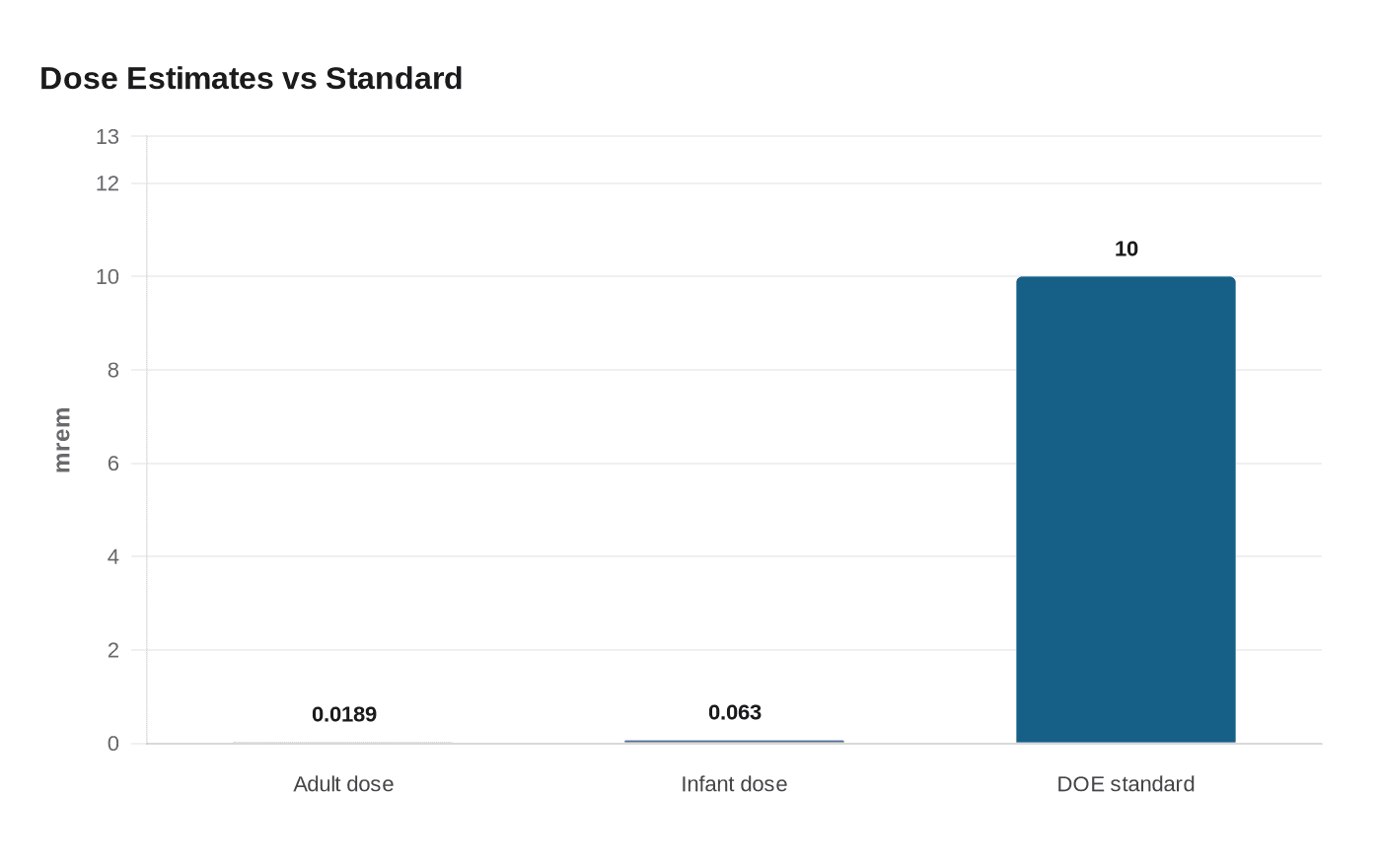
This is not the first time community scientists have argued that LANL’s calculations missed the most vulnerable people. In November 2024, a review commissioned for Tewa Women United said infants and small children can receive about three times the dose of adults from tritium exposure and faulted LANL for leaving infant and child dose calculations out of its compliance application. Kathy Wan Povi Sanchez, one of Tewa Women United’s co-founders, said the omission left children out of the public-health analysis.
New Mexico Environment Department Secretary James C. Kenney’s agency required extra safeguards in 2025, including an independent technical review, a public meeting, tribal consultation and a compliance audit. LANL/NNSA’s independent technical review concluded the best technical option was to depressurize the FTWCs in place at Area G and then move them onsite to the Weapons Engineering Tritium Facility. For White Rock families, the central question remains whether the air pathway was the only one that mattered, or whether regulators should have demanded a different answer before the containers were vented.
This article was produced by Prism’s automated news system from verified source data, official records, and press releases, then run through automated quality and moderation checks before publishing. The system is built and supervised by the people who set the standards it runs under. Read our full AI policy.
Did this article answer your question?