White Rock Canyon hike reveals geology, springs and petroglyphs
White Rock Canyon pairs a 900-foot river drop with springs, basalt cliffs and petroglyphs, but the right route depends on how much climb you want.
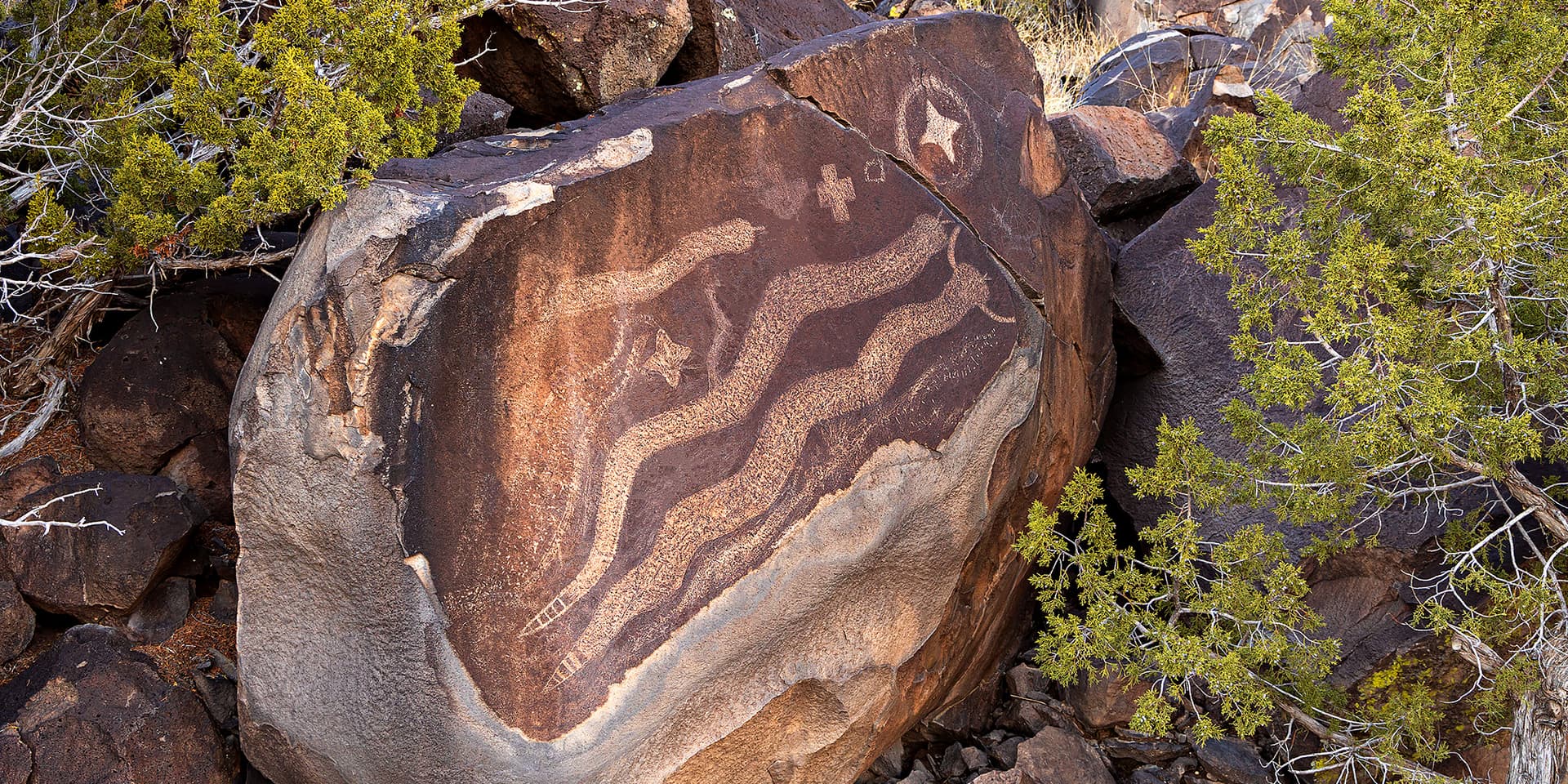
White Rock Canyon drops about 900 feet from the rim to the Rio Grande, turning any hike to the water into a committed outing. Exposed basalt from the Caja del Rio Plateau, natural springs, and hundreds of petroglyphs line the canyon. The main decision is whether to hike to the river or stay on the rim.
Choose the route that matches your outing
That drop makes the river-descending routes a committed outing rather than a casual stroll. Red Dot and Blue Dot are the classic steep routes to the water, and the return climb is the part that should shape your decision before you leave the car.
If you want canyon views without the full descent, stay on the rim. White Rock Overlook and the rim access give you a much simpler way to look across the river, distant mountains and rugged canyon country without taking on the steepest grades. That makes the rim option the best fit for a shorter outing, a first visit, or any day when you want to enjoy the landscape without planning around a long climb back.
How to reach the trailheads
Blue Dot begins from the White Rock side by turning off State Road 4 onto Rover Boulevard, then Meadow Lane, then into Overlook Park and onto the paved trailhead road. That route is straightforward once you know the turns, and it points you toward the most accessible entry for a river descent.
Red Dot is reached by continuing south from Rover Boulevard, then turning onto Sherwood Boulevard and Piedra Loop. Parallel parking for about six vehicles makes the trailhead feel much smaller and more limited than the Blue Dot access. If you are heading for Red Dot, plan your parking and your start time with that small capacity in mind.
For the rim view, White Rock Overlook is reached through the same general corridor off Rover Boulevard and Meadow Lane, then onto Overlook Road. The overlook gives a broad view of the Rio Grande and the surrounding canyon system, and it is the easiest way to see White Rock Canyon’s scale if you are not hiking all the way down.
What makes the canyon distinct
White Rock Canyon exposes basalt lava tied to the volcanoes of the Caja del Rio Plateau, and that geology gives the hike its dark rock faces and rough volcanic texture. Natural springs add another layer to the landscape, making water part of the canyon story instead of something hidden below the surface.
Hundreds of petroglyphs spread throughout White Rock Canyon, and they turn the hike into a place where geology and cultural history are visible together.

A landscape shaped long before the county existed
Los Alamos sits on the Pajarito Plateau, in a broader volcanic landscape that the National Park Service dates to volcanism more than a million years ago.
Bandelier National Monument protects more than 33,000 acres of canyon and mesa country nearby, with petroglyphs, dwellings carved into soft rock cliffs and standing masonry walls that connect the present-day trail experience to older communities that still live in the region. The National Park Service says the broader Los Alamos area has supported human life for more than 10,000 years, and that Ancestral Pueblo people lived here for centuries, roughly from A.D. 1150 to 1550.
Hike it with the canyon in mind
The network is open to non-motorized use only, and cultural resources such as room blocks, pot shards, petroglyphs and historical artifacts are protected by law. Stay on marked trails, because the canyon’s springs, rock features and cultural sites are part of what makes it special and also what makes it vulnerable.
- Water
- Sunscreen
- A hat
- Extra clothing
- A flashlight
- A navigational aid
A few basics belong in your pack every time:
Dogs must be leashed within 100 yards of a trailhead, a rule that matters especially at the busy access points where people, pets and vehicles all mix close together.
Where White Rock Canyon fits in the county trail system
White Rock Canyon is one route in a much larger local network. Los Alamos County says its trail system includes 58 miles in the county and more than 100 connected miles in surrounding public lands, while the county’s recreation page places the broader system at more than 150 miles of trails across the townsites and surrounding mountains.
This article was produced by Prism’s automated news system from verified source data, official records, and press releases, then run through automated quality and moderation checks before publishing. The system is built and supervised by the people who set the standards it runs under. Read our full AI policy.
Did this article answer your question?