Wolf Moon Supermoon Lights Up Los Alamos North Community Sky
Residents in Los Alamos gathered in the North Community area on the evening of Jan. 3 to view the Wolf Moon, the first Supermoon of 2026. The bright, larger-than-usual full moon offered a striking sight for photographers and stargazers, highlighting the town's advantages for night-sky viewing and prompting local interest in astrophotography.
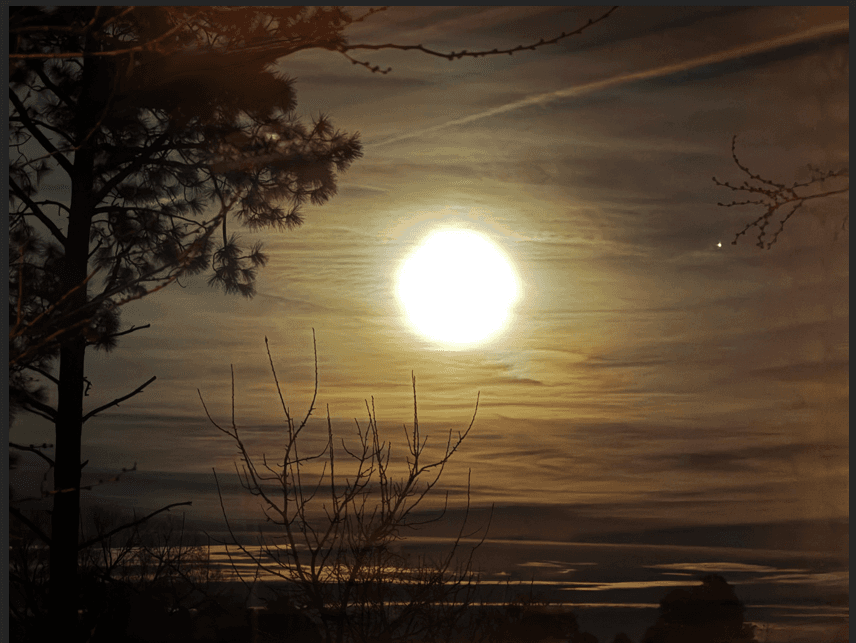
On the evening of Jan. 3, the full Wolf Moon rose over Los Alamos and presented the first Supermoon of 2026 as seen from the North Community area. A feature photo captured by John McHale of ladailypost.com documents the event, which drew attention from local photographers and residents taking advantage of clear skies.
A Supermoon occurs when a full moon coincides closely with lunar perigee, the point in the Moon's orbit nearest Earth. That proximity can make the Moon appear noticeably larger and brighter than an average full moon; it can look as much as about 14 percent larger and as much as about 30 percent brighter to observers on the ground. For Los Alamos residents, the higher elevation of the town and relatively low levels of light pollution often create favorable conditions for observing such celestial events, which helps local photographers capture dramatic night-sky images.
The Wolf Moon is the traditional name for January's full moon, a moniker rooted in older naming traditions for the winter months. While the Supermoon's visual effect is striking, its physical impact on Earth is minimal for inland communities like Los Alamos. Tidal shifts tied to lunar gravity are most noticeable along coasts; any gravitational differences caused by perigee do not translate into local hazards or measurable economic effects in a landlocked, high-elevation county.
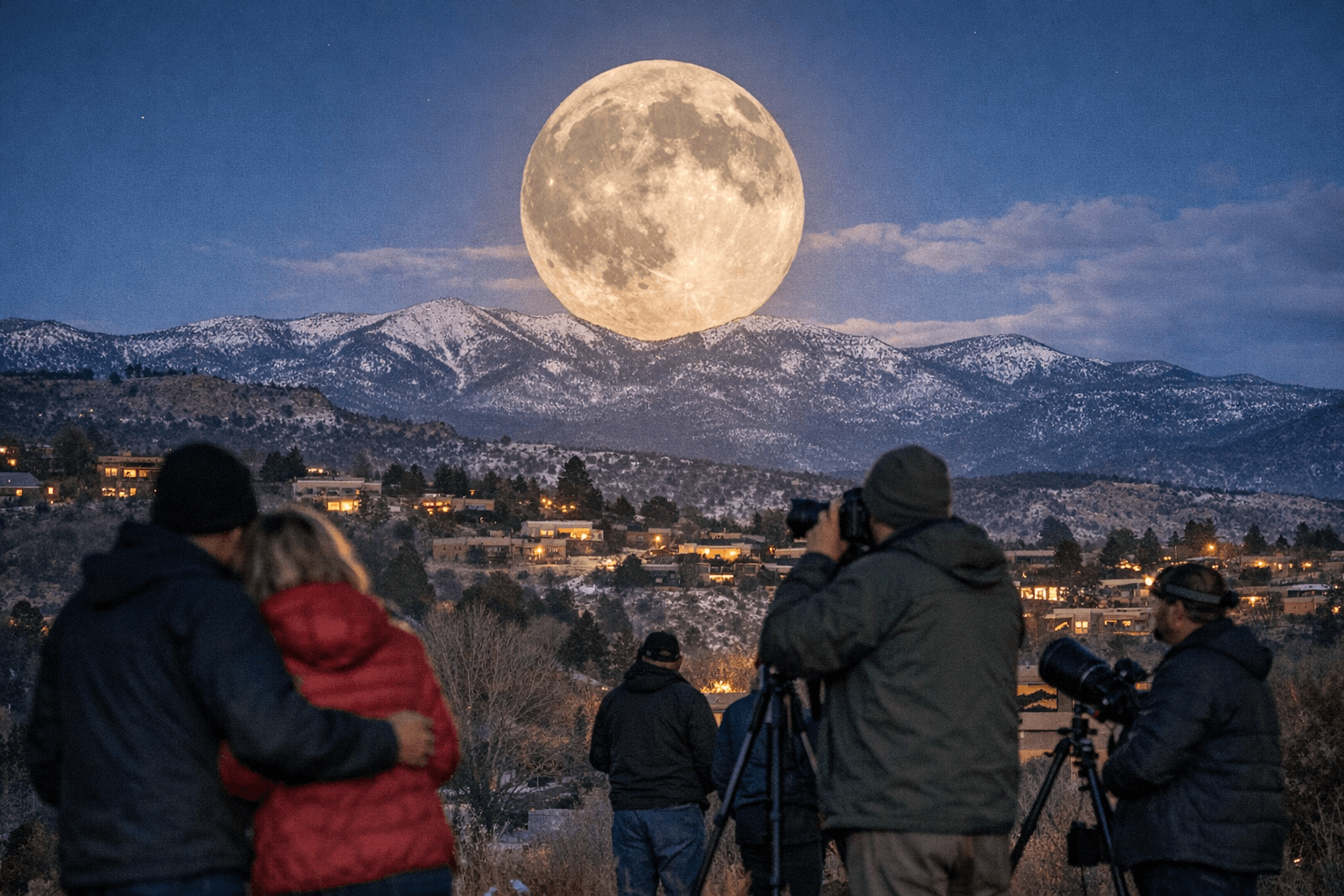
Still, the appearance of a Supermoon can have modest local economic and cultural effects. Interest from amateur and professional photographers can boost sales for camera retailers and services, and images circulated on social media highlight Los Alamos as a place well suited for stargazing and night photography. Community interest in astronomy can also support educational activities at schools and local organizations focused on science outreach.
Photographs such as John McHale’s provide a visual record of the evening and help sustain community engagement with natural events that require no admission or travel. For residents who missed the Jan. 3 display, the Moon remains a regular calendar marker and a reminder of how seasonal and astronomical cycles continue to offer low-cost ways for families and neighbors to connect with the night sky. Photo credit: John McHale/ladailypost.com.
This article was produced by Prism’s automated news system from verified source data, official records, and press releases, then run through automated quality and moderation checks before publishing. The system is built and supervised by the people who set the standards it runs under. Read our full AI policy.
Did this article answer your question?