Big Creek People In Action Anchors McDowell County With Education, Arts, Community Programs
Dyanne Spriggs runs BCPIA's free after-school program for 30 McDowell County students four days a week, while the nonprofit's housing rehab work reached 72 residents in one year.
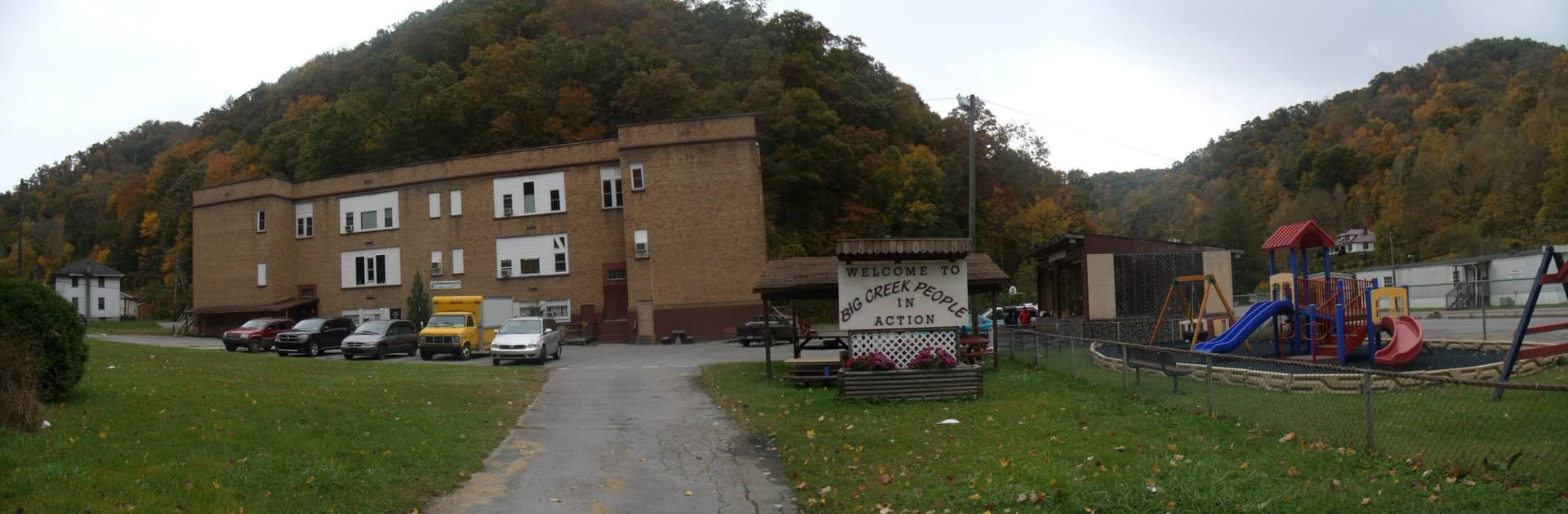
Dyanne Spriggs has spent years making the case that a repurposed elementary school building in Caretta, West Virginia can do what a county government with a shrinking tax base cannot: keep children reading, keep roofs from caving in, and keep a community from disappearing. As Executive Director of Big Creek People In Action (BCPIA), Spriggs leads an organization that has spent 35 years anchoring the southern coalfield portion of McDowell County to something more durable than nostalgia. The numbers behind that work, from 30 students in a free after-school program to 72 residents served through a single year of housing rehabilitation, tell a story that neither census poverty statistics nor coal-industry obituaries fully capture.
A Nonprofit Built by the Community It Serves
Founded in 1990 by McDowell County citizens responding to the economic fallout of coal's decline, BCPIA set its mission in blunt terms: "foster a community in which people learn, work, play, and grow together and prepare themselves for success in the 21st Century." The organization operates out of a renovated former school in Caretta, also listed at 17586 Rocket Boys Drive in War, WV, which itself serves as a statement of intent. A building the county once shuttered now hosts tutoring sessions, resource fairs, arts workshops, and leadership programs that reach residents across all age groups.
For 27 years, co-Executive Director Marsha Timpson was the face of that work, building BCPIA from an AmeriCorps-supported startup into a regionally recognized model before retiring on May 31, 2025. Spriggs, who built the organization alongside her as a lifelong friend and co-leader, now carries the directorship forward. Their shared tenure produced the operational depth that lets a small-staff nonprofit consistently deploy volunteer groups, secure grant funding, and serve the county's most under-resourced families.
The After-School Program: Forty-Five Students, Four Days a Week
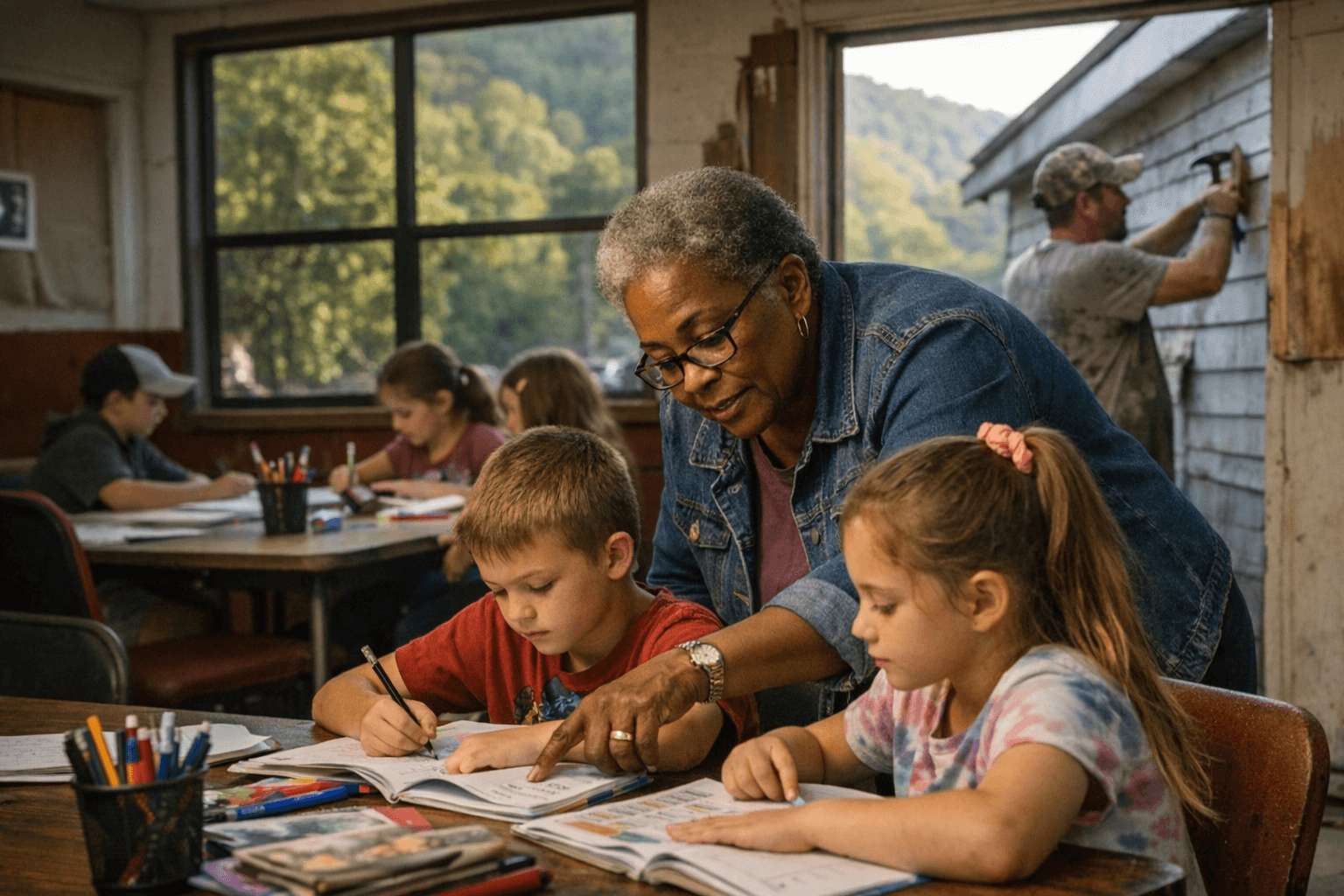
The clearest measure of BCPIA's education work is its free after-school program, which currently enrolls 30 elementary-age students and has reached as many as 45 participants during peak periods. The program runs four days a week during the school year, offering individualized tutoring designed to keep students current with their classmates. Spriggs has described the dual pressure the program addresses: children in McDowell County face not only academic gaps, but also the broader pull of a county where prescription drug abuse and entrenched poverty have disrupted household stability for a generation.
The program does not stop when school ends. BCPIA operates a summer literacy component specifically for preschool-age children, teaching foundational skills: the alphabet, how to spell their own name, and basic numeracy, precisely the competencies that determine whether a child enters first grade ready to learn or already behind. For older students, BCPIA also provides remedial academic support for those attending the county's Career and Technology Center who need to pass certification exams to pursue their chosen trades.
In 2023, BCPIA's after-school program directly benefited 27 students, alongside a parallel effort that provided books and school supplies to an equal number of children. The reach is modest by metro-area standards and intentionally focused: in a county where infrastructure is thin and transportation is a chronic barrier, small-scale consistency produces outcomes that one-time interventions do not.
Housing Rehabilitation: The Work No One Else Will Do
Six miles from any hardware store, in houses where 67 percent of the county's residential stock was built before 1940 and half are rated below normal quality, BCPIA runs a home rehabilitation program that repairs leaking roofs, constructs handicap ramps, rebuilds floors and porches, and restores bathrooms for families who cannot afford contractors and cannot physically do the work themselves.
Timpson documented the scale of that need plainly before her retirement: "McDowell County has the lowest standard of housing in the state of West Virginia. Many of our citizens suffer because they are not physically able or don't have the resources to improve their living conditions." In 2021, even with volunteer activity constrained by the pandemic, BCPIA still managed to serve 72 residents through housing rehab. In a typical year, church groups and college service teams from across the country come to Caretta specifically to work under BCPIA's coordination. A team from Notre Dame spent a week on housing rehabilitation projects and used their remaining time assisting students in the after-school program with coursework, a spontaneous example of how the organization's multiple program tracks reinforce each other.
The demand for housing rehab far exceeds what annual volunteer deployments can address. Roof replacement alone requires skilled labor and careful sequencing, and Spriggs and Timpson have been candid that the volume of need in McDowell County means every decision about which household receives help is genuinely difficult.
The Mountain Music Festival and the Case for Culture
Not every program BCPIA runs addresses a deficit. Some are simply about life being worth living. The organization has used the parking lot of the old Caretta school to build a community gathering space complete with a garden, a gazebo, and a stage. That stage has hosted the Mountain Music Festival, a free outdoor concert where eight bands have played and, by accounts from participants, "the whole town showed up." The Coal Miner Museum, also housed within BCPIA's building, connects current residents to the industrial history that shaped the county's identity before the workforce reductions of the 1980s and 1990s reshaped it again.
Arts workshops, seasonal family nights, and spring carnivals round out a cultural calendar that gives families low-cost reasons to gather. In a county where private entertainment businesses have largely closed and municipal recreation budgets are constrained, those events function as more than programming; they are one of the few consistent sources of shared public life.
Food, Partnerships, and Emergency Response
BCPIA does not operate in isolation. The organization runs food distributions in partnership with the Mountaineer Food Bank and coordinates with partner churches, including Berean Way Church and South Carolina Baptist Church, which have delivered hundreds of turkeys and food boxes to families during Thanksgiving and Christmas seasons. Through its partnership with Americans Helping Americans, which has invested in BCPIA's education and housing programs for years, the county has received thousands of food boxes annually, each stocked to feed a family of four for a full week, alongside winter coats, blankets, and holiday meals distributed to households that would otherwise go without.
These partnerships are not incidental. They are the mechanism through which BCPIA converts limited organizational capacity into measurable county-wide reach. By serving as the trusted local implementer for regional and national funders, BCPIA reduces the cost and friction of delivering services in a geography where institutional infrastructure is sparse.
Funding the Work and Where Gaps Remain
BCPIA's operating budget draws from a combination of grants, individual donations, volunteer labor, and partnerships with state and regional funders, including multi-year support from Americans Helping Americans. Total fundraising to date is documented at under $5 million, a figure that reflects both the scale of the organization and the chronic underfunding of rural nonprofits more broadly.
The gaps are structural and growing. Federal safety-net programs including SNAP and Medicaid are facing significant funding reductions, cuts that directly affect McDowell County households who depend on both. BCPIA staff members themselves have described living paycheck to paycheck while doing this work, a reality that underscores the fragility of the system the nonprofit helps sustain. Housing rehabilitation demand continues to exceed annual volunteer capacity. And the after-school program, despite serving 30 students consistently, almost certainly leaves additional children without access simply because small nonprofits cannot indefinitely expand without proportional funding.
Spriggs has put the stakes in direct terms: "With the support of Americans Helping Americans, we can extend the reach of our education and after-school program so that more young people receive the best opportunity to succeed and deal with the rising tide of prescription drug abuse, the debilitating effects of welfare dependency, the state of our county school system, and many others."
How to Access Help or Get Involved
For McDowell County residents seeking BCPIA services or families wanting to enroll children in the after-school program, the most current information is available through the organization's official channels:
- Phone: (304) 875-3418
- Fax: (304) 875-3518
- Email: bcpia3418@netscape.net
- Website: bigcreekpeopleinaction.org
- Address: H.C. 32 Box 541 / 17586 Rocket Boys Drive, War, WV 24892
BCPIA posts event schedules, volunteer sign-up opportunities, and resource distribution dates primarily through its social media pages and website. Volunteer groups, churches, and college service programs interested in participating in housing rehabilitation or educational support should reach out directly through the organization's website contact portal.
For 35 years, BCPIA has operated on the premise that a county can only recover through organizations with the local trust, knowledge, and staying power to show up consistently, not just during crises. That model does not generate headlines in proportion to the work it does. The 30 students in Caretta who have a safe, staffed, tutoring-equipped place to go four days a week after school are the clearest evidence that the model works, and the waiting families who cannot yet access it are the clearest argument for funding it further.
This article was produced by Prism’s automated news system from verified source data, official records, and press releases, then run through automated quality and moderation checks before publishing. The system is built and supervised by the people who set the standards it runs under. Read our full AI policy.
Did this article answer your question?