FCI McDowell Brings Jobs and Legal Scrutiny to McDowell County
A federal suit filed January 3, 2026 accuses FCI McDowell of leaving 86 prisoners locked in cells during a days-long carbon monoxide leak in August 2021.
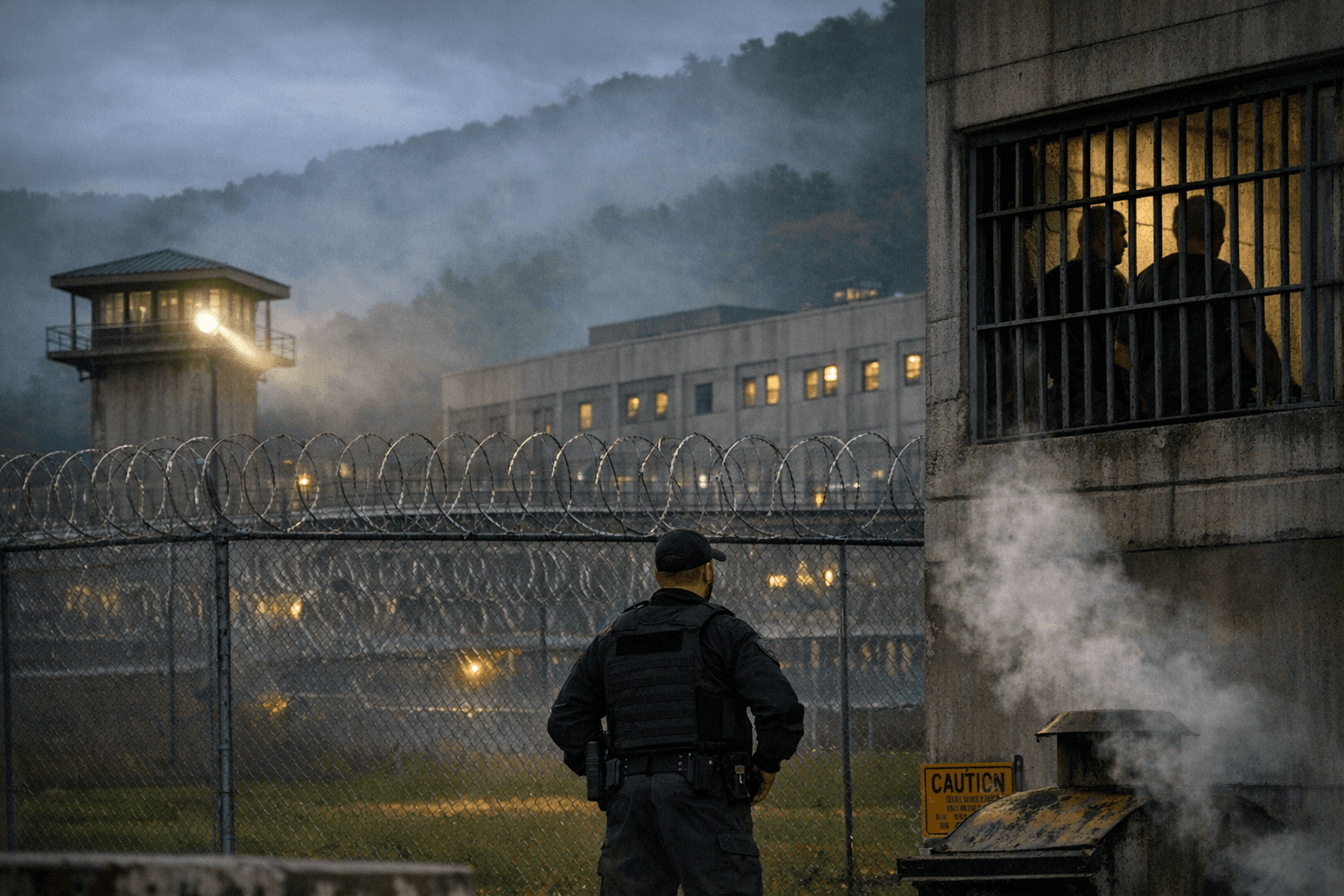
A federal civil lawsuit filed January 3, 2026, accuses the Federal Correctional Institution near Welch of failing to protect 86 incarcerated people during a carbon monoxide event that allegedly ran from August 8 to August 11, 2021. The plaintiffs reported symptoms ranging from headaches and vomiting to loss of consciousness while locked in their cells, and the suit raises unresolved questions about the timeliness of alarm responses and safety protocols at the Bureau of Prisons-operated facility.
That litigation arrived as FCI McDowell was already working through a separate cluster of federal criminal cases tied to drone-delivered contraband. On February 9, 2024, correctional officers detected a drone flying over the institution and traced its flight path back to the launch site, where they apprehended Hector Luis Gomez DeJesus, 32, of Sanford, North Carolina; Raymond Luis Saez Aviles, 37, of Poinciana, Florida; and Gamalier Rivera, 33, of Allentown, Pennsylvania. The three admitted to attempting to deliver cell phones, tobacco, and marijuana onto the prison grounds. DeJesus and Aviles pleaded guilty on April 29, 2025; Rivera followed on March 27, 2025. Francisco Alejandro Gonzalez, 24, of Chicago, pleaded guilty in a separate but related drone scheme. All four cases were prosecuted by the U.S. Attorney's Office for the Southern District of West Virginia.
The prosecutions mark some of the most significant federal enforcement activity at the Welch facility in recent years, and the carbon monoxide suit keeps oversight pressure active well into 2026.
FCI McDowell opened in 2010 at a cost of approximately $223 million. McDowell County residents had voted nearly unanimously to allow its construction, drawn by promises of steady federal employment in one of West Virginia's most economically challenged counties. Construction engaged roughly 100 contractors whose local spending provided an additional economic lift. The medium-security institution and its adjacent minimum-security satellite camp, both housing male offenders, sit about four miles north of Welch.
The jobs promise came with early friction: initial reporting flagged that local residents were not securing prison positions at the rate projections had suggested. Over time the facility nonetheless became one of the county's more stable sources of direct federal employment, supplemented by indirect work in maintenance, food service, and local contracting.
Families of people held at FCI McDowell also drive traffic to Welch through visitation, while local officials have coordinated with Bureau of Prisons representatives on workforce and public-safety questions. The still-active carbon monoxide lawsuit and the string of drone prosecutions now sit alongside that economic record, defining an institution that is simultaneously a significant employer and a facility facing live accountability questions in federal court.
This article was produced by Prism’s automated news system from verified source data, official records, and press releases, then run through automated quality and moderation checks before publishing. The system is built and supervised by the people who set the standards it runs under. Read our full AI policy.
Did this article answer your question?