McDowell County Among Recipients of $9.5 Million Abandoned Mine Land Grants
Davy gets its first-ever wastewater system and Jolo gains 60,000 feet of new waterline as McDowell County captures more than $6.25 million of a $9.5M federal mine land grant.
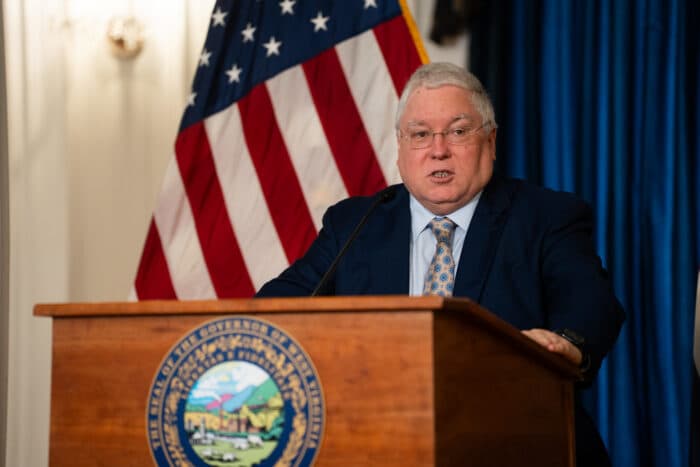
On February 15, 2025, a catastrophic flood ravaged McDowell County, West Virginia, and much of the state's southern coalfields. Less than a year later, clean water remained hard to come by for thousands of residents, many of whom live with discolored, foul-smelling water and recurring boil water advisories. The damage to water and sewer infrastructure from that flood formed the backdrop for a significant announcement on February 13: Governor Patrick Morrisey announced $9.5 million in Abandoned Mine Land Economic Revitalization (AMLER) grant funding for five critical water and sewer infrastructure projects in McDowell and Mingo counties during a press conference Friday, Feb. 13.
The funds were set aside for work on critical infrastructure after much of the existing layout was damaged or destroyed in the 2025 flood. Three of the five projects land in McDowell County and total more than $6.25 million.
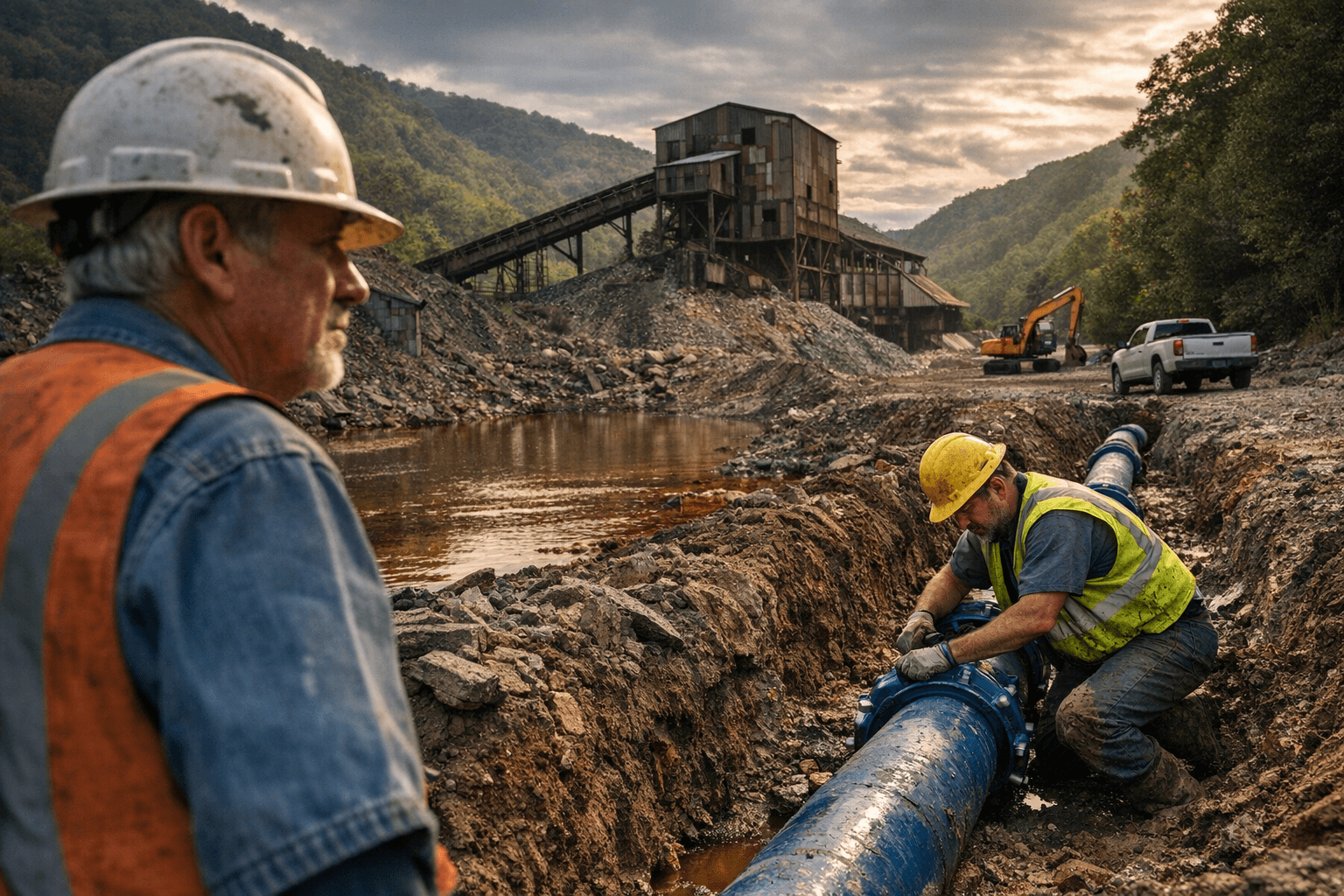
The single largest award goes to Davy: $2.75 million to construct the town's first centralized wastewater system, eliminating raw sewage discharges and replacing failing septic systems. Davy has never had a centralized sewer system. The second McDowell project is the Jolo Waterline Extension, receiving $2.014 million to install more than 60,000 feet of new waterline, providing reliable drinking water to 119 new connections, including five businesses. The third, the City of Gary Sewer Upgrade Project, receives $1 million to strengthen the existing sewer system and protect reclaimed subsidence sites within city limits.
Across the county line in Mingo, Kermit's long-compromised water storage tank finally has a path to replacement. Kermit's 110,000-gallon tank developed multiple perforations and was flagged by the state health department as being at risk of rupturing, according to Mayor Charles Sparks, who reported the issue in January 2024. The $1.26 million award will fund construction of a new 125,000-gallon storage facility. Rounding out the five is the Elkhorn Creek Water Project, which receives $2.5 million to extend public water service to 280 customers, including Ashland Resort, churches, and area businesses, and to support planned sewer expansion efforts in Ashland and Crumpler.
The five AMLER-funded projects are located near mine sites in McDowell and Mingo counties that closed prior to 1977 and were selected in coordination with state agencies to meet program requirements. The AMLER program, administered by the West Virginia Department of Environmental Protection's Office of Abandoned Mine Lands and Reclamation, channels federal dollars toward economic development on lands scarred by coal operations that predate the Surface Mine Control and Reclamation Act.
Morrisey framed the investments in explicitly economic terms. "Water and sewer systems may not be flashy, but they are essential," the governor said. "If you cannot deliver clean drinking water or safely manage wastewater, you cannot attract jobs, build homes, or grow your economy. West Virginia is ready to grow, and that starts with strong fundamentals."
The announcement was timed deliberately. The governor made the announcement before the one-year anniversary of the McDowell County flood on Sunday, February 15, 2026. Morrisey also used the occasion to unveil SENTRY, the Smart Environmental Notification Threat Response System, a 36-month, $10 million pilot initiative aimed at improving flood prediction and emergency response. Unlike traditional stream gauges, which measure rising water levels only after flooding is underway, SENTRY would combine rain gauges, soil-saturation sensors, wind data, and stream monitoring with artificial intelligence-driven modeling.
There are still parts of McDowell County where bridges are missing and roads are still not passable a year after the flood, underscoring the scale of unmet need. The $9.5 million announced by Morrisey in water and sewer infrastructure improvements in McDowell and Mingo counties would leave a $24 million-plus gap between total combined project costs estimated in a DEP list of projects to prioritize funding published in June and what was allotted via Morrisey's announcement and DEP-reported state revolving fund loan amounts. For Davy, Jolo, Gary, and the Elkhorn district, however, these grants represent infrastructure that has been absent or deteriorating for decades, not just since the flood.
This article was produced by Prism’s automated news system from verified source data, official records, and press releases, then run through automated quality and moderation checks before publishing. The system is built and supervised by the people who set the standards it runs under. Read our full AI policy.
Did this article answer your question?