McDowell County Now Under Moderate Drought as Rainfall Relief Remains Unlikely
A new D1 drought designation for parts of McDowell County arrived two days after officials confirmed a burn ban was still in effect — and rainfall totals of just a few hundredths of an inch are forecast.
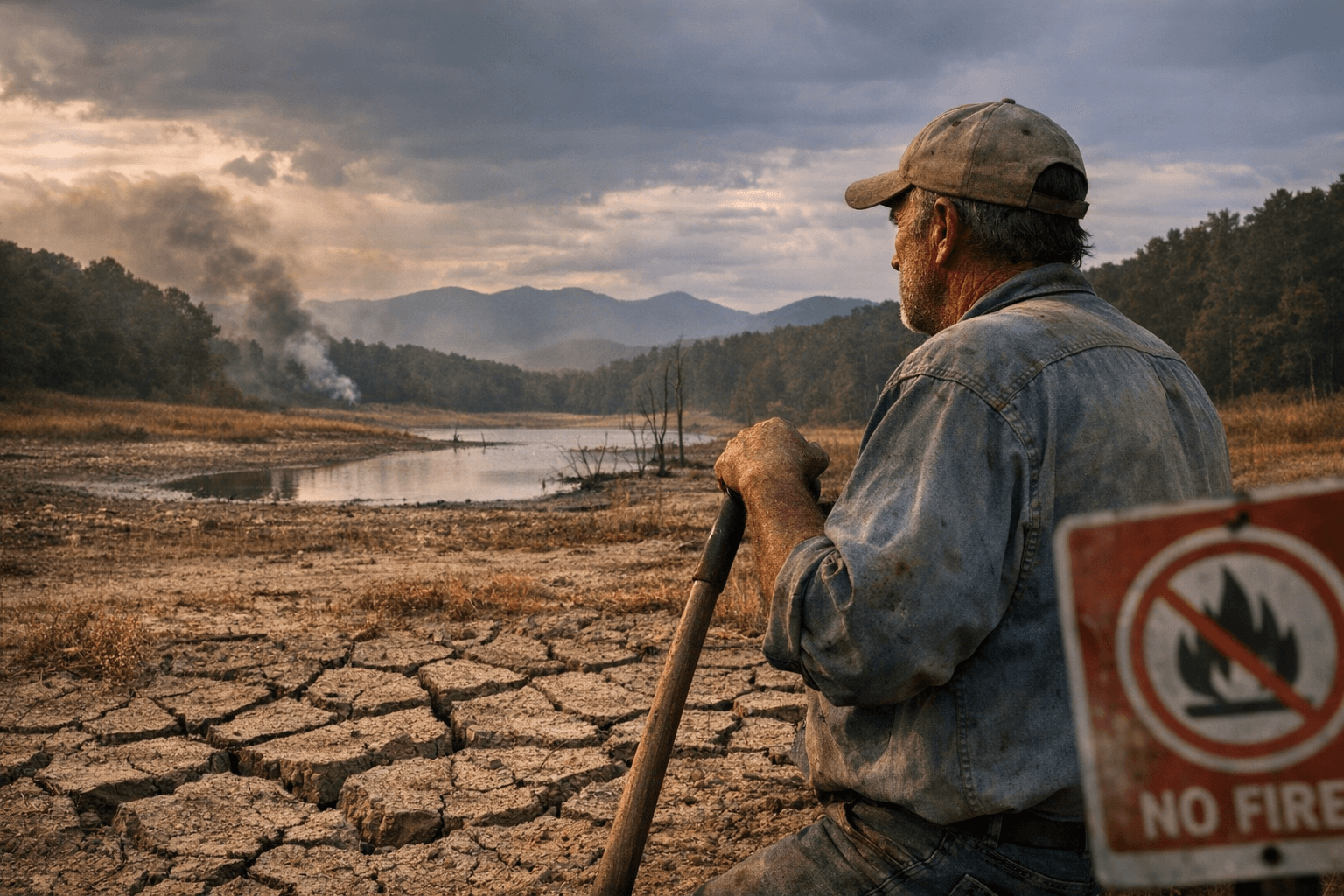
Parts of McDowell County crossed into Moderate Drought status on the latest U.S. Drought Monitor update, a designation that arrived just two days after McDowell County Emergency Management confirmed a burn ban remained in effect county-wide, even as the Jumping Branch wildfire was still on residents' minds. The timing of the D1 classification, which the monitor distinguishes from the surrounding area's lesser "abnormally dry" D0 status, puts the county at heightened risk heading into what forecasters expect will be a warm, dry stretch.
WOAY meteorologist Tanner Beam summarized the model guidance on April 9, evaluating both the European and American GFS models for any sign of near-term relief. Both showed a slim chance of showers over the weekend, but Beam's read of the data was conservative: most locations in the area could expect only a few hundredths of an inch, with isolated spots possibly reaching close to a tenth of an inch under the European model's more generous scenario. Neither figure, the station noted explicitly, would be enough to reverse the drought conditions now mapped across the county.
Temperatures are expected to climb back into the 70s and low 80s in the coming week, compressing whatever soil moisture remains and keeping the wildfire risk that prompted the county burn ban elevated well into the spring. West Virginia's daytime burning restriction, which prohibits open burning between 7 a.m. and 5 p.m. from March 1 through May 31, already applies statewide, but the burn ban in McDowell extends that prohibition further, covering all open burning within 100 feet of any structure.
The drought designation lands on top of existing water system stress in the county, most visibly in Gary, where the West Virginia Public Service Commission spent months investigating the municipal water utility as a distressed system. Regulators documented persistent discoloration, a boil water advisory and significant water loss before PSC staff recommended a distressed utility designation in February. The city and McDowell County Public Service District filed a joint operations plan March 13 asking the PSC to allow the district to take over Gary's water system. That case was still working through hearings as of late March. A D1 drought classification adds pressure to a system already struggling to deliver reliable water to its customers, particularly as it threatens shallow aquifers and private wells that parts of the county depend on outside municipal service areas.
Beam's forecast underscores the core concern: without a more substantial and widespread rain event, the drought is expected to deepen rather than ease in the weeks ahead. For a county where water reliability has been a recurring crisis independent of any drought, the combination of record-low rainfall, rising temperatures and an active wildfire season creates a compounding problem that county emergency managers and water operators will need to watch closely through at least mid-spring.
Here is the formatted final output:
SUMMARY: Parts of McDowell are now in moderate drought, two days after a burn ban was confirmed still in effect — and only a few hundredths of an inch of rain are forecast.
CONTENT:
Parts of McDowell County crossed into Moderate Drought status on the latest U.S. Drought Monitor update, a designation that arrived just two days after McDowell County Emergency Management confirmed a burn ban remained in effect county-wide following concerns tied to the Jumping Branch wildfire. The D1 classification sets the county apart from surrounding areas still mapped at the lesser "abnormally dry" D0 level, and it lands at the start of what forecasters expect will be a warm, dry stretch with little near-term relief on the horizon.
WOAY meteorologist Tanner Beam evaluated both the European and American GFS models for signs of meaningful precipitation. Both showed a slim chance of showers over the weekend, but Beam's reading of the data was conservative: most locations could expect only a few hundredths of an inch, with isolated spots possibly approaching a tenth of an inch under the European model's higher-end scenario. Neither total, the station made clear, would be sufficient to reverse the drought conditions now formally mapped across the county.
Temperatures are expected to rebound into the 70s and low 80s in the coming week, further compressing whatever soil moisture the area retains and keeping wildfire risk elevated. West Virginia's spring burning restriction already prohibits open burning between 7 a.m. and 5 p.m. from March 1 through May 31 statewide, but McDowell County's active burn ban carries additional weight, prohibiting all open burning within 100 feet of any structure. Without substantial, widespread rainfall, the drought monitor classification is likely to worsen before it improves.
The D1 designation lands on a county where water system stress was already a documented problem before any drought arrived. In Gary, the West Virginia Public Service Commission spent months investigating the municipal utility as a distressed system, with regulators documenting persistent discoloration, an active boil water advisory and significant water loss throughout the distribution network. PSC staff recommended a distressed utility designation in February, and as of March 13, the City of Gary and McDowell County Public Service District had filed a joint plan asking the Commission to allow the district to assume operations of Gary's water system. That case was moving through hearings in late March. A D1 drought classification introduces new pressure on a system already fighting to deliver reliable water; it also raises concern for the private wells and shallow aquifers that residents outside municipal service areas depend on, particularly as warmer temperatures accelerate evaporation and reduce recharge.
Beam's forecast framing carried an implicit message for local officials and emergency planners: the models offer a narrow weekend window, but absent a stronger and more organized storm pattern, conditions in McDowell are expected to deteriorate further through mid-spring. For county emergency managers, water utility operators and the households in Gary and elsewhere still navigating longstanding infrastructure failures, the drought monitor map is one more variable demanding a preparedness response, not a wait-and-see one.
This article was produced by Prism’s automated news system from verified source data, official records, and press releases, then run through automated quality and moderation checks before publishing. The system is built and supervised by the people who set the standards it runs under. Read our full AI policy.
Did this article answer your question?