McDowell County Residents Still Lack Clean Water Two Years After Crisis
Two years of PSC hearings and state studies haven't brought clean water to Welch, Gary or War, where families still rely on bottled water and church drives.

The Public Service Commission has held hearings, the Legislature has ordered studies, and some grant money has been awarded. But for families in Welch, Gary, Keystone, Northfork and War, the water coming out of the tap is still not reliably clean or safe, two years after McDowell County's drinking-water crisis first drew national attention.
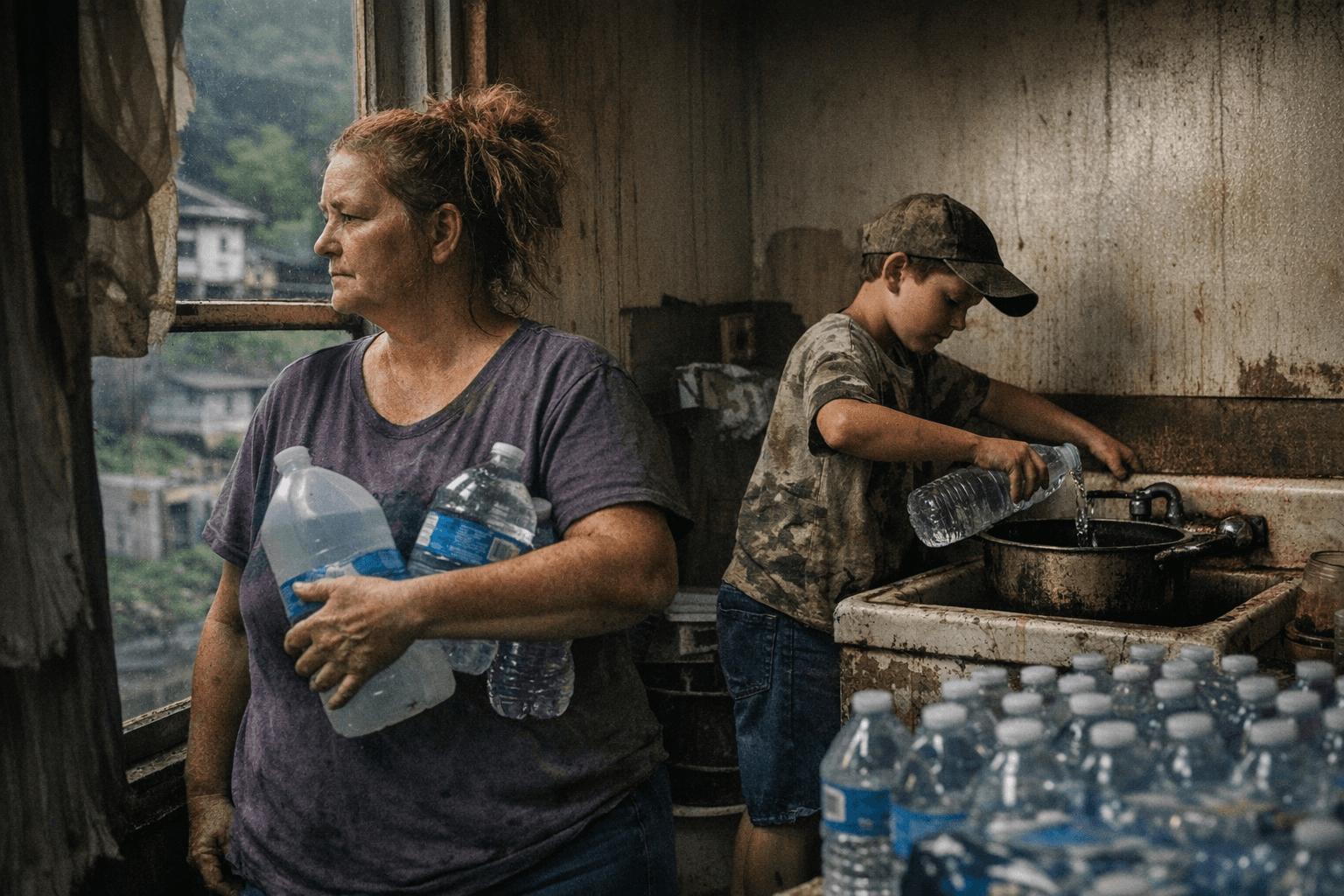
Residents across the county continue to describe water that is discolored, foul-smelling or otherwise unusable for cooking and bathing. To cope, many households have turned to buying bottled water they can barely afford, collecting from emergency distribution points or relying on church-run drives organized by local pastors and volunteers. Older residents on fixed incomes say the ongoing cost of bottled water has become a serious financial strain. Parents report persistent anxiety about the safety of water their children drink and bathe in.
Those daily burdens trace back to structural failures that long predate the current crisis. Much of McDowell County's water infrastructure is decades old, with corroded piping and aging storage tanks that require costly replacement rather than simple repair. Water service across the county is divided among many small, fragmented utility systems, each with its own ownership and governance, and none with a large enough customer base to generate the revenue needed to fund major upgrades. The county's post-coal economic decline has hollowed out the local tax base that might once have helped fill that gap.
State regulators and legislators have acknowledged the problem. The Public Service Commission conducted hearings focused on McDowell's water systems, and the Legislature issued study orders. Those actions produced some funding proposals and modest grant awards, but residents and local advocates say the pace of change has not matched the urgency at the kitchen faucet.
The scale of what is actually needed is formidable. Comprehensive infrastructure upgrades would require multi-million-dollar investments and, in some proposals, timelines stretching across years or even a decade. Delivering those improvements would demand coordinated action among individual towns, the county Public Service District, state agencies and federal grant programs, a level of alignment that has so far proved elusive.
Residents and community advocates are pressing for two things simultaneously: faster emergency relief to address immediate needs, and a durable financing plan that does not pass the cost onto households already stretched thin. The coming months will determine whether that pressure produces results. Key questions include whether state or federal funds get directed toward emergency stabilization measures, whether the PSC moves to designate additional interventions such as operational transfers for struggling systems, and whether new funding mechanisms now being discussed in the Legislature advance far enough to reach construction contracts.
For McDowell County communities, the gap between political attention and working infrastructure has now stretched long enough to outlast most news cycles. The faucets in Welch, Gary and War have not forgotten.
This article was produced by Prism’s automated news system from verified source data, official records, and press releases, then run through automated quality and moderation checks before publishing. The system is built and supervised by the people who set the standards it runs under. Read our full AI policy.
Did this article answer your question?