McDowell County roots shape Black Zack’s West Virginia storytelling
Black Zack’s rise as a West Virginia creator starts in Gary, where a school closure and coal-road life shaped the stories he now shares with the state.
Gary taught the first lesson
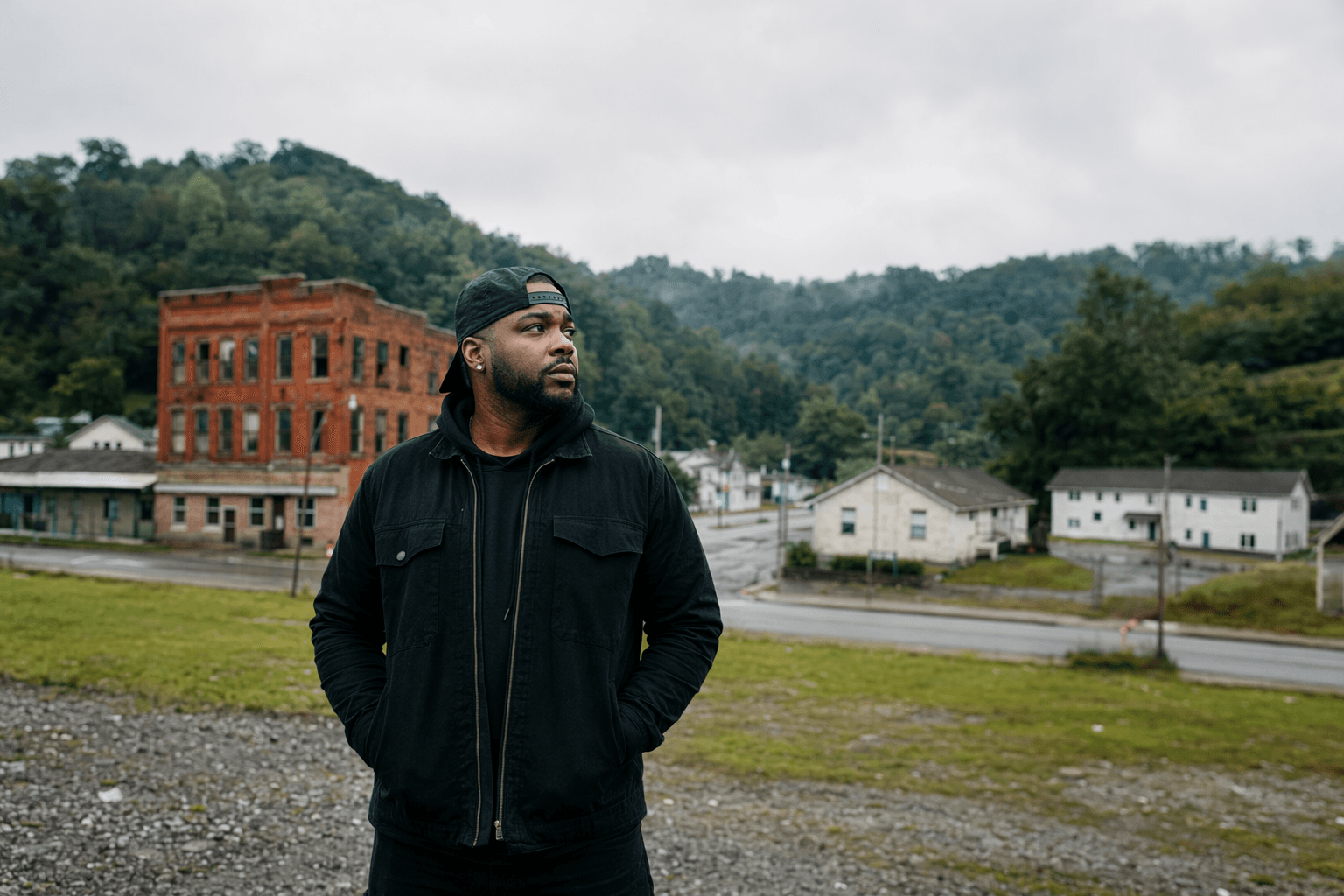
DeJuan Young, known online as Black Zack, carries McDowell County with him in a way that feels bigger than nostalgia. His story starts in Gary, where he grew up in a town that has long lived in the shadow of coal, school changes, and population loss, yet still produces voices people across West Virginia recognize. For McDowell County, that matters because his videos do more than entertain. They turn a small place into a point of reference for outsiders trying to understand the county’s roads, its people, and its stubborn sense of identity.

Gary is not just a backdrop in that story. The community was developed by U.S. Steel in 1902 as part of a coal-mining complex, and over 54 years of full operation the Gary complex shipped more than 200 million tons of coal. That industrial legacy still shapes how people read the town today. With only 762 residents counted in the 2020 Census, Gary is small enough that a single school change can alter daily life for families, and large enough in memory to still stand for an era when coal, transportation, and company-town order defined the landscape.
A school closure that changed a family route
Young’s childhood shifted when Gary Elementary School closed in the mid-2000s, with third-party school data listing 2006. His mother worked in Welch, the county seat, and decided to move the family to Princeton in Mercer County rather than send him to another local school. That one decision reflects a wider McDowell County reality: when a school closes, the consequence is not abstract policy. It changes commutes, custody arrangements, after-school routines, and where a child grows up.
That local detail helps explain why Young’s work feels rooted rather than performed. He did not come to McDowell County from the outside to extract a story from the hills. He grew up in the county, left because of the practical demands created by a school closure, and carried those memories into the work he does now. The result is a storyteller who can speak about coal roads, hollow life, and the human cost of distance with the authority of someone who has lived it.
Why Black Zack reads as a hometown voice
Young is also a former coal hauler, and that part of his background matters as much as the online persona. Long drives through the same hills he talks about on camera gave him a working knowledge of the county’s geography, its weather, and the rhythm of travel between places that outsiders often flatten into a single map dot. When he talks about West Virginia, he is not borrowing the scenery. He is speaking from work routes, family choices, and the kind of everyday repetition that teaches a person how a county really functions.
That is why his audience response reaches beyond simple fandom. Black Zack has become a recognizable hometown voice, and in a county as small as McDowell, recognition carries civic weight. When one creator is widely seen as a credible local narrator, he starts shaping what people think they know about Gary, the coal roads, and the county itself. The story becomes more than personal branding. It becomes an informal form of representation, one that can make McDowell feel less like a place described by others and more like a place describing itself.
What McDowell County’s numbers say about the backdrop
The scale of the county helps explain why one voice can loom so large. McDowell County had 19,111 residents in the 2020 Census, making it the southernmost county in West Virginia and one of the state’s most sparsely populated places. In a county that small, schools, roads, churches, and local businesses are not just services. They are the social infrastructure that holds memory together.
That scale also helps explain why stories about people like Young resonate. McDowell County is not only a place of public headlines or emergency coverage. It is a place that produces truckers, workers, families, and digital storytellers who carry the county’s identity outward. When those voices reach larger audiences, they become part of how the county is understood beyond its borders, especially in a digital era when a hometown personality can travel farther than any local newspaper route ever could.
Education disruption and the long path back
Young’s school story fits into a broader county history of disruption and recovery. McDowell County schools were taken over by the state in 2001 because of chronically low student performance, then returned to local control in 2013 after improvements. That 12-year stretch reveals that the school closure Young experienced was not an isolated event. It was part of a longer pattern of instability that affected how children were educated, where families lived, and whether the county could keep young people connected to home.
Reconnecting McDowell, announced in 2011 as a public-private partnership involving the governor of West Virginia, the state Board of Education, and the American Federation of Teachers, was created in response to those deep economic and educational struggles. The initiative has described countywide gaps in healthcare, social services, broadband, mentoring, and housing, all of which make it harder to attract and keep teachers and to build stable community life. It also said all McDowell County schools but one elementary school offer mental health services, a reminder that the county’s recovery is being built one support system at a time.
Welch, renewal, and what outsiders miss
Welch remains central to that story, not only because it is the county seat but because it is where reinvention is visible. Renaissance Village in Welch was described as the first multistory construction in the city in more than 50 years. Planned to include 16 apartments plus retail and commercial space, it signals a form of rebuilding that goes beyond slogans and into bricks, jobs, and neighborhood function.
That matters for how Black Zack’s story lands. If outsiders see only coal roads and decline, they miss the people and projects trying to hold McDowell County together. If they hear only the online persona, they miss the childhood in Gary, the school closure that pushed a family to Princeton, the former coal hauler’s understanding of the road system, and the countywide struggles that shaped him. His reach gives McDowell County a familiar face, but his roots give that face weight.
In the end, Black Zack’s role as an informal ambassador says as much about McDowell County as it does about him. A county this small does not need many voices to be heard, but it does need voices that are trusted. Young has become one of them, and that means the story outsiders think they know about Gary, Welch, and the coal roads is increasingly being told by someone who lived it first.
This article was produced by Prism’s automated news system from verified source data, official records, and press releases, then run through automated quality and moderation checks before publishing. The system is built and supervised by the people who set the standards it runs under. Read our full AI policy.
Did this article answer your question?