Three Chicago Men Sentenced in FCI McDowell Drone Smuggling Plot
A federal court sentenced Arturo Joel Gallegos to three years of probation for his role in a 2024 plot to deliver contraband to FCI McDowell using a drone. The case highlights ongoing concerns about contraband deliveries at the local prison, interagency enforcement in McDowell County, and the policy choices surrounding sentences for prison smuggling conspiracies.

A federal judge on December 17, 2025 imposed three years of probation on Arturo Joel Gallegos, 27, of Chicago, after he admitted conspiring to introduce contraband onto the grounds of the Federal Correctional Institution McDowell. Gallegos pleaded guilty to conspiracy to introduce or attempt to introduce contraband into a federal prison, admitting he traveled to Welch, West Virginia on February 1, 2024 with two other Chicago men and expected to be paid for his role.
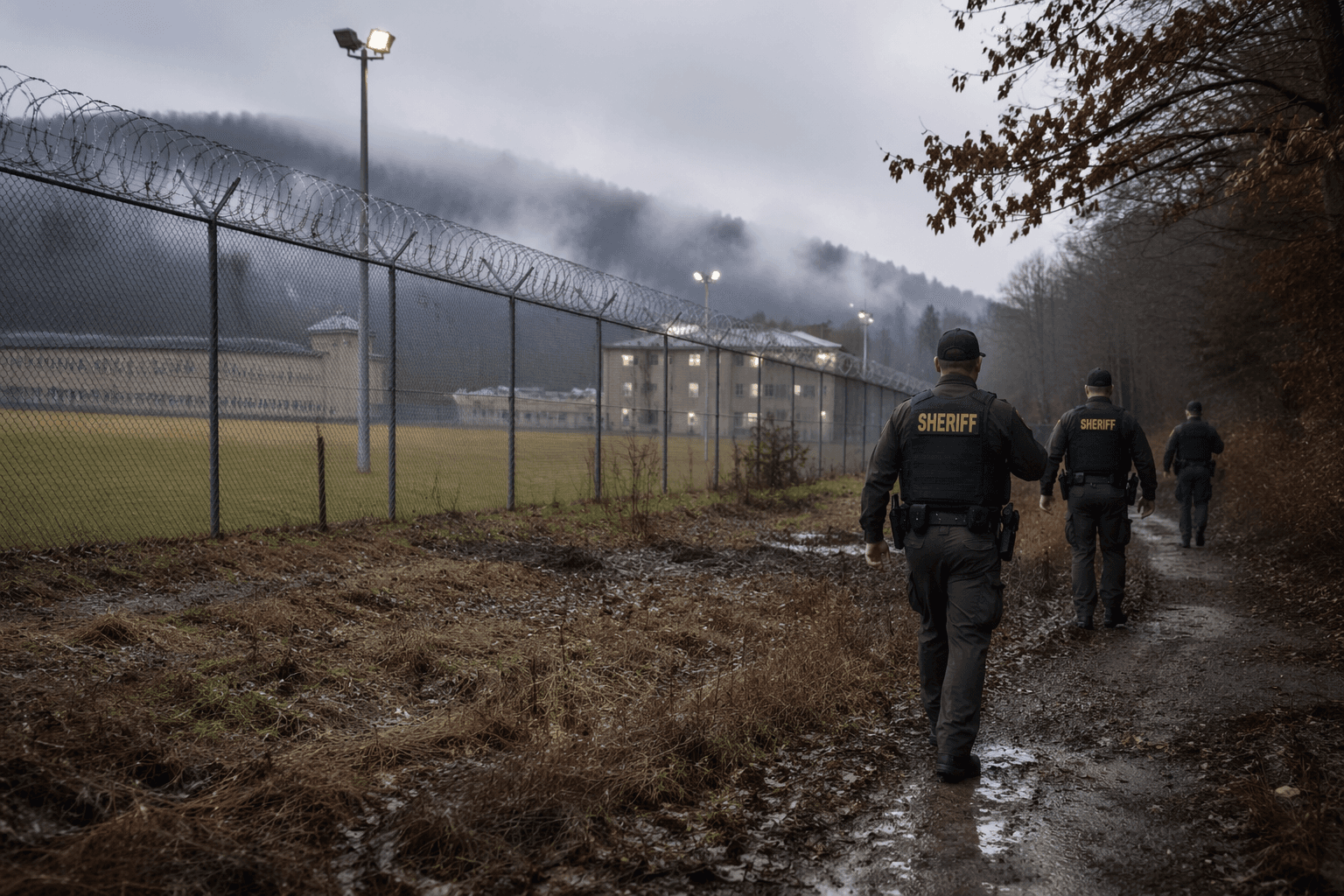
Court records and law enforcement statements describe how officers intercepted Miguel Angel Aleman Piceno, 23, and Francisco Alejandro Gonzalez, 25, near the prison fence on the afternoon of February 1. Investigators found a drone and camouflaged packages that contained tobacco, four cell phones, chargers, phone cards and marijuana. Officers later encountered Gallegos at a Welch motel where they seized packaging materials, tobacco and marijuana. Aleman Piceno pleaded guilty on June 2, 2025. Gonzalez pleaded guilty on July 7, 2025. Each co defendant was sentenced to three years of federal probation.
Senior United States District Judge David A. Faber imposed the sentence. United States Attorney Moore Capito announced the result and commended investigative work by the Federal Bureau of Investigation, the Federal Bureau of Prisons and the McDowell County Sheriff’s Office. Assistant United States Attorney Brian D. Parsons prosecuted the case. Related court documents can be located on PACER under Case No. 1:24 cr 126.

For McDowell County residents, the case reinforces how drone enabled contraband poses a persistent operational challenge for correctional facilities and local law enforcement. The interception demonstrates coordinated federal and county response, but it also raises questions about resource allocation for surveillance, perimeter security upgrades and investigative capacity at smaller jurisdictions. Sentencing to probation rather than confinement may prompt public discussion about deterrence and proportionality for conspiracies to supply prisons.
The incident also underscores the importance of civic engagement in shaping local priorities. County officials, state delegates and federal representatives will face decisions about funding and policy tools to counter technology enabled smuggling. Public oversight and clear communication from law enforcement and corrections officials will be important as McDowell County assesses security and community safety measures.
This article was produced by Prism’s automated news system from verified source data, official records, and press releases, then run through automated quality and moderation checks before publishing. The system is built and supervised by the people who set the standards it runs under. Read our full AI policy.
Did this article answer your question?