Welch courthouse tells McDowell County's story of railroads and labor conflict
Welch's courthouse rose with the railroad, then became the setting for Sid Hatfield and Ed Chambers' murders and the Mine Wars.
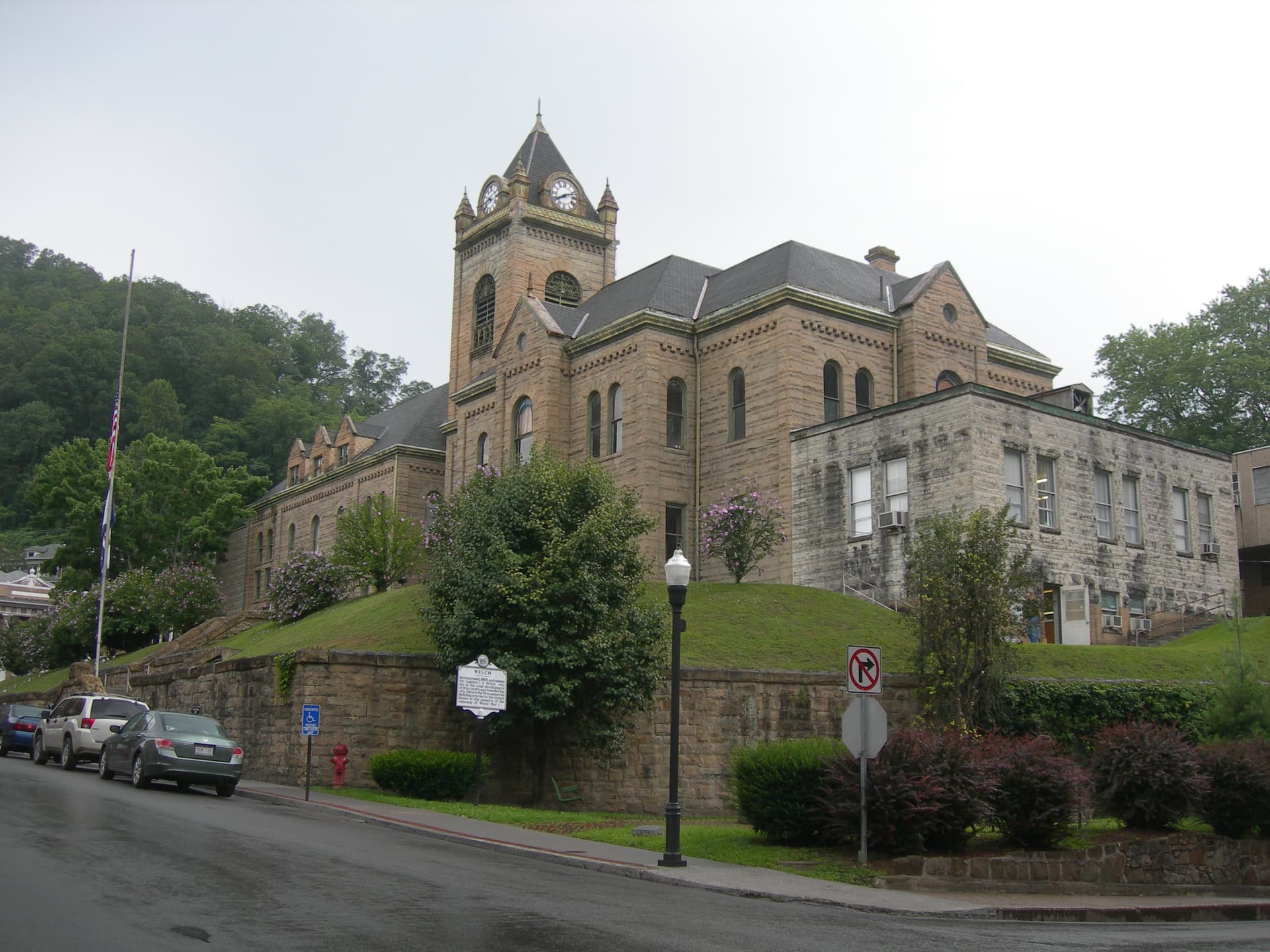
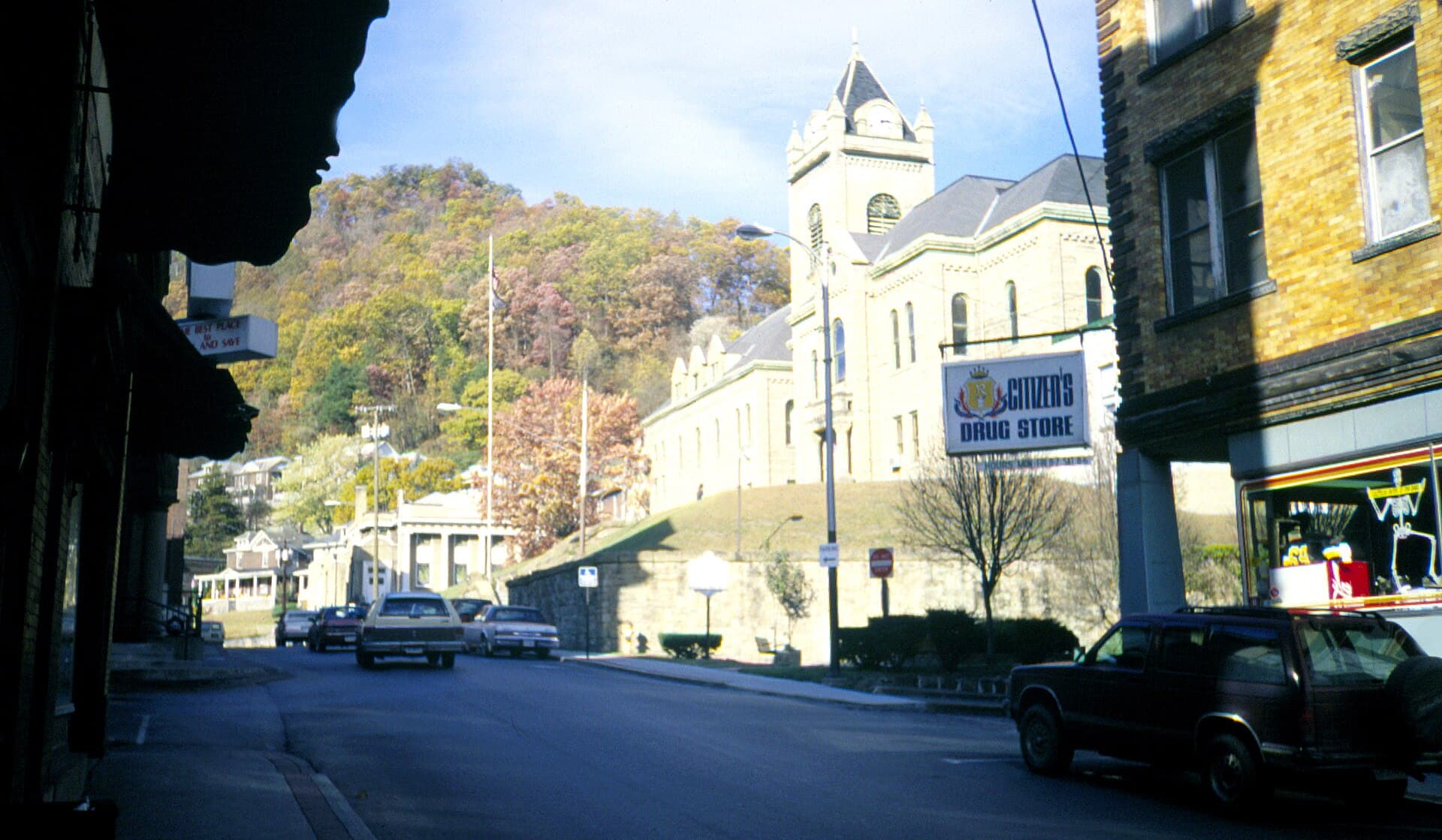
On Wyoming Street, the McDowell County Courthouse still sits above downtown Welch. Its stone walls and tower mark the place where county government, railroad-driven growth, and labor conflict all pressed into one small mountain seat.
How Welch became the county seat
McDowell County was created on February 28, 1858, from part of Tazewell County, Virginia, and its courthouse history began in less settled fashion than the present building suggests. The county court met in different places before the seat settled at Perryville, now English, by 1872, and the present courthouse is the third one the county built, following log structures in Wilco and Perryville.
The move to Welch in 1892 came after the Norfolk & Western Railway reached the town and helped turn it into a fast-growing commercial center. Welch was incorporated in 1894, but the seat shift was not simply a neat civic upgrade. In accounts preserved by the West Virginia Encyclopedia, James A. Strother and Trigg Tabor secretly moved the county records to Welch during the county-seat fight.
A courthouse built to match a growing county
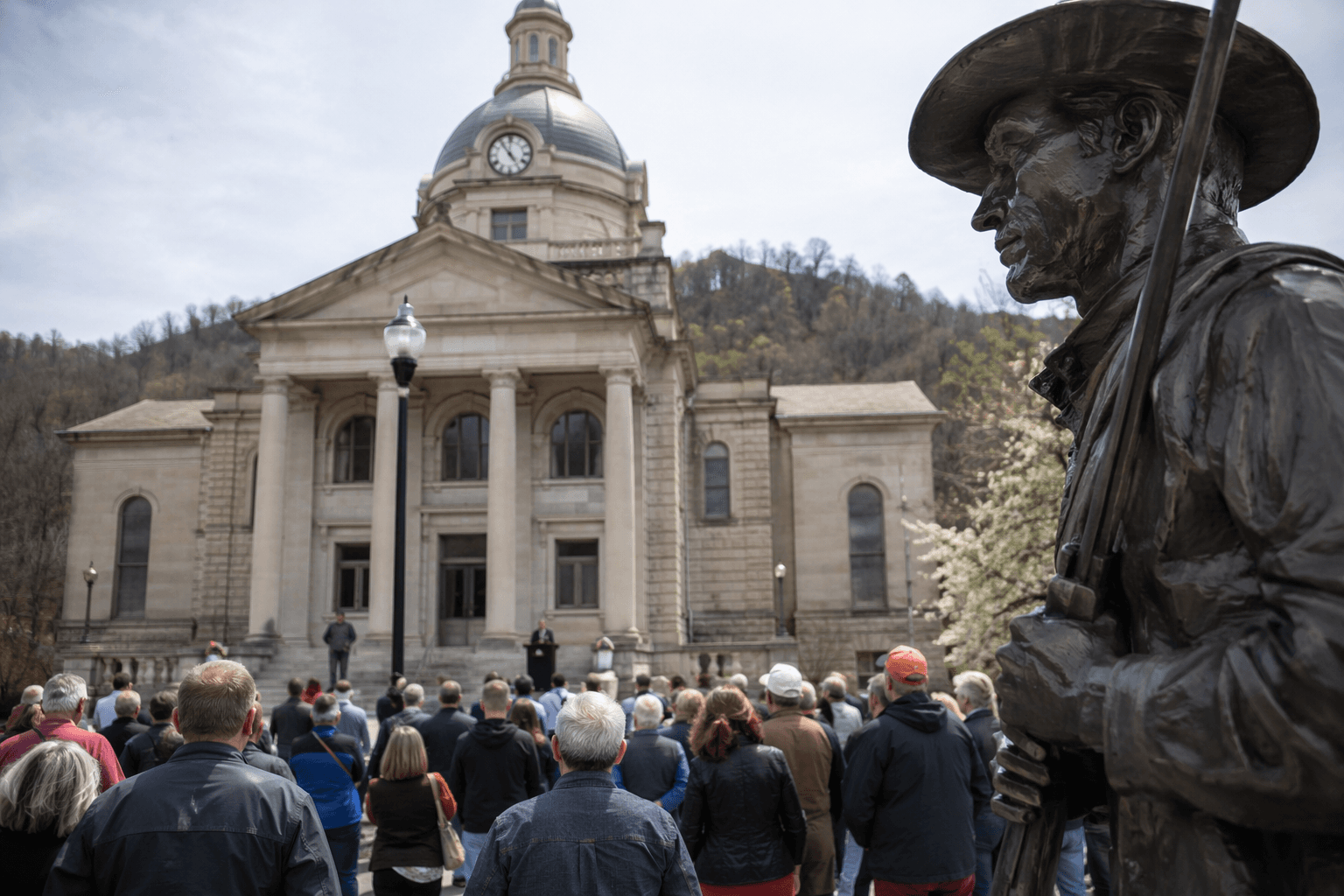
The courthouse that stands today dates to 1893-94 and was designed by Frank Pierce Milburn, who was just 25 when his plan won a competition that drew input from 12 architects. It is Romanesque Revival, built of quarry-faced Berea sandstone and native rock-faced stone, with a square three-story tower at the northeast corner.
The original structure measured about 90 by 56 feet, and its basement was not an empty undercroft but a working part of county administration. It long served as a vault for county records and housed the heating system.
Growth did not stop there. An addition went up in 1909 for county and city clerks’ offices, built to match the original Romanesque style and use identical materials, and later additions followed in 1963 and 1979. The courthouse was listed on the National Register of Historic Places on August 29, 1979.

The day the courthouse became a Mine Wars landmark
On August 1, 1921, Sid Hatfield and Ed Chambers were summoned to the McDowell County Courthouse for a scheduled court appearance, and before they could enter, they were shot and killed by Baldwin-Felts agents on the courthouse steps.
The National Park Service identifies the killings as one of the catalysts for the Battle of Blair Mountain, the violent peak of the West Virginia Mine Wars. That broader conflict centered on McDowell, Mingo and Logan counties in 1920 and 1921, but McDowell’s role was not limited to proximity. Operators and local law enforcement used severe measures to suppress union activity in neighboring Mingo County, and when Mingo jails filled, some detained miners and organizers were moved to the McDowell County jailhouse.
Hatfield had already been acquitted in a Mingo County trial connected to the Matewan violence, but he still faced a pending charge related to blowing up a tipple in Mohawk, and that trial had been set for Welch before the venue changed. The National Park Service identifies C. E. Lively as one of the Baldwin-Felts agents involved in the killings.
Why the courthouse still matters in Welch
From Wyoming Street above downtown, the courthouse anchors a compact historic landscape that includes nearby markers and the Welch Commercial Historic District.
This article was produced by Prism’s automated news system from verified source data, official records, and press releases, then run through automated quality and moderation checks before publishing. The system is built and supervised by the people who set the standards it runs under. Read our full AI policy.
Did this article answer your question?