Chinle Recovery Center Reopens, Expanding Peer Services for Navajo Communities
The Day At A Time Club in Chinle reopened March 18 after losing its Talbot House facility in 2018, backed by a $780K ARPA contract signed by President Nygren.
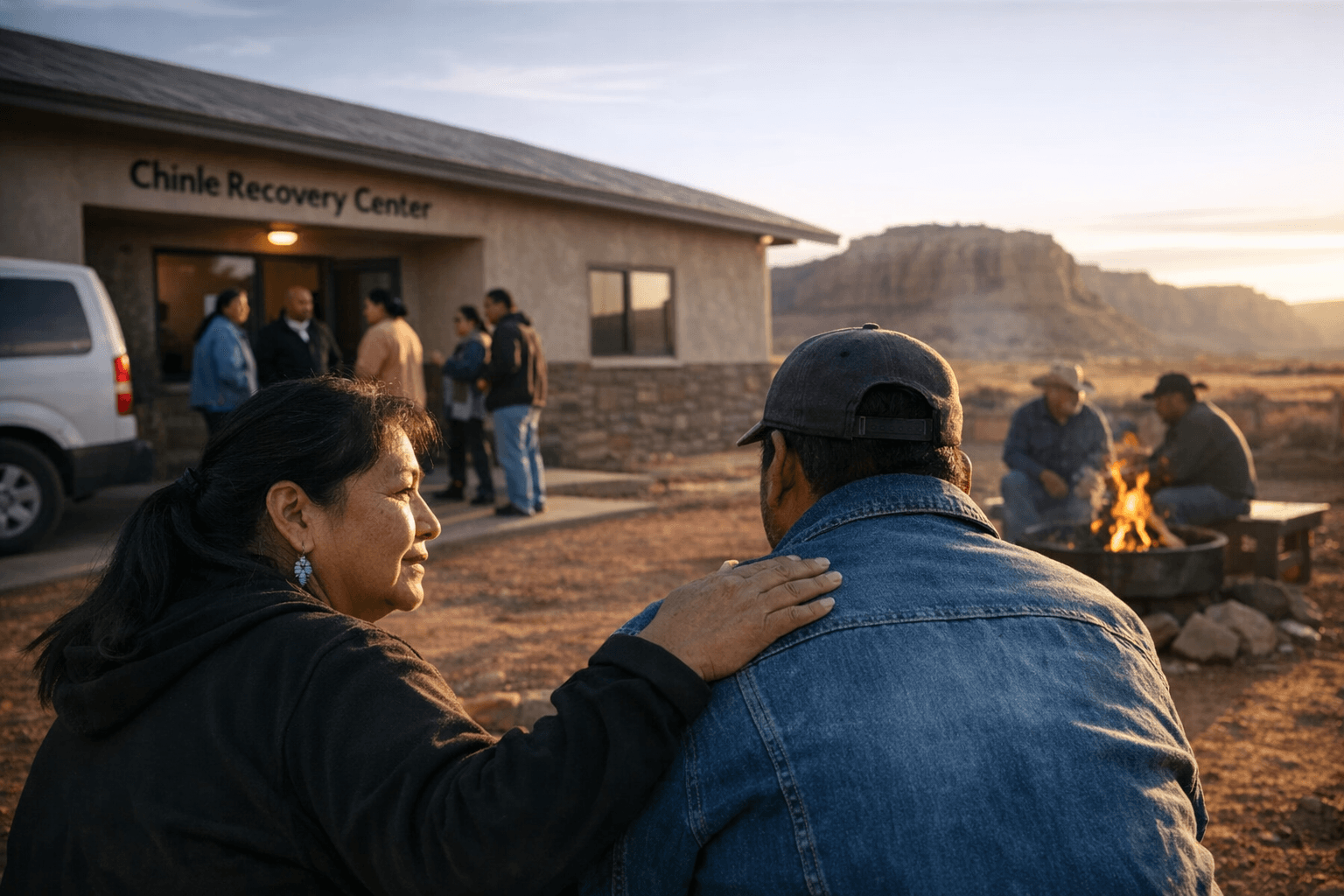
President Buu Van Nygren joined Navajo Nation Council members, veterans, recovery advocates, and community volunteers in Chinle on March 18 to bless and dedicate the Day At A Time Club, Inc. Chinle Recovery Center, restoring peer-recovery services to a community that had been without a dedicated facility since the Talbot House was lost in 2018.
"This moment represents years of persistence and partnership to restore critical recovery services for our people," President Nygren said at the opening.
The Day At A Time Club has operated on the Navajo Nation since 1978, making it the longest-running recovery provider in the Nation. Its Chinle presence had been anchored by the Talbot House until that facility closed eight years ago. The new center rebuilds on that legacy with an expanded slate of services: Alcoholics Anonymous and Narcotics Anonymous meetings, Family Groups, Wellbriety Talking Circles, Sweat Lodge ceremonies, mentorship programs, and telehealth counseling through community behavioral health partnerships.
Funding came from multiple sources. The 25th Navajo Nation Council directed a combination of Navajo Nation Fiscal Recovery Funds and chapter allocations, with contributions from the Chinle Chapter and surrounding chapters. ARPA funds also played a central role. "In 2023, I had the honor of signing a $780,000 contract with Day At A Time Club to expand alcohol and substance abuse counseling services," President Nygren said. "That investment helped lay the groundwork for the center that opened today." The building itself was donated by Dr. Joe Shirley Jr., Apache County District I Supervisor, and his team.
Speaker of the Navajo Nation Council Crystalyne Curley attended and highlighted the broader purpose of the project. Community leaders framed the center as "a reflection of collective responsibility and resilience among the Diné people."
Veterans, long-time recovery members, and community volunteers were credited with keeping the project moving through years of grassroots advocacy before construction could be completed.
"The need for recovery services across the Navajo Nation remains a pressing reality," President Nygren said. "Centers like this can help our people heal physically, mentally, and spiritually, allowing them to rejoin our communities. This should be our mission: to provide the support systems that make recovery possible.
This article was produced by Prism’s automated news system from verified source data, official records, and press releases, then run through automated quality and moderation checks before publishing. The system is built and supervised by the people who set the standards it runs under. Read our full AI policy.
Did this article answer your question?