Gallup feature highlights hidden local spots and off-route attractions
Gallup's lesser-known stops tie Route 66, downtown tours, and Native culture into a practical alternative to the county's highway exits.
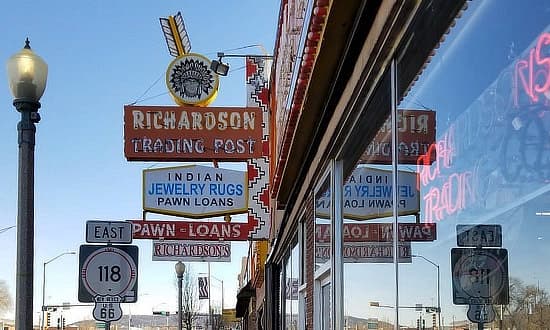
Gallup works best when you leave the obvious Route 66 pull-offs and follow the places that sit just beyond the interstate. The city describes itself as “nestled in spectacular red rock beauty and located along historic Route 66,” and the strongest off-route stops turn that identity into something residents and visitors can actually use. In McKinley County, a hidden-spot guide is not filler. It is a map to downtown landmarks, public art, scenic gathering places, and Native cultural resources that help define daily life here.
Why downtown still matters
Downtown Gallup remains the easiest place to understand the city’s visitor identity because it is where history, commerce, and public space overlap. Visit Gallup calls downtown a “thriving cultural hub,” with handcrafted treasures, treats, and historic landmarks, which is why a walk off the main highway can still feel like a full day out. The center of town is not just a backdrop for tourists passing through. It is one of the clearest examples of how Gallup blends local business with the region’s Route 66 identity.
A useful place to start is the historic core around the McKinley County Courthouse and the public library. Gallup New Deal Art offers public tours of both buildings with an expert guide, focusing on New Deal architecture, murals, decorative arts, and Native American painting. Those tours turn two everyday civic buildings into a compact lesson in how federal-era design and local art shaped the city’s public face.
The road story still shapes the county
Route 66 officially opened on November 11, 1926, and Gallup’s official history describes the highway as the route that crossed New Mexico from Tucumcari to Gallup and “changed the state forever.” That history still shows up in the way the city presents itself today, from downtown branding to heritage stops that sit a short drive from the main traffic flow. For a local reader, that matters because the road is not only a nostalgia piece. It still organizes where visitors go, where they stop, and what they remember.
Gallup and McKinley County marked that legacy again in November 2025, when officials unveiled New Mexico’s first Route 66 Centennial Monument. The timing is important because the centennial year has made Route 66 part of the present tense again, not just a memory. A feature on hidden local spots fits that moment by steering attention to the places that give the road local meaning rather than just a photo stop.
Red rock, balloon fields, and open space
The county’s off-route appeal is not limited to buildings and museums. Visit Gallup promotes the Red Rock Balloon Rally as an annual event with more than 100 hot air balloons, a reminder that the city’s outdoor identity is as strong as its downtown one. Red Rock Park remains one of the area’s recognizable anchors, pairing the landscape with the kind of wide-open setting that makes Gallup feel different from other stops along I-40.
That landscape matters because it gives travelers a reason to slow down. In a place defined by red rock scenery and Route 66 heritage, the best local stops often combine view, event, and place in a single visit. The balloon rally, the park, and the downtown core all show how Gallup turns geography into an attraction rather than a backdrop.
Native culture is central, not peripheral
Any serious guide to McKinley County also has to treat Native culture as a central part of the story. The region sits within a wider network of Navajo Nation and Zuni community life, and visitor resources point travelers toward institutions that can ground a visit in those traditions. Destination Native America lists the Zuni Visitor Center as a regional visitor resource, a useful marker for people looking to understand the area through Native perspectives rather than through roadside shorthand.
That broader cultural frame is reinforced by outside attention as well. Forbes published a June 15, 2026 article on a 150-mile stretch of Route 66 in New Mexico where thousand-year-old traditions remain vibrant, underscoring that the road corridor is also a living cultural landscape. In McKinley County, that means an off-the-beaten-path stop is not just a detour. It can be an entry point into a much older and still-active story about place, community, and continuity.
Why the county needs a broader map
The scale of McKinley County helps explain why these smaller destinations matter so much. Gallup-McKinley County Schools says its district covers 4,957 square miles, while Census Reporter lists McKinley County at 5,451.1 square miles and 68,945 residents in 2024. USAFacts puts the county at about 68,100 residents in 2025, representing 3.2% of New Mexico’s population. Those numbers point to a large, spread-out county where a single guide to lesser-known places can help connect communities that are physically far apart.
That geographic reality also changes how people move through the county. When attractions are spread across more than 5,000 square miles, the value of a downtown tour, a public art stop, or a regional visitor center goes beyond tourism. It helps people see the county as a network of places, not just a line of exits. In Gallup, that network runs from the courthouse and public library to Red Rock Park, the Zuni Visitor Center, and the Route 66 landmarks that keep the city tied to its own history.
Taken together, those places explain why an off-route guide still matters here. Gallup’s civic buildings, cultural institutions, and scenic stops give residents and visitors a way to experience McKinley County as a lived-in place with depth, not just a stretch of pavement. With Route 66’s centennial in view and downtown Gallup continuing to serve as a cultural hub, the county’s hidden spots are part of the main story.
This article was produced by Prism’s automated news system from verified source data, official records, and press releases, then run through automated quality and moderation checks before publishing. The system is built and supervised by the people who set the standards it runs under. Read our full AI policy.
Did this article answer your question?