Gallup Receives Crime-Gun Ballistic Technology as New Mexico Builds Statewide Network
Shell casings recovered at Gallup crime scenes can now be matched against a statewide ballistic database that already linked 10 guns to 24 incidents statewide.
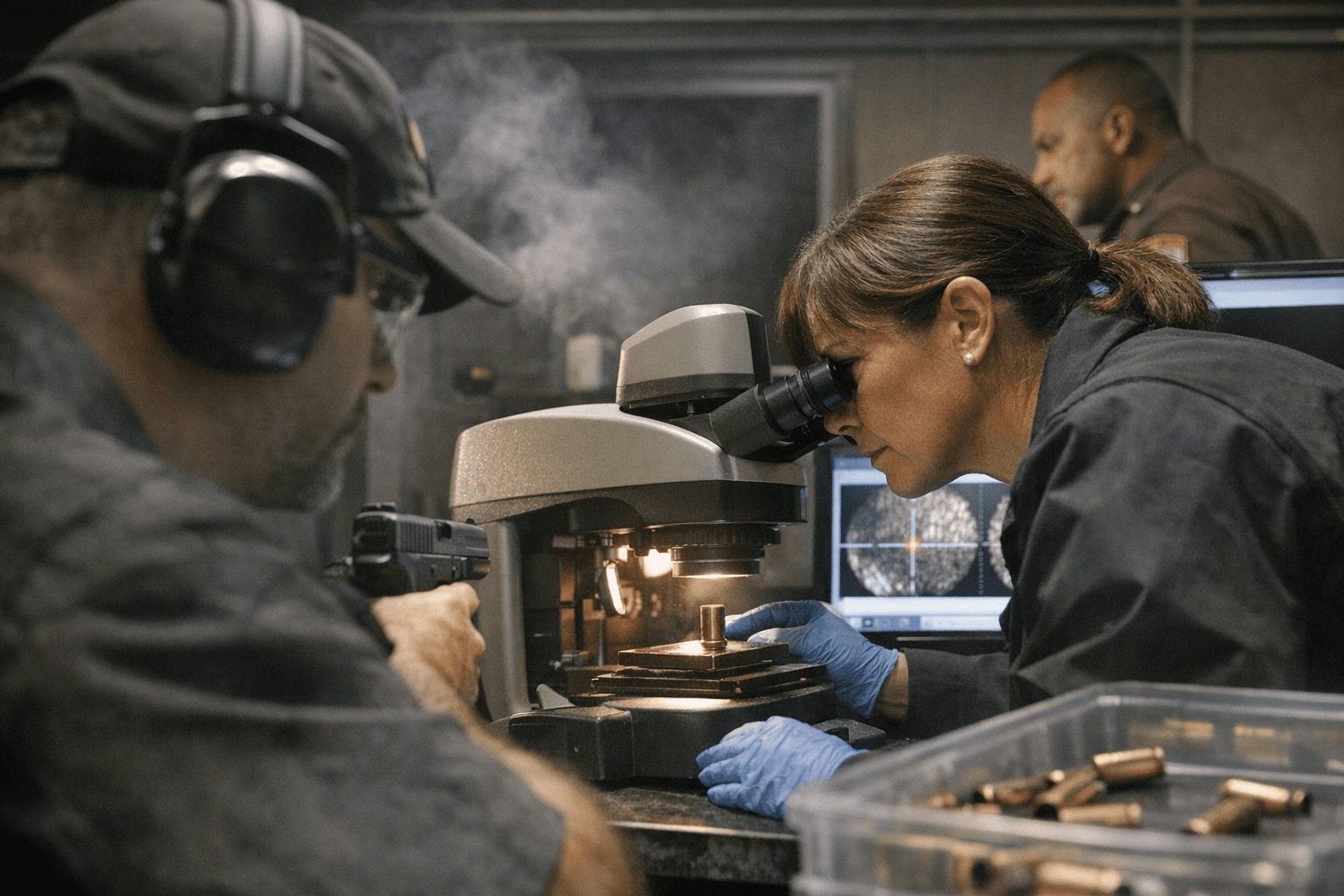
The Gallup Police Department now has direct access to ballistic-matching technology capable of linking shell casings recovered at local crime scenes to firearms used in shootings across New Mexico and the nation, bypassing the weeks-long waits that previously accompanied sending physical evidence to outside laboratories.
New Mexico Attorney General Raúl Torrez unveiled the state's Crime Gun Intelligence Center in December 2025, positioning National Integrated Ballistic Information Network machines at five sites: San Juan County, Gallup, Albuquerque, Roswell, and Las Cruces. The rollout makes New Mexico the first state to organize such a statewide network, and early results are concrete: the New Mexico Department of Justice reported that the system had already matched 10 firearms to 24 separate incidents.
The technology works by treating the microscopic marks a gun leaves on a shell casing as a ballistic fingerprint. When investigators recover a casing at a scene, they can image it locally and upload it to a federal ATF database, which generates a ranked list of potential matches. Trained technicians at ATF's NIBIN National Correlation and Training Center then conduct a confirmation review. Nationally, that center carries a 98.9% confirmation rate on the leads it produces, and across 378 locations in fiscal year 2024, the program generated more than 217,000 leads.
That national track record matters for Gallup because the city's violent-crime burden is unusually high for a community of its size. SafeHome.org ranks Gallup as leading all New Mexico cities in violent crime, at approximately 1,360 incidents per 100,000 residents. The city recorded seven homicides in 2024, up from five the year before, while its overall crime rate climbed roughly 4 percent year over year. More than 97 percent of New Mexico communities have a lower crime rate than Gallup according to NeighborhoodScout analysis of 2023 FBI data, and a resident's chance of becoming a victim of violent or property crime sits at approximately 1 in 19.
The placement of a machine in Gallup carries particular weight because of the city's geography. Gallup borders the Navajo Nation and serves as a commercial hub for surrounding rural communities, meaning local investigators routinely encounter cases that cross tribal, county, and state jurisdictional lines. Those cross-jurisdictional cases have historically been among the hardest to close, and a shared ballistic database accessible to federal, tribal, and state agencies simultaneously could change that calculus.
Torrez joined Doña Ana County Sheriff Kim Stewart in Las Cruces on April 3 to highlight the rollout. "This Crime Gun Intelligence Center is the first of its kind, allowing for start-to-finish information gathering and intelligence analytics that will be key to the arrests of dangerous criminals," Torrez said. Stewart, whose county received one of the five machines, framed participation as a prerequisite for progress. "We are not going to win the war of crime, or push crime back, or whatever it is we do without collaboration," she said. "We are not going to do it without working together."
That emphasis on collaboration points directly at what the technology cannot do on its own. NIBIN matches only what gets submitted: if local agencies do not consistently collect and image ballistic evidence, or if personnel trained to act on leads are stretched thin, the machine's value diminishes. The statewide database feeds into the national ATF network, and New Mexico state officials hold direct access as well, but critical questions remain unanswered in the rollout's public documentation: who below the state level can query the database, how long ballistic records are retained, and how the Gallup Police Department and McKinley County Sheriff's Office will measure whether the technology is actually shortening the time between a shooting and a suspect's identification.
The Department of Justice's early match data, 10 guns linked to 24 incidents within months of the center's launch, signals genuine investigative utility. Whether the Gallup machine generates a comparable return will depend on how consistently investigators feed it evidence and how quickly agencies on both sides of county and tribal lines act when leads come back.
This article was produced by Prism’s automated news system from verified source data, official records, and press releases, then run through automated quality and moderation checks before publishing. The system is built and supervised by the people who set the standards it runs under. Read our full AI policy.
Did this article answer your question?