McKinley County courthouse showcases New Deal art and Lloyd Moylan mural
The McKinley County Courthouse is Gallup’s free public art room, anchored by Lloyd Moylan’s 2,000-square-foot courtroom mural and a larger New Deal collection.
The McKinley County Courthouse at 201 West Hill Avenue in Gallup is easy to miss if you think of it only as a place for hearings and county business. In reality, it is one of McKinley County’s most accessible public art spaces, a New Deal-era building where the courtroom itself holds Lloyd Moylan’s monumental mural and the rest of the structure carries art in its walls, fixtures and furnishings. For residents who pass it on the way downtown, the building doubles as a civic gallery that costs nothing to enter when the public side of the courthouse is open.
A courthouse built as public art
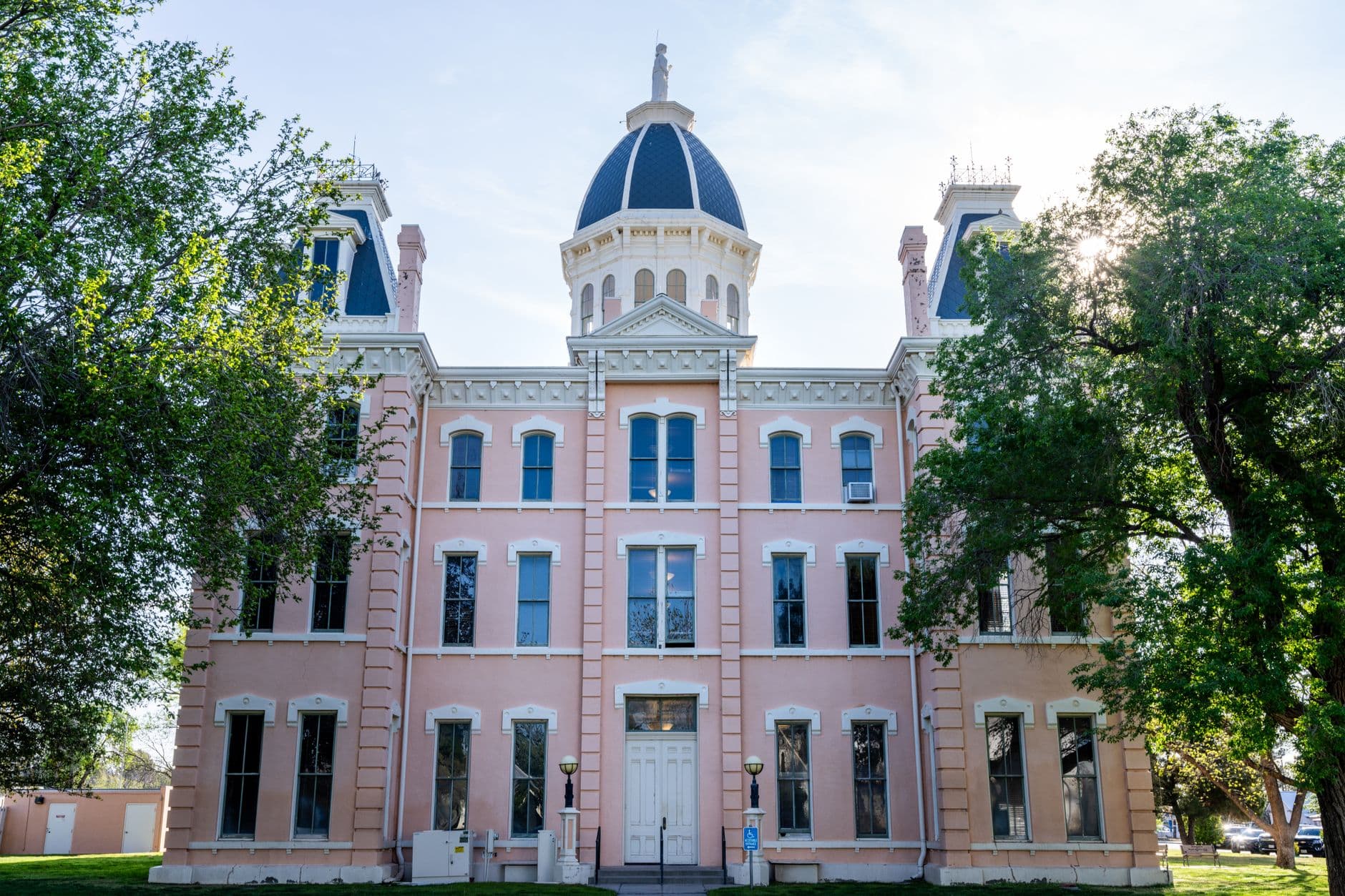
The courthouse was built in 1938 and 1939 with Public Works Administration funding, part of the federal New Deal push that tied architecture, labor and art together in one civic project. Gallup New Deal Art says the cornerstone was laid in 1938 and the building opened in 1939, while Living New Deal lists the site as completed in 1940 in its database, reflecting the broader New Deal-era completion date used there. The building was designed by Trost & Trost Architects & Engineers of El Paso, Texas, in the Spanish Pueblo Revival style, which gives it a distinctly regional profile rather than the blank institutional look of many modern courthouses.
That design matters because the courthouse was never meant to stand apart from the town’s identity. It was built as a government building, but also as a cultural marker for Gallup, one that places New Mexico’s architectural language right into the machinery of county government. The result is a courthouse that still functions as a seat of law while also preserving one of the county’s most important visual records.
Lloyd Moylan’s courtroom mural is the centerpiece
The courthouse’s crown jewel is Lloyd Moylan’s courtroom mural, described by Gallup New Deal Art as a 2,000-square-foot historical painting. The site says the mural is Moylan’s greatest artistic achievement and fully realizes his creative philosophy and worldview. That scale is what makes the room memorable: this is not a small decorative panel tucked into a hallway, but an immersive work that turns the courtroom into a narrative space.
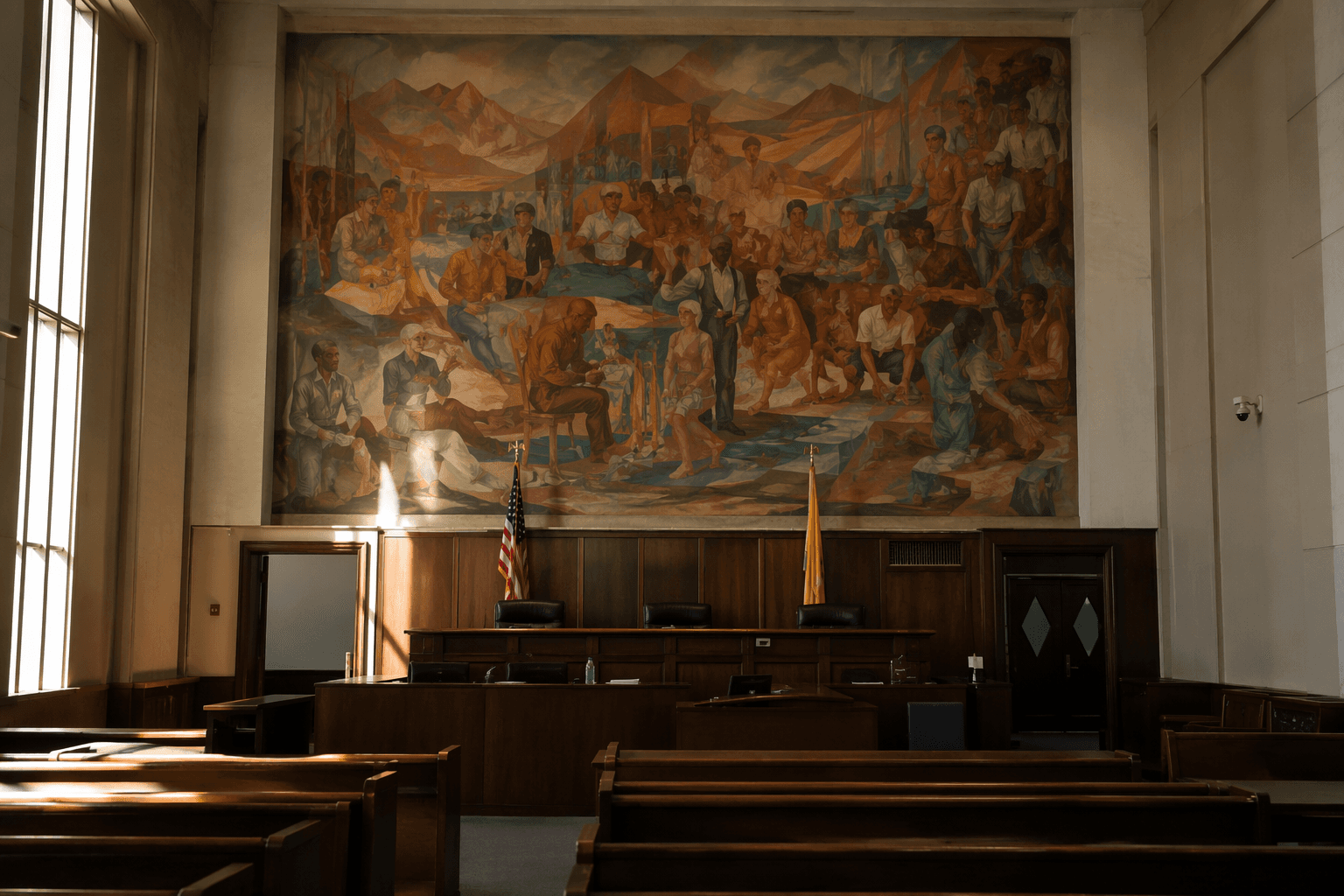
Moylan matters far beyond this one room. Gallup New Deal Art says he is the most-represented artist in the town’s New Deal art collection, and nearly one-third of the easel paintings in the collection are by him. His work gives the courthouse a local voice, because the mural is tied directly to McKinley County history rather than to generic Southwestern imagery. Visitors standing in the courtroom are looking at a visual story rooted in the county itself.
The mural was restored in 1991, which is an important marker of preservation. It shows the work has been treated as a living civic asset rather than a forgotten relic, and it raises the practical question that hangs over any government-owned art collection: who pays for the next round of conservation, how often is the work inspected, and how much of the collection’s story is actually explained to the people walking through the building?
More than one artwork, and more than one room
The courthouse is not a single-mural destination. Living New Deal identifies the old courthouse as an exceptional collection site for New Deal art, with murals, tile works, lamps and furniture all part of the building’s artistic fabric. That matters because the collection is easy to flatten into one famous image, when the site actually shows how comprehensive New Deal-era design could be inside a public building.
Gallup New Deal Art says the town’s New Deal art collection is split among six separate locations, and the courthouse and public library downtown are part of its public tour route. That makes the courthouse a starting point, not an ending point, for anyone trying to understand Gallup’s civic art landscape. The building sits within a larger network of New Deal architecture and decoration, so a visit here opens into a broader view of how Gallup presented itself in the 1930s and how that visual identity still shapes the town.
The collection is also framed as more than local ornament. Gallup New Deal Art describes the courthouse as a gateway to New Mexican visual identity and the origins of Native American painting. That framing gives the mural a wider cultural weight, because it places McKinley County within a regional story about how public art helped define New Mexico’s image.
How to see it, and what to look for when you do
The courthouse is most useful as a public art stop because it is part of daily county life. People do not have to plan a museum visit or buy a ticket to encounter it; they can see the architecture from downtown, and when they enter the building for county business or a public tour route, the art is already built into the space. The courthouse and the public library together give Gallup New Deal Art a downtown route that is easy to follow and grounded in civic buildings rather than isolated art venues.
- the Spanish Pueblo Revival design by Trost & Trost Architects & Engineers
- the courtroom mural’s 2,000-square-foot scale
- the range of New Deal materials beyond painting, including tile work, lamps and furniture
- the 1991 restoration, which marks the mural as actively cared for rather than merely displayed
When you are inside, the details to watch for are concrete:
The courthouse also remains part of the county’s present tense. McKinley County announced a “Spirit of the Ceremonial” sculpture installation in the courthouse rotunda, a reminder that the building is still being interpreted as a public cultural space, not sealed off as a static monument. That matters for accountability as much as for aesthetics, because a government building that houses art should also make clear how the art is preserved, how it is funded and who is responsible for telling its story.
In Gallup, the courthouse is still doing two jobs at once. It is where county government works, and it is one of the clearest places in town to see how New Deal money, regional architecture and local memory were turned into public art that still belongs to everyone walking through the door.
This article was produced by Prism’s automated news system from verified source data, official records, and press releases, then run through automated quality and moderation checks before publishing. The system is built and supervised by the people who set the standards it runs under. Read our full AI policy.
Did this article answer your question?