Naabik’íyáti’ Committee advances rights-of-way for energy projects
A Navajo Nation committee moved a rights-of-way bill that could reset power-line access across Four Corners corridors, affecting lease revenue and land control.
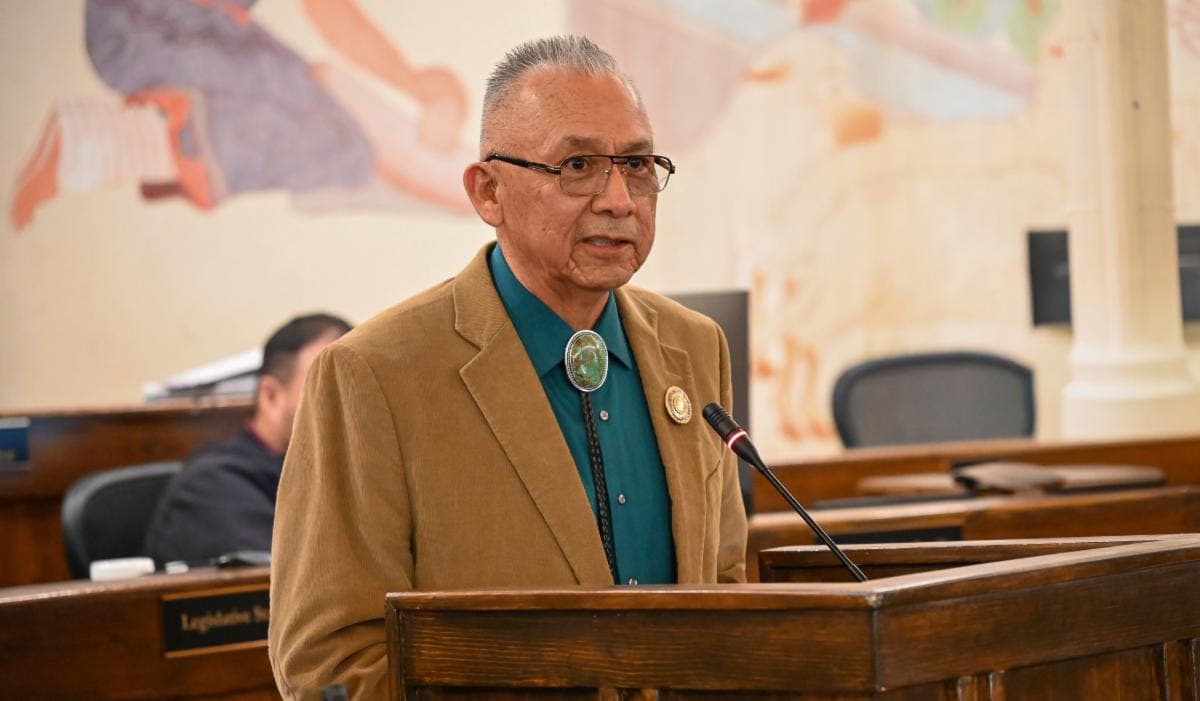
Rights-of-way tied to the Four Corners energy corridor moved a step forward in Window Rock, putting lease revenue, land access and future utility approvals back at the center of Navajo Nation decision-making. The Naabik’íyáti’ Committee advanced Legislation 0105-26, a measure that would amend Resolution CF-08-11 and change how future and existing rights-of-way tied to energy development agreements are handled.
The bill was sponsored by Council Delegate Rickie Nez and co-sponsored by Council Delegates Casey Allen Johnson and Danny Simpson. Under the proposal, the Resources and Development Committee would be authorized to approve amendments to certain rights-of-way, ratify earlier rights-of-way resolutions and approve future rights-of-way connected to those agreements. Draft legislative materials say the changes would affect the existing Arizona Public Service right-of-way term, moving it from July 6, 2041 to July 6, 2031, and would reissue the right-of-way for transmission lines tied to the Four Corners Power Plant on Navajo Nation trust lands in New Mexico and Arizona.

The committee action matters well beyond the council chambers because the corridor crosses Navajo Nation communities and carries the infrastructure that keeps the plant and related utilities in place. Council materials say the point of the legislation is to support renewals for energy infrastructure that generate revenue for the Navajo Nation and compensation for individual Indian landowners whose allotments are crossed by transmission lines. The Navajo Nation Council says the issue had been under discussion for three years and involved Navajo Transitional Energy Company and Arizona Public Service leadership, with the goal of allowing continued operations at the Four Corners Power Plant.
A 2011 federal environmental record of decision already approved a 25-year site lease extension for the plant and renewed transmission line and access road rights-of-way linked to the project. More recently, Navajo Transitional Energy Company said it acquired a seven-percent ownership interest in units four and five of the plant in July 2018, underscoring why the legal structure around the site still carries political and financial weight.
The measure also drew scrutiny inside the committee. Delegate Amber Kanazbah Crotty raised concern that the bill did not define energy development agreements clearly enough, warning that some rights-of-way resolutions could face challenge without more detail. Nez said the 2011 Council treated energy and mineral agreements as falling within that category and had already delegated final rights-of-way approval authority to the Resources and Development Committee. Brenda Jesus, chair of that committee, said the legislation was being aligned with existing Navajo Nation law and the intent of the energy development agreements.
The broader policy backdrop is the 2013 Navajo Nation Energy Policy, which calls for maximizing proceeds from energy development and seeking a more equitable share in agreements already on the books. For communities along the utility and access routes, the stakes are practical: who controls the land, how long the corridors remain in place and whether the Nation and individual landowners see the benefit.
This article was produced by Prism’s automated news system from verified source data, official records, and press releases, then run through automated quality and moderation checks before publishing. The system is built and supervised by the people who set the standards it runs under. Read our full AI policy.
Did this article answer your question?