Navajo Nation committee approves FY 2027 budget instruction manual
New budget rules will put payroll, utilities and chapter funding first for Navajo programs serving McKinley County, with June hearings next.

Navajo Nation departments that serve Gallup, Church Rock, Crownpoint and other McKinley County communities will enter the next budget cycle under new rules that put utilities, personnel, insurance and chapter funding ahead of everything else.
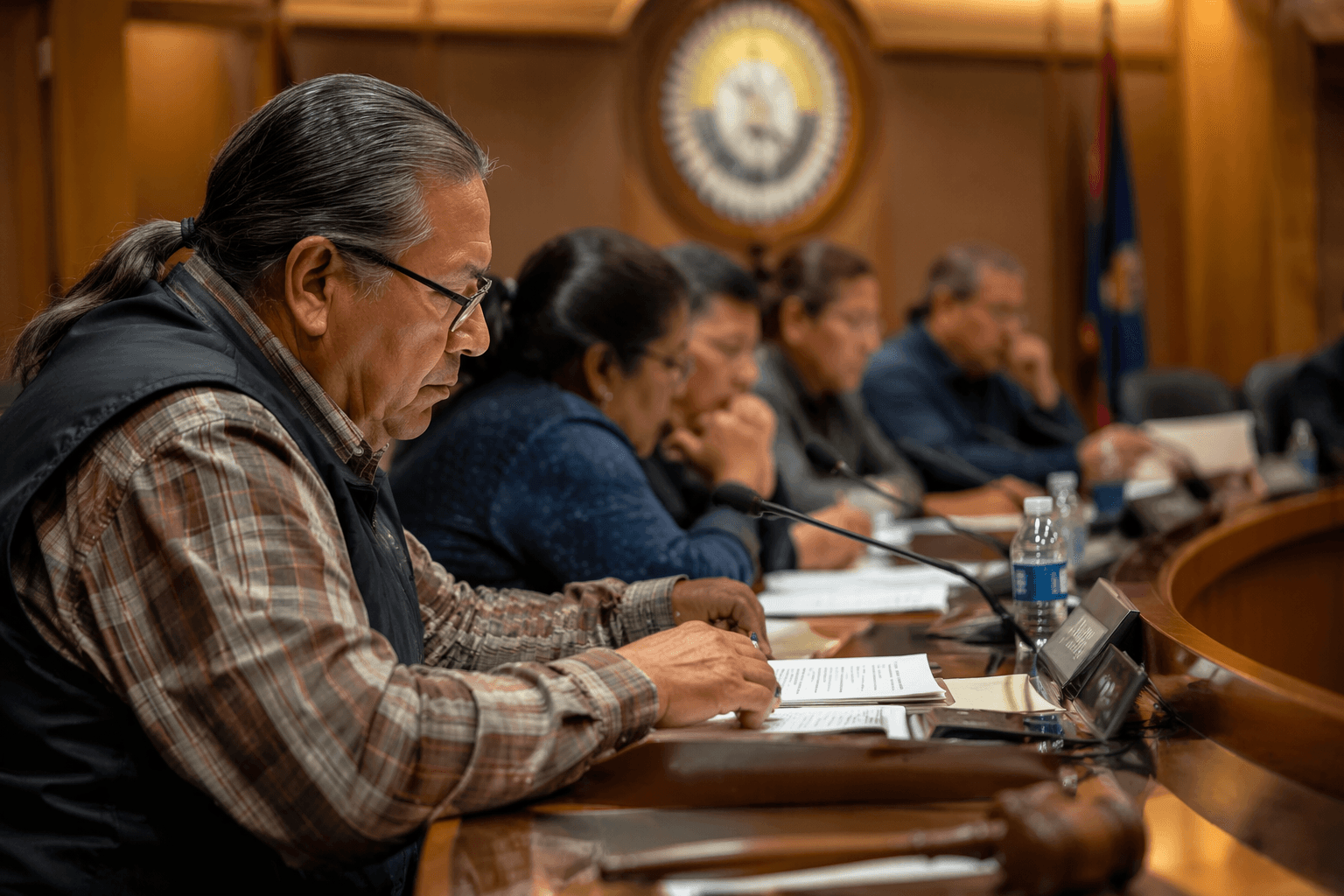
The Navajo Nation Budget and Finance Committee approved the Fiscal Year 2027 Budget Instruction Manual on April 30 in Window Rock, adopting Resolution No. BFAP-09-26 after receiving a spending report from Controller Sean McCabe. The manual is the framework departments will use to build their FY2027 requests, and it will decide how agencies justify numbers, what counts as base funding and which items get pushed into an unmet-needs pool.
McCabe supported the plan with four years of audited and unaudited expenditure data, covering FY2022 through FY2025 across all three branches of government. That data was used to set a more accurate FY2027 planning base amount, a change that matters because the first dollars in the door will now be steered toward mandatory costs before extra asks are considered.

For McKinley County residents, the biggest impact will come in the programs that touch daily life. The revised framework prioritizes essential operating costs and direct services first, then opens an unmet-needs process for later requests. That could shape funding for health services, schools, roads, public safety and chapter operations tied to Navajo communities on the eastern side of the Nation, including the Gallup area where tribal and county-adjacent systems often overlap.
The planning picture is tied to a projected FY2027 general fund of about $218.2 million after $83.3 million in legislative set-asides, from gross revenue of about $301.5 million. The controller’s March 31 projection broke that down into roughly $64.9 million in tax revenue, $26.0 million from oil and gas, $39.6 million from coal, and $81.2 million from land rental, rights-of-way and business site lease income. A separate April 1 report said the Nation held about $630.8 million in in-house investments, $306 million in long-term investments and a $1.38 billion grant fund portfolio.
The committee’s April 15 work session showed how broad the budget process already is, with presentations from the Office of Management & Budget, the Office of the Controller, Human Resources, Judicial Branch human resources, Community Development, Tax and Finance, and Legislative Counsel. That session also covered the budget timetable, fund allocation, project budgeting, account setup and later sections of the manual.
Public hearings for the FY2027 Comprehensive Budget are scheduled for June, giving chapter members and other residents a chance to weigh in before spending priorities are locked in. The six-member committee, which oversees fiscal, financial, investment, contracting and audit policies, has already shown it is willing to rework allocations, including a $15.7 million shift during FY2026 oversight budget meetings.
This article was produced by Prism’s automated news system from verified source data, official records, and press releases, then run through automated quality and moderation checks before publishing. The system is built and supervised by the people who set the standards it runs under. Read our full AI policy.
Did this article answer your question?