Navajo Nation Report Finds McKinley County Schools Punish Native Students More Harshly
McKinley County's school district expelled Native students at 10 times the state rate, a new Navajo Nation Human Rights Commission report found. Now the AG's office has confirmed "troubling disciplinary practices."
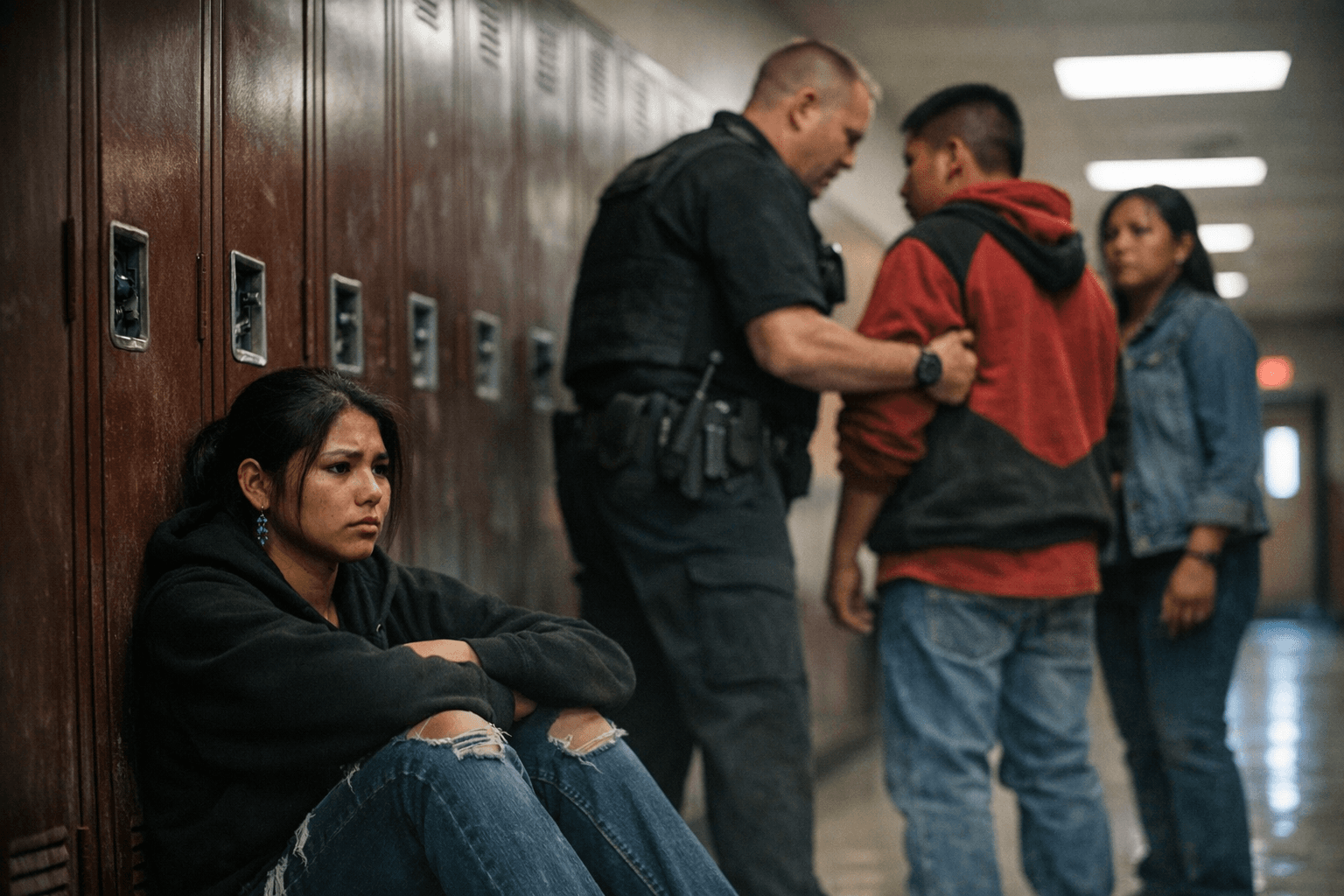
The Navajo Nation Human Rights Commission called on Gallup-McKinley County Schools to develop an alternative, culturally appropriate disciplinary system after finding the district imposes disproportionately harsh punishments, including expulsion, on Native American students.
The 25-page commission report cited a December 2022 investigation by New Mexico In Depth and ProPublica that found Indigenous students were punished more harshly than other students in New Mexico during the four years ending in 2020, with Gallup-McKinley largely responsible for the disparity. The district carries the largest Indigenous student body of any local school district in the country. It enrolls a quarter of the state's Native students but was responsible for at least three-quarters of Native expulsions in the 2016-17 to 2019-20 school years. The district's annual expulsion rate was 4.6 per 1,000 students, at least 10 times as high as the rest of the state during those four school years. District employees also called law enforcement to address alleged misbehavior by Native students at four times the rate of the rest of New Mexico.
The district, with half of its 32 schools on tribal land, is simultaneously facing a federal probe into discrimination against Native American job candidates and staff, compounding pressure on a district where roughly 70% of the roughly 13,000 students are Native American, most of them Navajo.
Across the four hearings held at Navajo Nation chapter houses last fall, 39 Navajo citizens, including parents, grandparents, leaders and district employees testified. Most described insufficient cultural awareness and training among district employees. One unnamed woman, caring for her three grandchildren after their mother's death, testified that she did not feel heard when district employees disciplined her youngest granddaughter and that the punishment was "harsh and insensitive to their circumstances." Community members also raised concerns about language barriers, discriminatory hiring, problems with special education plans, and inadequate classroom heating. Some witnesses cried at hearings, afraid their words would get back to the district, and parents spoke on behalf of children too afraid to testify themselves.
"It's our kids, our students, who are suffering the consequences of entrenched racism," said Wendy Greyeyes, Ph.D., an associate professor of Native American studies at the University of New Mexico and chair of the commission. Greyeyes said the problems go beyond discipline: "A lot of other things were brought up in terms of systematic failures of funding structures, of keeping and maintaining buildings, and being responsive to creating a culturally inclusive environment."
The commission's report seeks a formal agreement between the Navajo Nation and Gallup-McKinley for the district to adopt a restorative justice-oriented discipline policy, modeled on existing talking-circles programs at New Mexico's Cuba Independent Schools district and the STAR School east of Flagstaff, Arizona, on the Navajo Nation. In addition to a restorative justice approach, the commission called on the New Mexico Public Education Department to more proactively examine disciplinary data to identify disparities and called for a "comprehensive financial audit" of whether the district provides more funding to schools off the reservation than to those within its boundaries.
Lauren Rodriguez, Attorney General Raúl Torrez's chief of staff, said the agency's "exhaustive" investigation into student discipline at Gallup-McKinley calls for the state Public Education Department to enforce student discipline data reporting requirements and better track that data. The investigation identified "troubling disciplinary practices," but it is not clear under state law that the AG can "pursue formal legal action against the district for this particular conduct." That gap, Rodriguez said, is why Torrez has pushed for comprehensive state civil rights legislation since 2023. Previous efforts failed, but Torrez remains committed to legislation that would provide his office with the legal tools necessary to address civil rights violations.
Interim Superintendent Jvanna Hanks, through a spokesperson, called the commission's work "important" and noted that district employees participated in each of the four hearings. "Today, GMCS has new leadership and a new school board, and we are working to continue and to further address the kinds of concerns addressed in the Commission's report," she said.
This article was produced by Prism’s automated news system from verified source data, official records, and press releases, then run through automated quality and moderation checks before publishing. The system is built and supervised by the people who set the standards it runs under. Read our full AI policy.
Did this article answer your question?