Navajo Nation reviews screwworm plan after Texas cases raise concern
Texas screwworm cases forced Navajo officials to reopen a 20-year-old animal-health plan, with ranchers, pets and local food supplies all at stake.
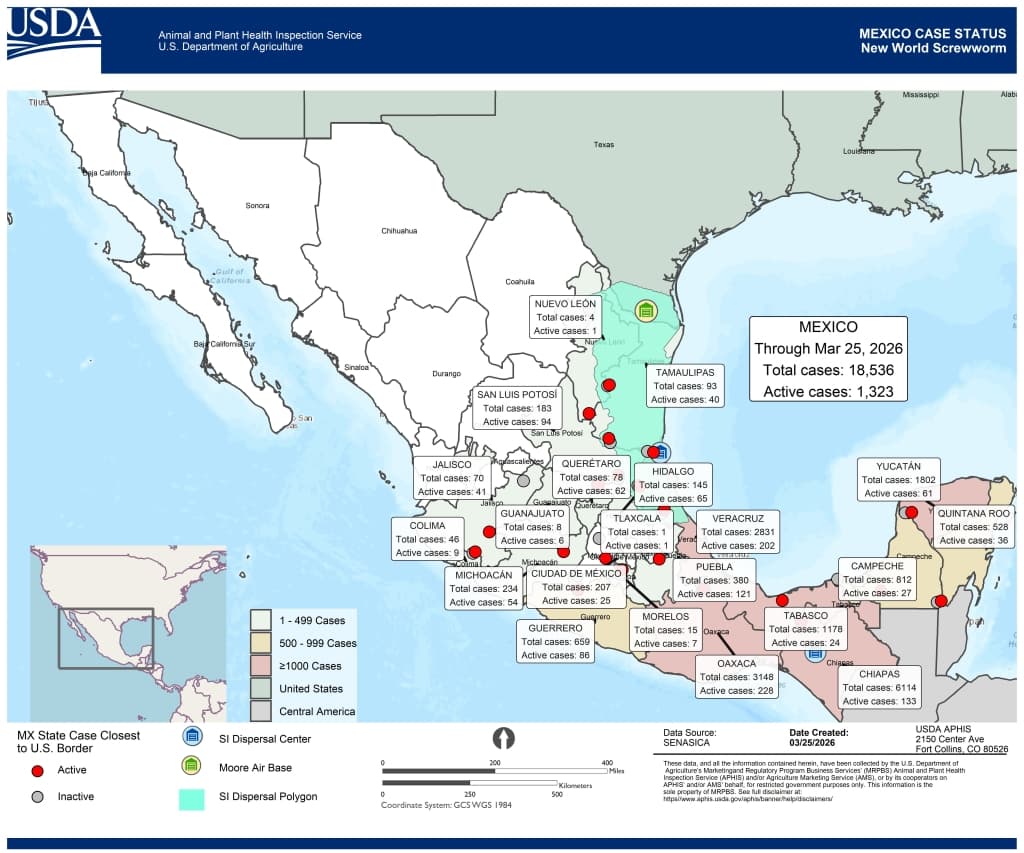
The Navajo Nation is revisiting a more than two-decade-old emergency plan as New World screwworm cases in Texas push the threat closer to McKinley County and the rest of the region. For Diné ranchers, pet owners and families tied to livestock and local food production, the review is meant to get ahead of a parasite that can quickly turn into an expensive animal-health crisis.
USDA confirmed the first U.S. animal case in the current outbreak on June 3, 2026, in a 3-week-old calf in Zavala County, Texas. By June 8, USDA’s current-status page listed six U.S. cases total, including a dog in Lea County, New Mexico, underscoring how quickly the problem has moved beyond one Texas herd and into the wider Southwest.

The Centers for Disease Control and Prevention says the outbreak has been moving northward through Central America and Mexico since 2023, but no locally acquired human infestations have been reported in the United States. USDA says New World screwworm can infest livestock, pets, wildlife, occasionally birds and, rarely, people, which is why a case in one county can raise concerns for animal owners far outside the initial detection zone.
That broader risk is what makes the Navajo Nation Department of Agriculture’s review important. The department says it is the lead agency for protecting rangelands, livestock and agricultural resources on the Navajo Nation, so any updated response plan could affect how the Nation handles animal inspections, communication, movement controls and coordination with veterinarians, producers and federal officials if the threat edges closer to Window Rock, Crownpoint, Thoreau, Gallup or other communities across McKinley County.
Federal officials are also leaning on old lessons. USDA says the United States eradicated New World screwworm in 1966 using the sterile insect technique and eliminated a small outbreak in the Florida Keys in 2017. Now, USDA says it is expanding sterile-fly production toward about 500 million flies per week and has created a dedicated New World Screwworm Directorate within APHIS, a sign that officials expect prevention and rapid response to matter as much as containment. For Navajo communities that depend on livestock and local agricultural commerce, the current review is a warning not to wait for the parasite to arrive before tightening the response.
This article was produced by Prism’s automated news system from verified source data, official records, and press releases, then run through automated quality and moderation checks before publishing. The system is built and supervised by the people who set the standards it runs under. Read our full AI policy.
Did this article answer your question?