New Mexico primary opens to independent voters in first semi-open election
Independent voters could finally pull a primary ballot, but McKinley County’s real challenge was figuring out the new rules before the polls closed.
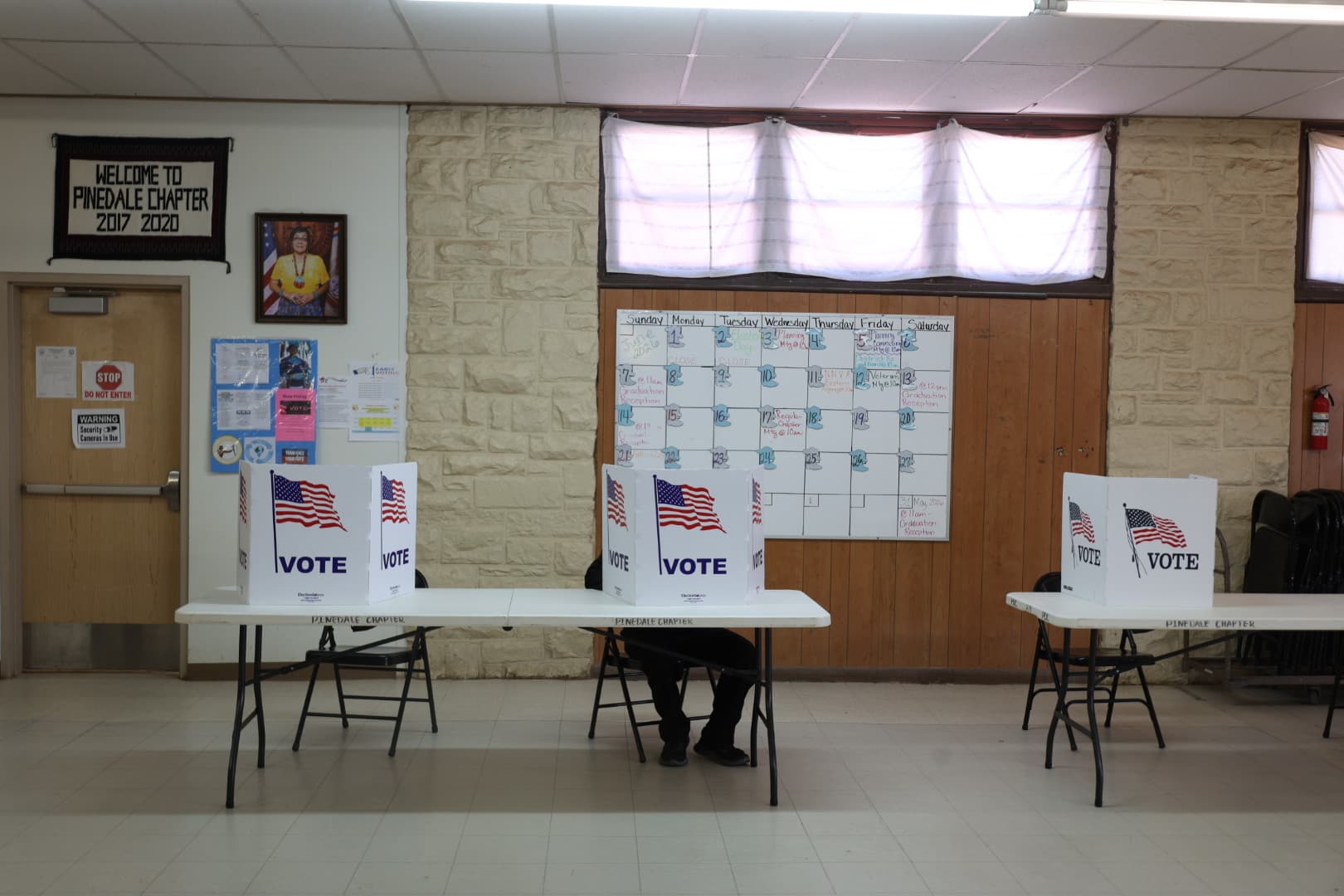
What changed for McKinley County voters
New Mexico entered a different kind of primary this year, and voters in Gallup, Zuni and across McKinley County felt that change at the most basic level: who could pick a ballot, and without re-registering. Secretary of State Maggie Toulouse Oliver’s office said this was the first primary in which independent voters could take part without updating their voter registration, a shift made possible when the state’s semi-open primary law took effect on July 1, 2025.
The new system kept party lines in place for major-party voters. But for people not registered with a qualified major or minor party, including independent and declined-to-state voters, the rule now allowed a choice of major-party ballot without changing registration. Voters registered with a qualified minor party had another option too: same-day voter registration at the polling place, which could be used to update their registration before voting.
By June 1, the state said more than 181,900 eligible voters had already cast ballots in the 2026 primary statewide, including more than 18,500 voters not registered with a qualified political party. That early participation mattered in McKinley County because the first test of the new law was not theoretical. It was whether voters who had sat out previous primaries, or assumed they could not participate, would understand that the rules had changed in time to use them.
The deadlines that mattered most
For anyone still deciding how to vote, the clock was already running down. The absentee-ballot request deadline had passed, so the remaining question was whether a mailed ballot had already been completed and returned in time. Completed mailed ballots had to be received by 7:00 p.m. on Election Day, and polling places were scheduled to be open from 7:00 a.m. to 7:00 p.m.
That 7 p.m. cutoff is the kind of detail that can decide a vote in a county where people may be balancing work, family obligations and travel time to a polling place. The state also said unofficial results would begin posting after 7:00 p.m., though counting can pause at 11:00 p.m. under state law if needed and continue the next day. For voters trying to follow the count from Gallup or Zuni, that meant the first figures would be quick, but not necessarily final.
The practical takeaway was straightforward: if a voter had not already mailed a ballot that would arrive by the deadline, in-person voting was the clearest path to make sure the ballot counted. The new rules made participation broader, but the timing rules still demanded attention.
Why the first semi-open primary mattered here
The 2026 primary was more than a procedural change. It opened the process to a larger pool of voters than New Mexico had in the older closed-primary system, and that mattered in counties where party registration has not always matched how people actually want to vote. Independent and unaffiliated voters could now take part without changing their registration first, which is a meaningful shift in a state with a large number of voters outside the major-party rolls.
That broader access showed up in the turnout numbers. New Mexico’s unofficial 2026 primary turnout reached 24.53%, with 345,469 ballots cast out of 1,408,185 eligible voters. In 2024, when the primary was still run under the older closed-primary rules, statewide turnout was 22.83%, with 231,947 ballots cast out of 1,015,862 eligible voters. The electorate was larger this time, and the state had clearly made room for more voters to participate.
The numbers also show why election officials kept pushing simple instructions. More than 18,500 early voters statewide were not registered with a qualified political party, which means the new system was not just a legal change on paper. It was already affecting who showed up and how they voted.
What the count said about McKinley County
McKinley County’s own results page showed 71 of 71 precincts fully reported, a sign that the local count had moved through every precinct without leaving gaps in the initial reporting. That matters in a county like this, where voters want to know whether the system is working as intended and whether ballots from places like Gallup, Zuni and the surrounding communities are being processed cleanly and on schedule.
The local result also helped answer a bigger question that hovered over the first semi-open primary: whether election access was improving in a way voters could actually use. Full precinct reporting does not solve every problem, but it does show a functioning count at the county level, and it gives voters a clearer read on how their ballots were handled once the polls closed.
For McKinley County, the value of the Secretary of State’s election-day guidance was not just that it listed rules. It translated a major legal change into practical terms at the moment people still needed it most. If a voter knew they were independent, they could now choose a major-party ballot without changing registration. If they had a mailed ballot, they knew the 7 p.m. deadline mattered. If they were waiting on results, they knew the first unofficial totals would come after 7 p.m. but could still evolve into the night.
That is the real shift in the first semi-open primary: more people are inside the process, but the process only works if the rules are clear enough for voters to act on them before the doors close.
This article was produced by Prism’s automated news system from verified source data, official records, and press releases, then run through automated quality and moderation checks before publishing. The system is built and supervised by the people who set the standards it runs under. Read our full AI policy.
Know something we missed? Have a correction or additional information?
Submit a Tip

