Record 16 candidates file for Navajo Nation president race, 86 seek Council seats
Sixteen candidates filed for Navajo Nation president, with 86 more seeking Council seats in a race that could reshape leadership by January 2027.
The Navajo Nation’s 2026 election opened with a record-sized presidential field and the prospect of major Council turnover, a combination that could change how tribal government handles budgets, services and chapter priorities across McKinley County and beyond.
Sixteen candidates filed for president by the close of the April 22 filing period, including incumbent President Buu Nygren of Red Mesa. He will face Navajo Nation Council Speaker Crystalyne Curley of Tséłání/Cottonwood, former Vice Presidents Frank Dayish Jr. of Chéch’iltah and Myron Lizer of St. Michaels, and Rock Point candidate Justin Jones, whose early entry helped signal how crowded the race would become. The rest of the field includes Kevin L. Cody of Piñon, Dr. Jordan Begay of Tonalea, Arvin Trujillo of Gad’íí’áí/Tókǫ’í, Debbie Nez-Manuel of Klagetoh, Tom T. Chee of Shiprock, Donovan Begay of Huerfano, Alexander Chambers of Shiprock, Emily Ellison of Chéch’iltah, Johnny Russell Jr. of Nageezi, Larry Noble of Steamboat and Andrew Curley of Houck.
The Navajo Election Administration’s unofficial list also showed 86 candidates competing for the Council’s 24 seats. Seventeen sitting delegates filed for re-election, while seven others either stepped away from another term or filed for higher office, deepening the turnover already expected under the new district map. Beyond the presidency and Council, two commissioner seats were open at Naschitti Chapter and one seat was open at Kayenta Township.
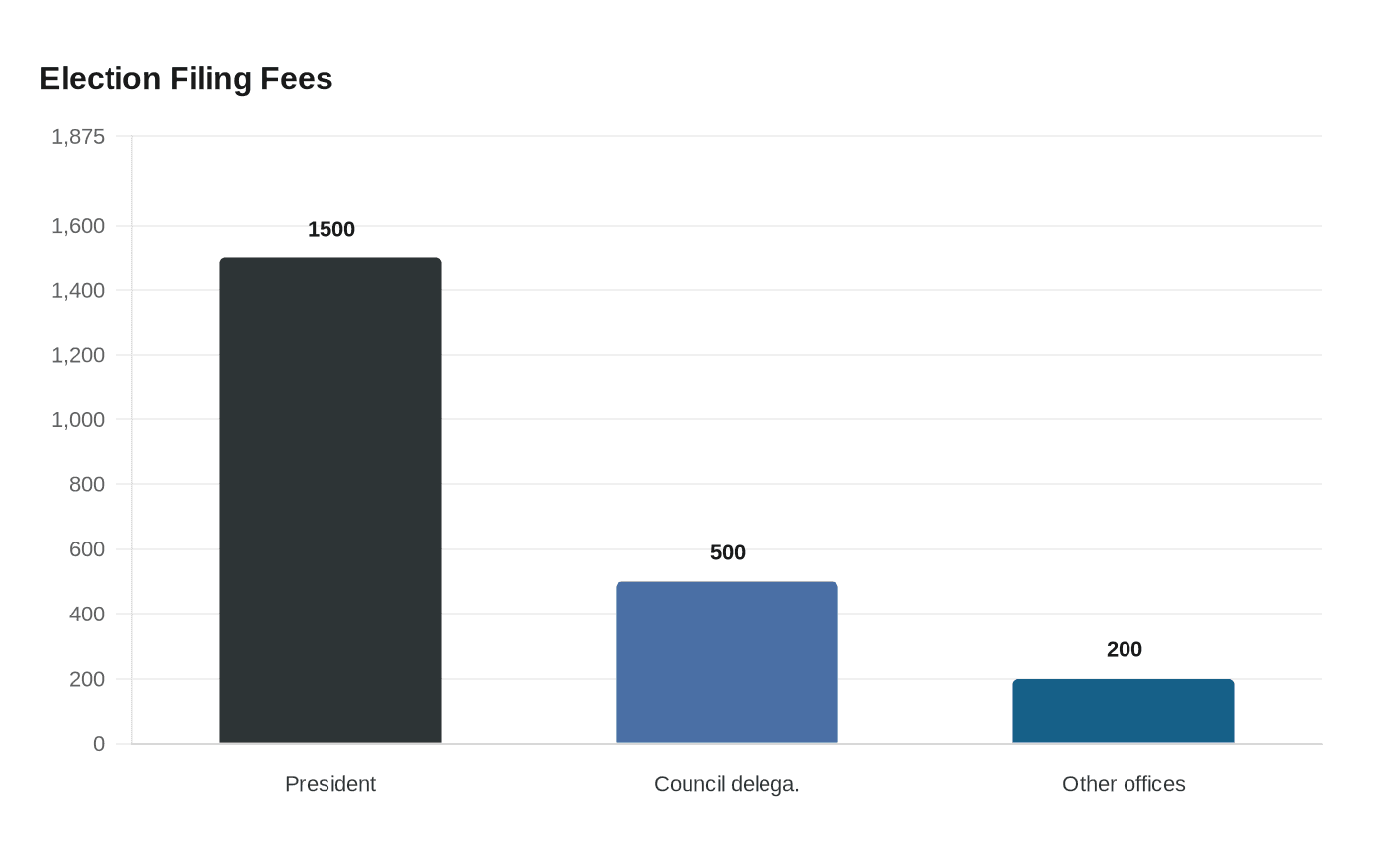
Filing ran from April 9 through 5 p.m. on April 22. With all agency filing offices closed on the final day, remaining submissions were routed to the Department of Diné Education auditorium in Window Rock, with the Education Building site off Morgan Boulevard open from 8 a.m. to 5 p.m. Filing fees were set at $1,500 for president, $500 for Council delegate and $200 for the remaining offices on the ballot. The official candidate list was released the next day, on April 23.
The primary is set for July 21, after the Navajo Nation moved the date to align with Arizona’s state and county elections. Voter registration closes June 4, and absentee voting runs from June 15 through July 17. Those elected will take office in January 2027 under a reapportioned delegate map, making the outcome about more than one race at the top of the ballot.
Reapportionment remains central to the stakes. The Navajo Board of Election Supervisors recommended Plans 5, 3 and 4 in that order after public hearings and a December work session, while the Budget and Finance Committee considered setting aside $115,000 for reapportionment work and early election preparations. Fifteen years after voters reduced the Council from 88 delegates to 24, the Nation is still debating how many lawmakers should represent 110 chapters.
For McKinley County communities tied closely to Navajo government, the race arrives as the Council and president continue a budget fight that already tested the balance of power. The Council approved a $603.2 million comprehensive budget for fiscal 2026, and Nygren used line-item veto authority against parts of the Legislative and Judicial branches. His 2022 primary victory, when Jonathan Nez led with 17,073 votes and Nygren finished second with 12,878 in a field that drew 47,495 voters for 38.9% turnout, is the clearest recent benchmark for how much the 2026 contest could alter both executive and legislative control.
This article was produced by Prism’s automated news system from verified source data, official records, and press releases, then run through automated quality and moderation checks before publishing. The system is built and supervised by the people who set the standards it runs under. Read our full AI policy.
Did this article answer your question?