UNM-Gallup weaving class teaches Diné dyeing traditions in Gallup
UNM-Gallup students are dyeing wool in downtown Gallup to learn Navajo weaving as family practice, language work and cultural continuity. The class turns plant dyes into a bridge between campus and home.
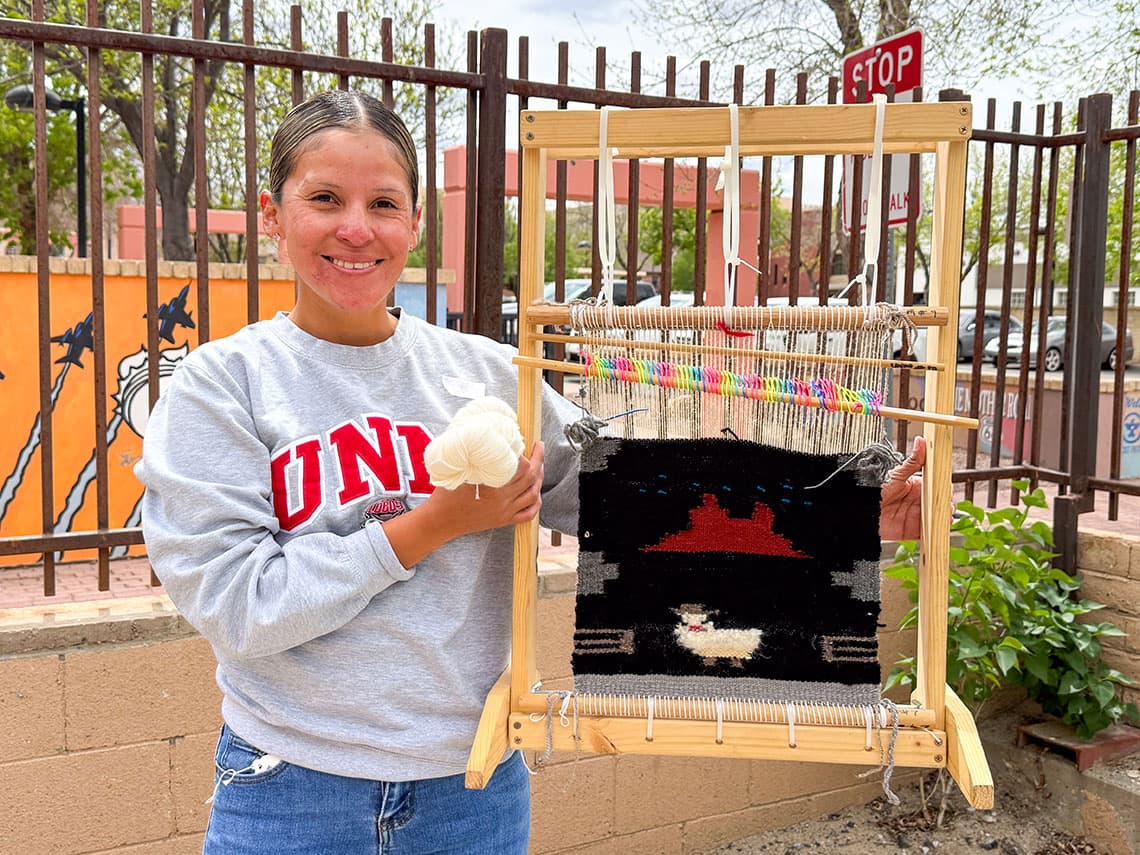
Behind the Weaving In Beauty shop in downtown Gallup, UNM-Gallup students spent a Friday turning wool, water and local plants into a lesson about Diné identity. The class was not just about making a textile sample, it was about reconnecting with family teachings, Navajo language and the kind of hands-on knowledge that lives in McKinley County homes.
A weaving lesson rooted in place
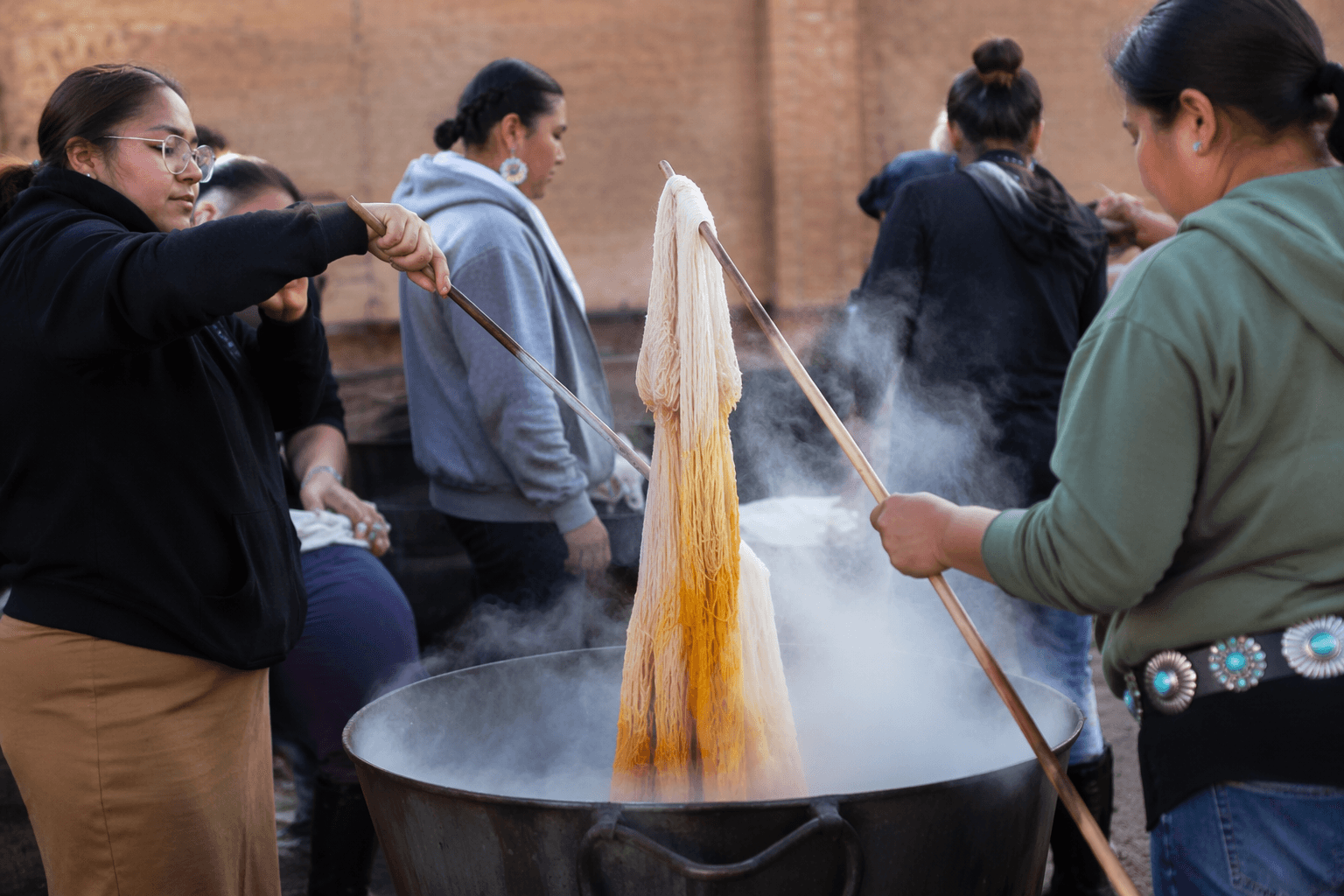
The weaving class at The University of New Mexico-Gallup brought students out of the abstract and into the work itself. Adjunct faculty member Gloria Begay led the lesson by boiling large pots of water and setting out bundles of Navajo tea, sagebrush, cedar and onion skins, materials that connect weaving to the land as much as to the loom.
That setting mattered. Downtown Gallup sits in the heart of a region where weaving has long been part of daily life, and the class showed how cultural education can happen in the middle of a busy town rather than off to the side as an afterthought. For students, the session offered a direct link between campus learning and the traditions many families still carry at home.
Learning the whole process, not just the finished blanket
Students worked in pairs to prepare skeins of wool for dyeing, which made the class feel more like a working studio than a lecture. The assignment also included creating a dye chart, turning each batch into a record of how natural materials produce different colors in wool used for Navajo weaving.
That chart is more than homework. It teaches students to observe, compare and remember how plants behave in the dye pot, and it preserves the kind of knowledge that can be passed from one season to the next. The lesson reflects the full sequence behind traditional weaving, where dyeing is not separate from the craft but one step in a larger process that includes shearing, carding, spinning and weaving.
Students brought family memory into the classroom
For Regina Castillo, the class was a way to reconnect with her culture while taking a break from her nursing studies. She grew up watching her grandmother weave, and she remembered summers spent helping care for sheep, shearing them, washing wool and gathering herbs and berries for dyeing.
Castillo said learning her culture helped her feel at ease and gave her confidence to keep going in her nursing program in the fall. Her experience reflects a larger reality in McKinley County, where school, work and family life often overlap, and where cultural knowledge can be a source of strength rather than something separate from career preparation.
Other students brought similar reasons to the class. Jaydian Tillman said the course gave him a new hobby and new connections. Nakeisha Begaye said she enrolled because she grew up around weaving and had a grandmother who was a weaver. Adam Blanchard described the class as challenging but enjoyable, and said he was keeping up with the tradition and language.
Why the class matters for families in McKinley County
The course lands at a time when many families are trying to keep language, plant knowledge and textile skills alive across generations. Traditional Navajo weaving is often learned within families, and that kind of instruction can move from grandparent to parent to child, carrying not just technique but memory, discipline and identity.
That is what makes the class feel so local. In McKinley County, where Gallup sits on or near the Navajo Nation, weaving is not just an art form on a wall or in a gallery. It is tied to sheep raising, wool processing, natural dyes and the stories people tell about where they come from.
For students like Castillo, Begaye, Tillman and Blanchard, the class offers a space where cultural continuity is built into the routine of campus life. It gives younger learners a place to practice what they may have watched at home, but not yet been taught step by step.
Part of the campus, not a side activity
UNM-Gallup is a two-year branch of the University of New Mexico, and the weaving course is formally part of that campus offering, not a one-time demonstration. The fall 2026 course list includes ART STUDIO 221: Navajo Weaving, which shows the subject is being treated as a real part of the curriculum.
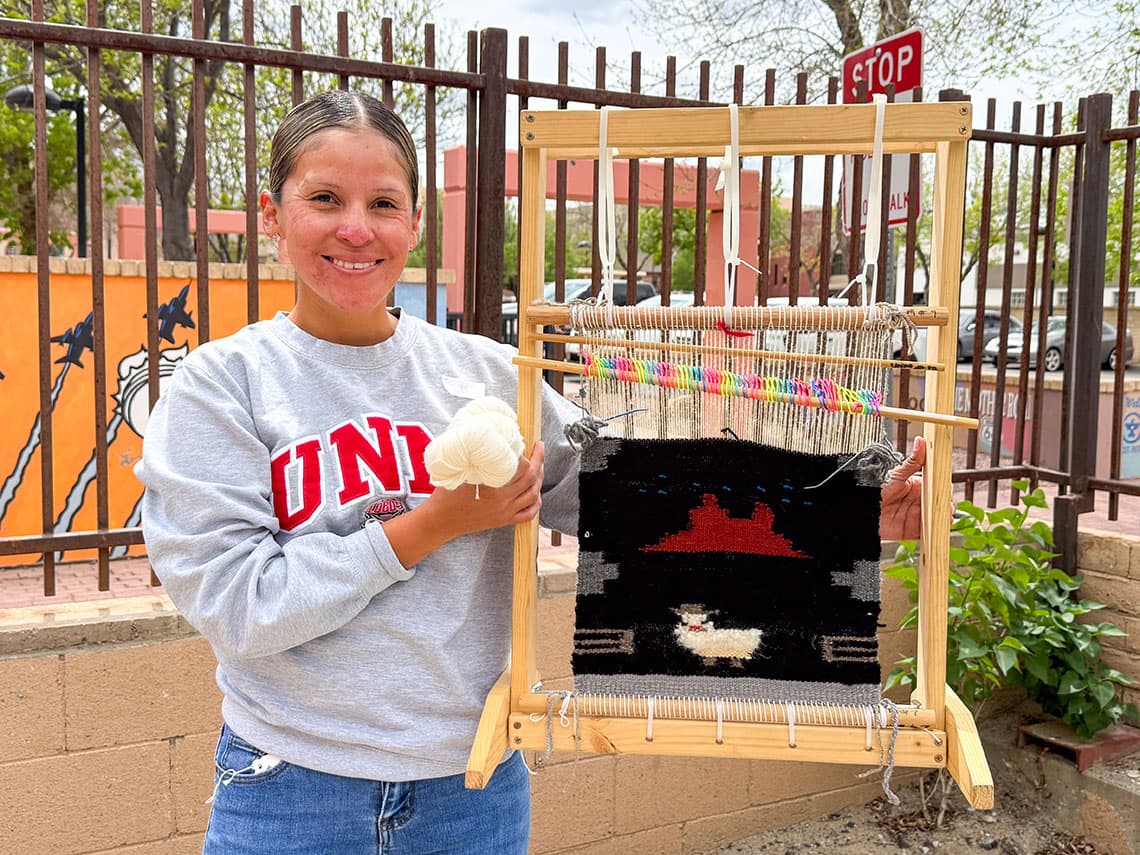
That matters in a place like Gallup, where higher education is often judged by whether it helps students move forward without asking them to leave their culture behind. Here, the class does both. It supports a student body that includes future nurses and other career-track learners while making room for a traditional practice that still carries family meaning.
The wider history behind the dye pot
The lesson also fits into a longer history of change in New Mexico fiber arts. National Park Service history notes that the railroad’s arrival in 1880 brought commercial blankets, yarns and synthetic dyes into northern New Mexico, reshaping local weaving practices. That history helps explain why a class devoted to natural dyeing feels so important now.
The same National Park Service material on sheep, wool and weaving emphasizes that hands-on learning includes dyeing, spinning and weaving. It also points to the role of Churro sheep in Navajo culture, reminding students that the fabric begins long before the loom, with animals, land and labor. In that context, Begay’s lesson behind a Gallup shop was not a craft demonstration in miniature. It was a full cultural chain, from plants to wool to finished cloth.
A living tradition with a future in Gallup
The strongest lesson from the class is that weaving still lives in the everyday life of McKinley County. It survives in family memory, in the language of younger learners, in the work of preparing wool by hand and in the decision to make room for this knowledge inside a college course.
With Gloria Begay scheduled to teach another Navajo weaving class in the fall, UNM-Gallup is making clear that this is ongoing work. For Gallup students and the families who raised them, the real value of the class is not only that it teaches a skill, but that it helps carry Diné textile traditions forward without separating them from the people and places that keep them alive.
This article was produced by Prism’s automated news system from verified source data, official records, and press releases, then run through automated quality and moderation checks before publishing. The system is built and supervised by the people who set the standards it runs under. Read our full AI policy.
Know something we missed? Have a correction or additional information?
Submit a Tip