Worsening Drought Strains Navajo Nation Water Systems, Threatening McKinley County Residents
Gallup groundwater has sunk 200 feet in a decade and 4 in 10 Navajo families already haul water as drought tightens its grip on McKinley County.
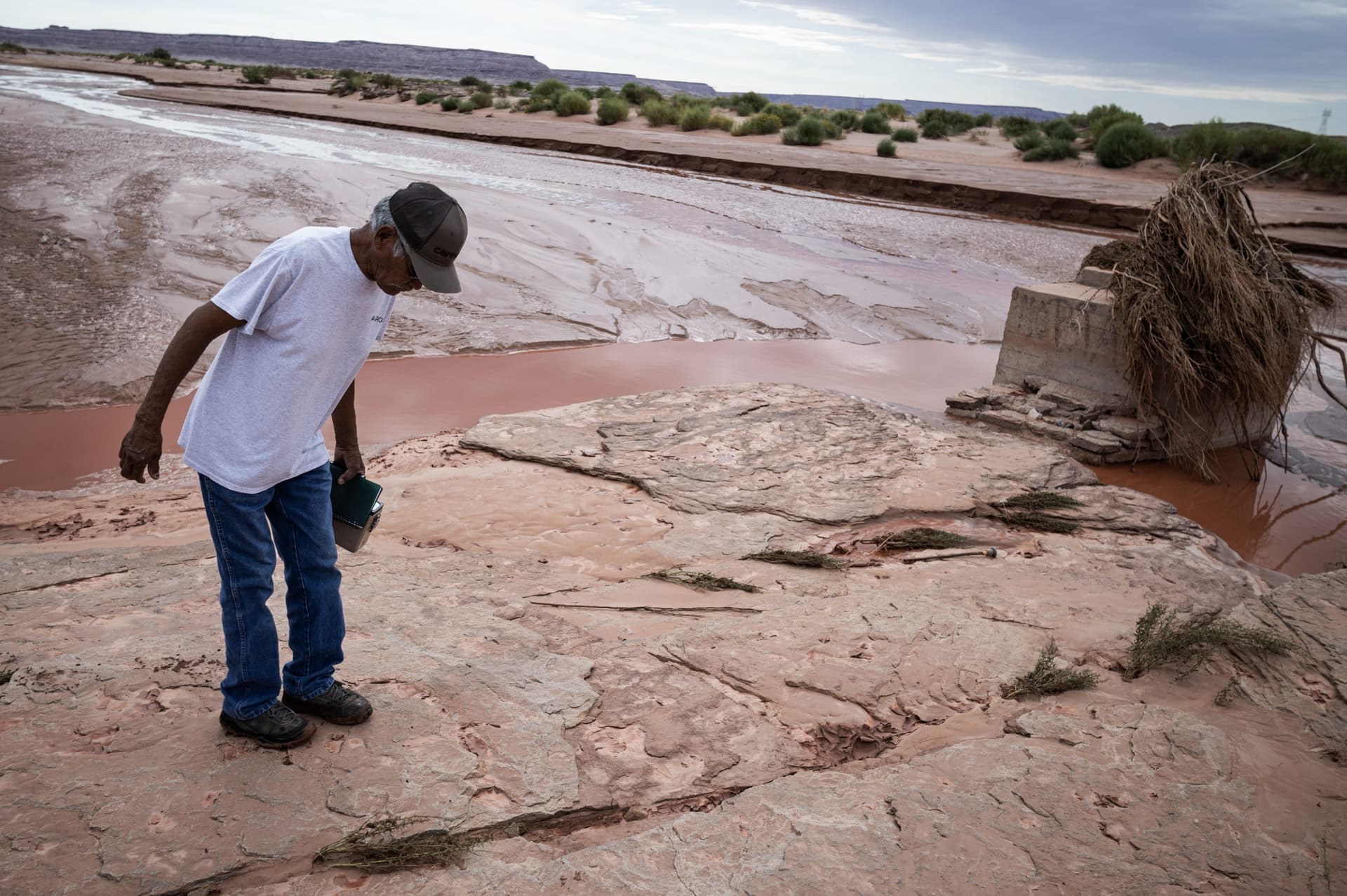
Gallup's groundwater table has dropped roughly 200 feet over the past decade, and four out of every 10 Navajo Nation households already haul water by truck to cover daily needs, figures that lay bare how thin the margin has become as drought intensifies across McKinley County and the broader Navajo Nation.
For chapter communities along the eastern Navajo Nation, including Coyote Canyon and Crownpoint, the strain is structural. Distribution systems that operate on tight margins are vulnerable to reduced pressure and intermittent outages when surface flows fall and reservoirs contract. Families connected to piped service will likely feel pressure drops first; those who rely on designated haul points should anticipate longer waits and higher costs as dry conditions deepen through spring.
McKinley County was among the counties the USDA designated as a primary drought disaster area when the Navajo Nation declared a drought emergency in May 2025. NCEM Chairman Marcarlo Roanhorse framed the stakes plainly at the time: "Our Nation is facing a dangerous convergence of water scarcity, degraded rangeland and climate-driven threats. We cannot wait. Our communities are already feeling the strain."
That declaration remains in force, and it carries concrete tools for residents. Navajo Nation chapters are authorized to access Chapter Emergency Funds for water hauling, storage tank installation, and local mitigation. For any resident facing a dry tap or a service outage, the chapter house is the first call: chapter emergency protocols are the fastest route to coordinated delivery or temporary storage support. The Navajo Nation also authorized $6.5 million from the Agricultural Infrastructure Fund for windmill repairs and water storage installation across drought-affected communities.
The most effective immediate step is to fill storage tanks and barrels whenever service is available, eliminate outdoor water use entirely, and report outages and low-pressure conditions to the chapter utilities department promptly so the scope of the problem is documented for emergency funding requests.
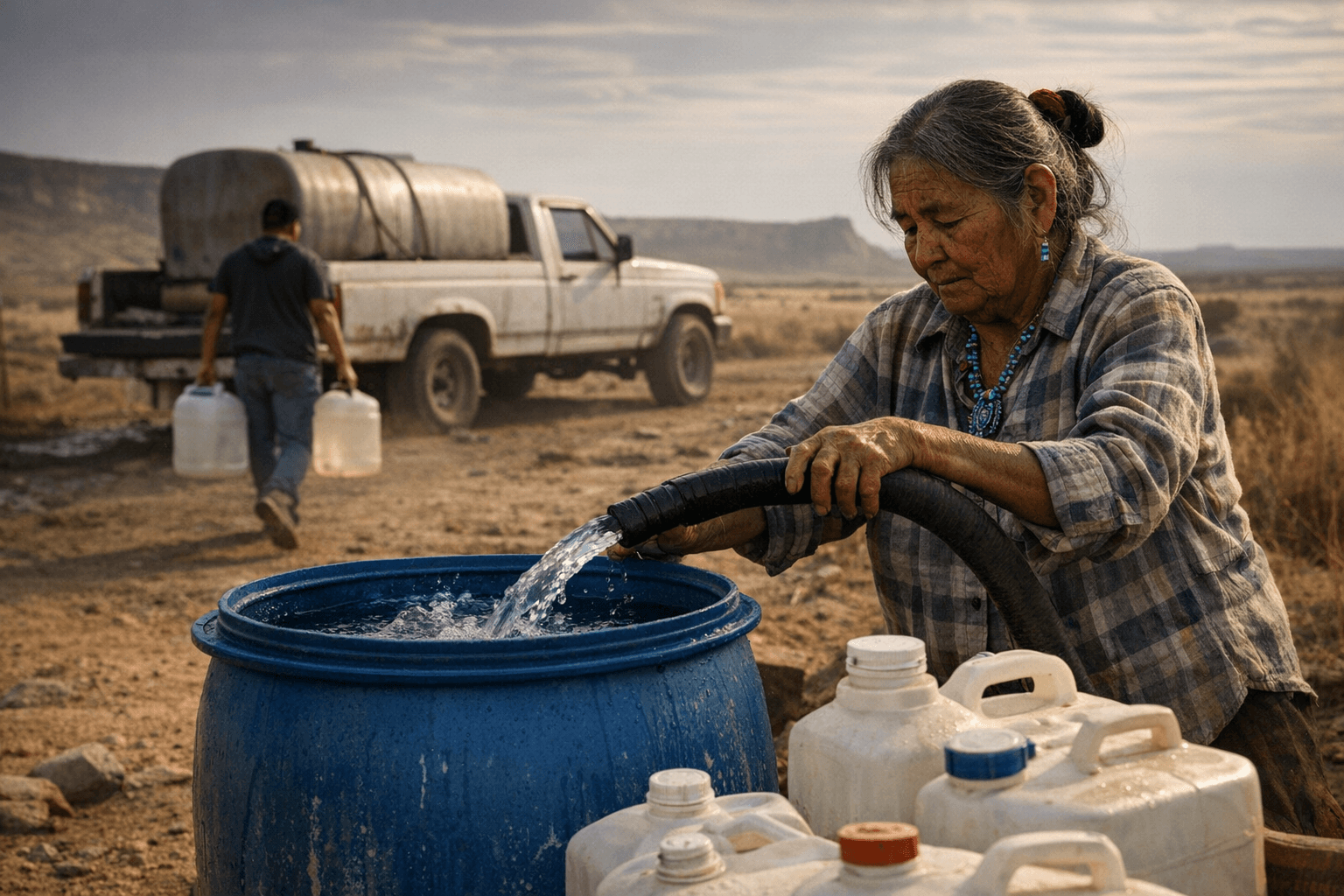
The long-term solution is the Navajo-Gallup Water Supply Project, a federally funded pipeline designed to carry San Juan River water through roughly 260 miles of pipe to Gallup and more than 43 Navajo chapters. The Bureau of Reclamation confirmed $120 million for the project in early 2025 and committed another $120 million in January 2026. Construction of the sublateral to Coyote Canyon began in February 2025 and is expected to be completed this year; the Crownpoint sublateral is slated to break ground later in 2026.
Until those pipelines reach full capacity, schools, health clinics, and elder-care facilities across McKinley County should verify backup reserves now rather than waiting for a shortage. Livestock producers who depend on wells or stock ponds face their own urgent math: emergency haul deliveries take time to arrange, and wells showing stress in April can fail entirely by July.
The 200-foot groundwater decline in Gallup took a decade to accumulate. It will not reverse in a single wet season, and without the San Juan pipeline at full capacity, every dry month widens the gap between what exists underground and what the county's residents, schools, and businesses actually need.
This article was produced by Prism’s automated news system from verified source data, official records, and press releases, then run through automated quality and moderation checks before publishing. The system is built and supervised by the people who set the standards it runs under. Read our full AI policy.
Did this article answer your question?