Zuni Youth Weavers Build Confidence at Grand Canyon Demonstrations
Three Zuni weavers turned Grand Canyon tourists into an audience for Pueblo culture, gaining confidence and a possible career path along the way.
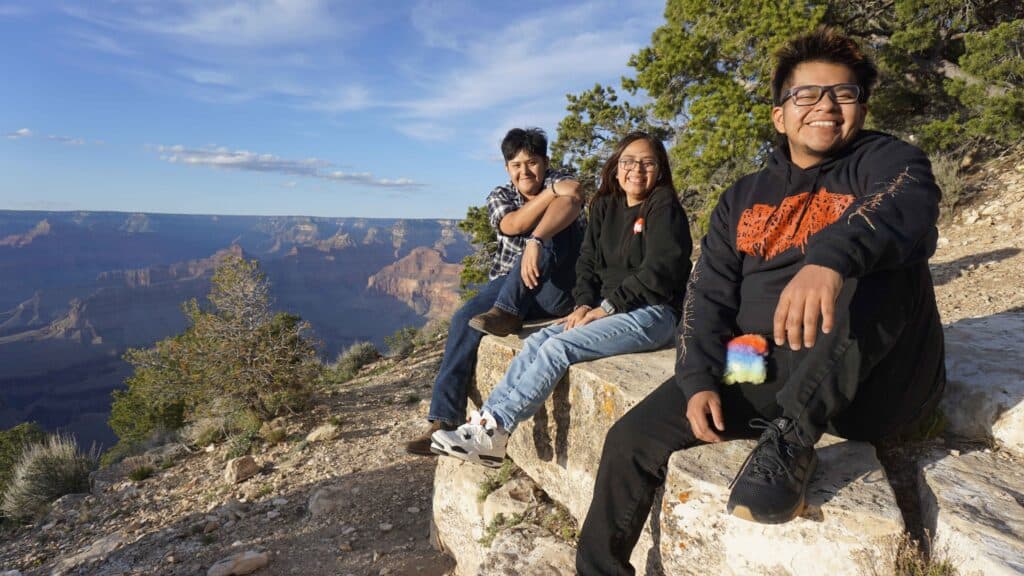
At Desert View Watchtower, three young Zuni weavers spent early April turning a busy Grand Canyon stop into a live classroom for Pueblo culture. Kaleb Leekity, Maliyah Halusewa and Jerone Shelendewa drew crowds as they worked their looms, weaving hair ties and sash belts while answering questions from visitors who stopped in from around the country.
The trip, which ran from March 31 through April 3, marked a milestone for the apprentices, who had completed Zuni Youth Enrichment Project’s 10-week Emerging Artist Apprenticeship in Pueblo weaving. The program began with plain-weave projects such as leg ties, hair ties and belts before moving into more complex double-float designs, giving students ages 15 to 24 a step-by-step foundation in technique, muscle memory and problem-solving. The apprenticeship was supported by the Bezos Family Foundation and First Nations Development Institute.
The young artists were nervous at first, but by the end of the first day they were leading conversations with tourists and explaining the designs and cultural meaning behind the pieces. Art Coordinator Elroy Natachu Jr. and Art Leader Kandis Quam accompanied the group and coached them on how to present themselves as ambassadors for Zuni. Natachu said visitors may never meet another Zuni person in their lives, which made the apprentices’ role especially meaningful.
For Leekity, 25, the demonstration was more than a showcase. He said he has long dreamed of doing what the mentors do, and the experience pushed him to think seriously about returning to work at the Grand Canyon. Halusewa said explaining the meaning of her designs helped her understand her own work more deeply, a reminder that cultural teaching can sharpen both confidence and craft.
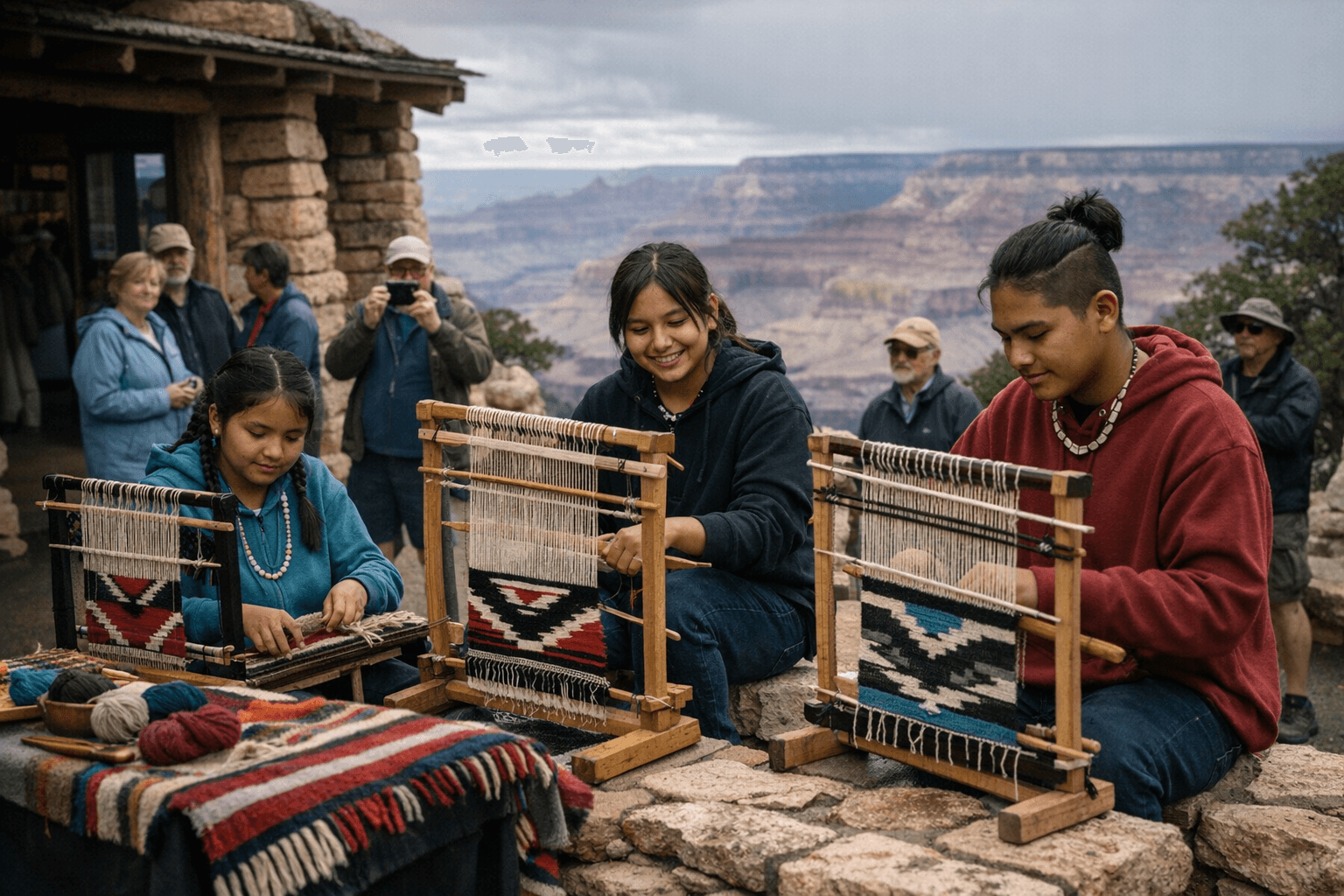
The Grand Canyon Cultural Demonstration Program has become a major intertribal platform since it began in 2014 under the Grand Canyon Intertribal Working Group. Grand Canyon National Park and Grand Canyon Conservancy jointly host the program, which is free and open to the public and usually takes place at Desert View Watchtower in spring, summer and fall. Park materials say it was created to elevate the voices of members of the 11 federally recognized tribes connected to the canyon, and by 2025 it had grown from four demonstrators to more than 200 tribal participants. Demonstrators receive a $25-an-hour honorarium, plus housing and some travel expenses, making it both a cultural stage and a paid opportunity.
For Zuni families in McKinley County, the appearance carried a broader message. Zuni Youth Enrichment Project said it has invested $17.5 million in the community since 2009 and serves youth through 10 programs, showing how arts training, mentorship and public presentation can help turn heritage into pride, skills and visible leadership.
This article was produced by Prism’s automated news system from verified source data, official records, and press releases, then run through automated quality and moderation checks before publishing. The system is built and supervised by the people who set the standards it runs under. Read our full AI policy.
Did this article answer your question?


